
Kejriwal's dual approach: Victim in Delhi, authoritarian in Punjab

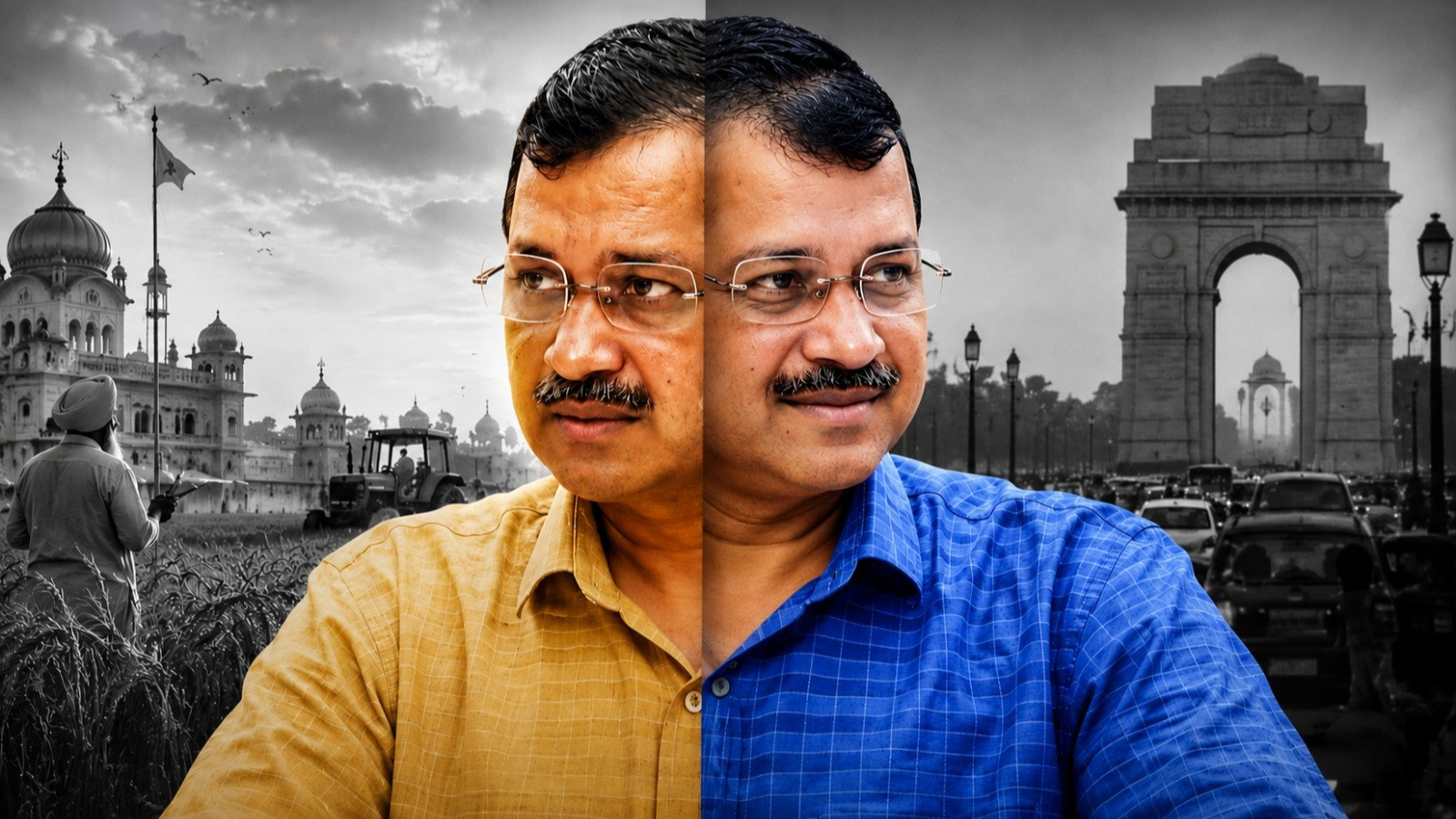
AAP government in Punjab targets journalists with copyright claims.
In Delhi, Arvind Kejriwal considers the removal of his posts or the restriction of his social media accounts as an attack on fundamental rights. However, in Punjab, his party's government attacks journalists in the same manner, which they accuse the BJP government at the Centre of doing in Delhi. Kejriwal's party uses copyright strikes as a weapon for this. Aam Aadmi Party is the first political party to misuse copyright strike rules on such a large scale. The Reporters Collective has exposed this duplicity or double standards of Arvind Kejriwal.
In fact, the Aam Aadmi Party government in Punjab has gone after journalists. Since October last year, the ruling Aam Aadmi Party (AAP) in Punjab has claimed copyright on at least 48 videos and posts uploaded by journalists on Facebook. It should be noted that all this content was related to criticism of the AAP government in Punjab.
Between January and April 2026, four Facebook pages were taken down after receiving copyright infringement notices on content claimed by AAP. A fifth page was removed following a notice from Punjab Police and also received five separate copyright notices. When these five pages were removed, their total followers exceeded 30 lakh.
AAP has consistently accused other parties, especially the Bharatiya Janata Party (BJP), of controlling the media and suppressing its voice. On August 7, AAP chief Arvind Kejriwal accused the Narendra Modi government of targeting social media users who posted anti-government content during the Gen Z protests. This statement came when his own Instagram account, along with accounts of journalists and media institutions, was restricted. Kejriwal termed it an attack on fundamental rights. But in Punjab, where AAP is in power, the party has used the same method it accuses others of. For several months, AAP made copyright infringement claims against journalists criticizing the Punjab government, leading to the removal of their pages.
A copyright strike is a legal action provided by an online platform, where the content can be removed upon a complaint by the actual copyright owner for using their material without permission.
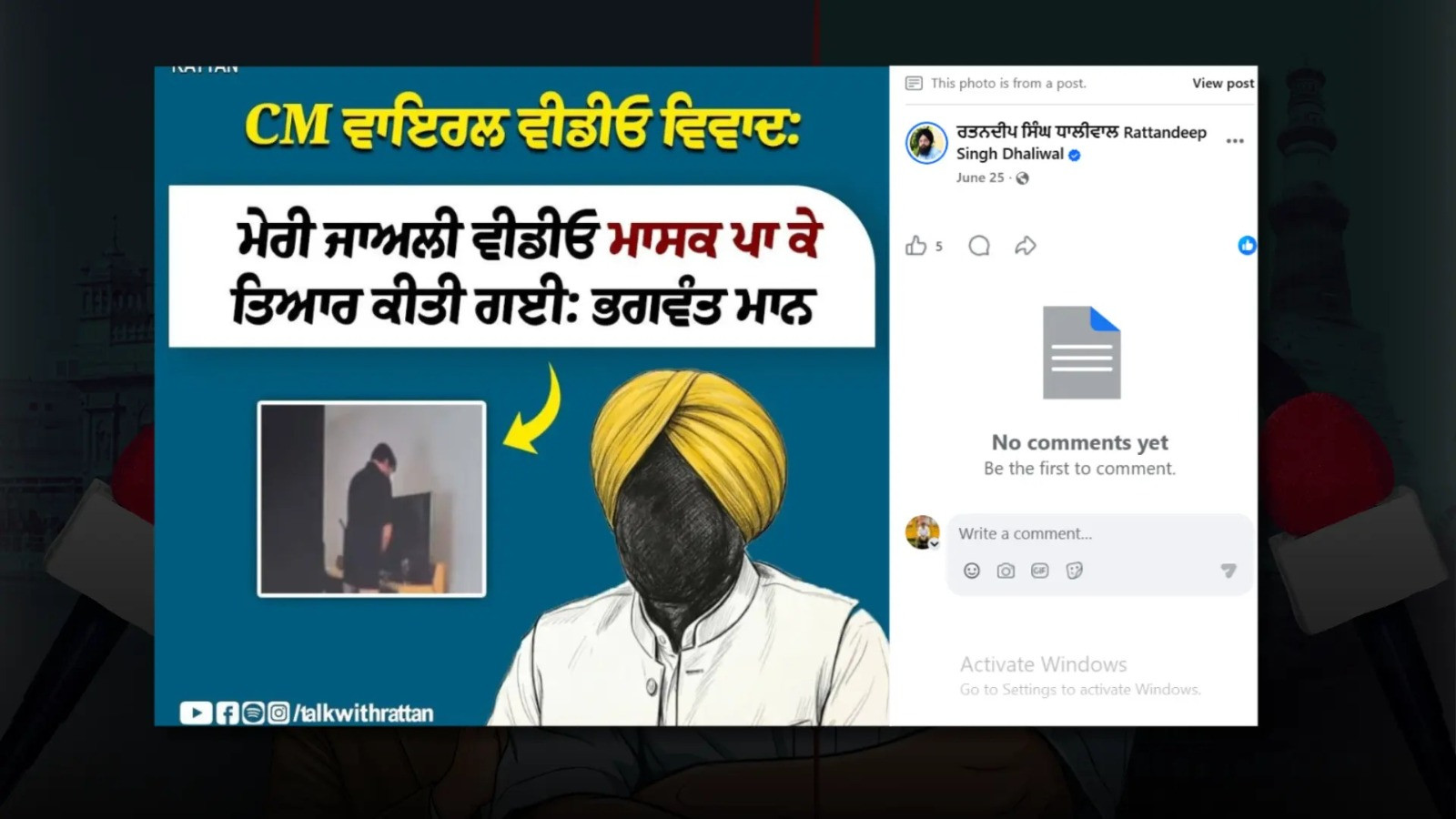
The materials flagged by AAP as copyright infringements included a press release from a Sikh religious organization, a photo of an opposition MLA, social media posts by Punjab Chief Minister Bhagwant Mann, AI-generated images, government notifications related to appointments in state boards, and even pictures of the Punjab Assembly. Most copyright strikes were issued over photos of Bhagwant Mann and other AAP leaders. Much of this content was clearly not owned by AAP.
This is not the first time AAP in Punjab has been accused of targeting journalists. Since forming the government in Punjab in 2022, the party has been accused of threatening journalists and RTI activists with police cases, obstructing the circulation of newspapers including The Indian Express, conducting a "targeted witch-hunt" against the Punjab Kesari group, and getting journalists' social media accounts suspended. Opposition parties have termed it a serious attack on press freedom.
The Reporters Collective investigated five cases, including Facebook accounts of RMB Television, Lok Awaz TV, Maninderjeet Sidhu, Rattandeep Singh Dhaliwal, and Parmeet Singh Bidowali. These pages are run by four regional journalists working in small towns and tier-3 cities of Punjab.
Between January and April, the affected journalists wrote to Facebook's grievance officer and appealed to restore their content and pages. Two of these journalists approached the Punjab and Haryana High Court, alleging that copyright strikes were used for censorship. One case is still in court. The other journalist withdrew his petition after the state government explained the reasons for the page removal. However, these efforts did not restore the pages, which remained closed for several months. Subsequently, The Reporters’ Collective sent questions to Meta, Facebook's parent company. A Meta spokesperson said,
“The content and accounts were mistakenly removed and have now been restored.”
Four out of five pages were later restored. RMB Television was restored on June 17, two days after questions were sent. Lok Awaz TV, Rattandeep Singh Dhaliwal, and Parmeet Singh Bidowali's pages returned on June 22. However, the ‘Maninderjeet Sidhu’ page remains blocked due to a legal demand from Punjab Police.
As a precaution, Maninderjeet Singh Sidhu, who runs Lok Awaz TV, removed all AAP-related content from his page to avoid further copyright strikes. The other journalists retained their old content on their restored pages. The Software Freedom Law Centre, a Delhi-based non-profit working for digital rights, stated that the restoration of these pages shows that automated moderation can lead to “opaque and overly broad censorship.”
When questioned about the copyright strikes, AAP-Punjab's media in-charge Baltej Pannu claimed,
The four people whose Facebook pages were removed are “not journalists.” Pannu said, “If someone does not have the proper degree or qualification and is making baseless allegations against AAP, we have to take action.”
In India, there is no legal requirement for a degree to practice journalism. Both journalists and ordinary citizens have the right to criticize any government and its policies. According to the report, AAP-Punjab has found a new way to target journalists criticizing the state government by using intellectual property laws. Typically, critics are dealt with through other legal avenues like defamation by private parties.
The investigation also revealed that three of the journalists targeted by AAP have journalism degrees, while the fourth is currently pursuing a journalism course. One of these journalists had even interviewed Bhagwant Mann in 2019, before AAP formed the government in Punjab.
According to digital rights experts, this is possibly the first time in India that a political party has used copyright strikes on such a large scale for “censorship.”
Local language digital media platforms in Punjab emerged rapidly during the 2020-21 farmers' movement. Frustrated with the limitations of mainstream media, many journalists turned to online platforms. Advertising revenue from social media views also boosted this sector. There are no official figures, but journalists in Punjab estimate that there are about 200 such digital outlets in the state, most of which are active on Facebook and YouTube. Among them, Lok Awaz TV and Maninderjeet Sidhu are two platforms run by Faridkot journalist Maninderjeet Singh Sidhu, with 9.7 lakh and 4.5 lakh followers respectively. Sidhu employs about 15 people and runs his newsroom from two rented rooms in Jaitu, Faridkot.
AAP filed at least 20 copyright strikes against both pages of Sidhu. After at least 15 strikes, the Lok Awaz TV page was shut down in January. The Maninderjeet Sidhu page was separately removed in March due to IT Act violations. At least five intellectual property rights (IPR) claims were also made against it.
The flagged content included images of Bhagwant Mann, Arvind Kejriwal, and AAP MLAs protesting in the Punjab Assembly. AAP even told Facebook that AI-generated images of Mann and Kejriwal, as well as a picture of a Congress MLA, violated its intellectual property rights.
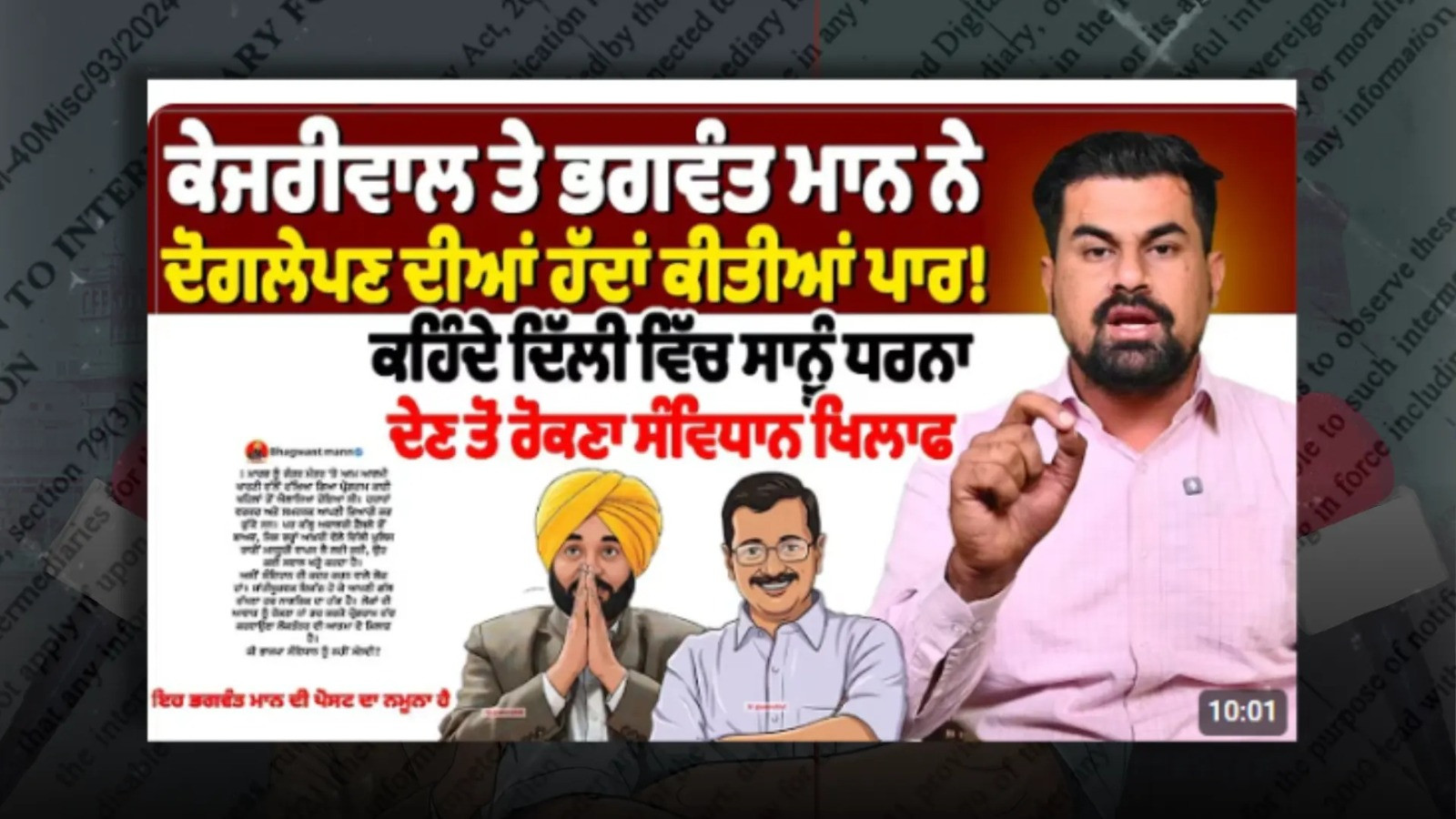
On 26 September 2025, Lok Awaz TV posted a video,
in which Sidhu was commenting on the protest by AAP MLAs against the central government in the Assembly. The video included five images of AAP MLAs holding placards calling Prime Minister Narendra Modi's ₹1,600 crore flood relief package a "jumla."
The Reporters Collective traced one of these images to AAP-Punjab's own X handle. However, the Secretary to the Speaker of the Assembly, Kultar Singh Sandhwan, Surinder Singh Moti, stated that no political party is allowed to take pictures inside the Assembly. Despite this, AAP claimed ownership of the images taken inside the Assembly.
The Punjab government also broadcasts the Assembly proceedings on its YouTube channel. The rules of the Assembly prohibit journalists from taking pictures of the proceedings. Therefore, journalists rely on video grabs from the official YouTube broadcast and official press releases.
In a letter to Facebook's grievance officer on 20 January, Sidhu argued that posting publicly available government material does not violate AAP's "proprietary rights."
Sidhu's other page, Maninderjeet Sidhu, received at least five IP claims. Additionally, legal notices were sent under Section 79(3)(b) of the Information Technology Act, 2000, regarding eight videos. Following a notice from Punjab Police, Facebook removed these videos.
Sidhu told The Reporters’ Collective,
"Anyone who questions the government is attacked with this new method of copyright claims."