Congress leads in Rajasthan panchayat elections, BJP faces setback
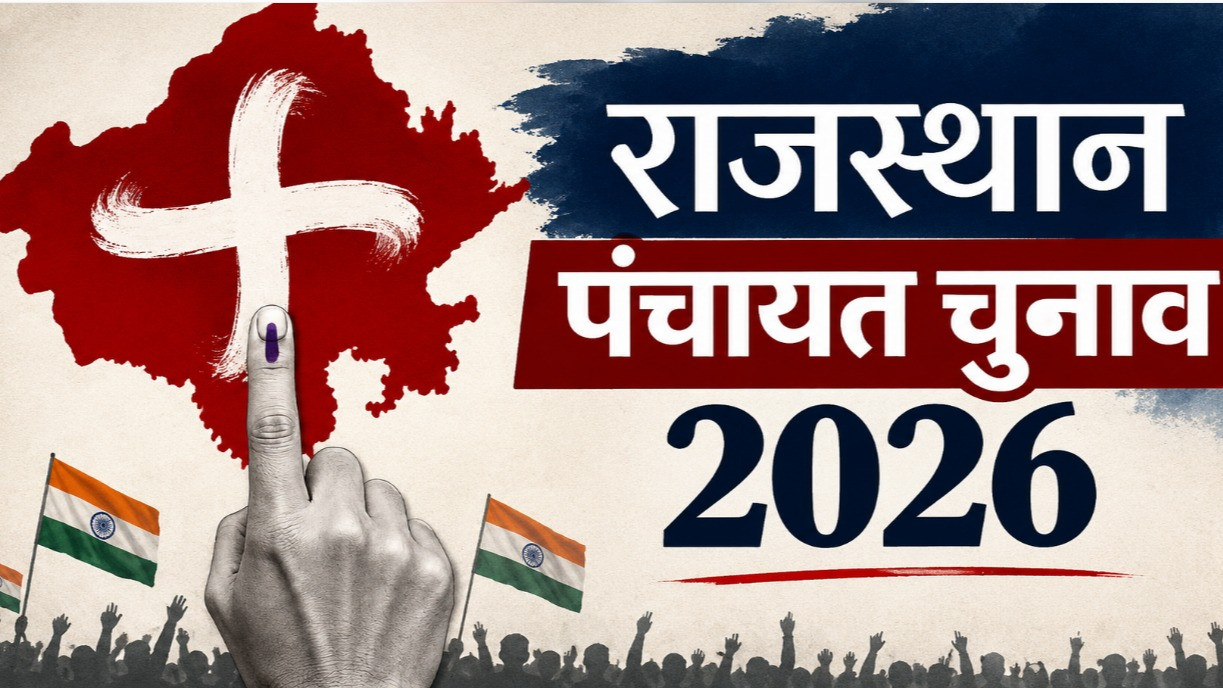
The defeat in panchayat and district council elections in rural Rajasthan is a major blow for the BJP.
The results of the Panchayat elections in Rajasthan have indicated a significant shift in the state's rural politics. In the results announced on November 20, the Congress party left the ruling Bharatiya Janata Party (BJP) far behind. Congress performed better than the BJP in the district councils and Panchayat committees. These results are particularly important as the BJP government is set to complete three years of its term in December. At such a time, Congress's lead in the rural body elections is being viewed as a political warning for the state government.
During the counting of votes for the Rajasthan Panchayat elections, early trends showed Congress establishing a clear lead over the BJP. By the time results for 6,758 out of a total of 7,543 Panchayat committee seats were declared, Congress had won 3,352 seats while the BJP had secured 2,004 seats. Independent candidates received 576 seats, while the Rashtriya Loktantrik Party (RLP) got 468 and the Bharat Adivasi Party (BAP) received 251 seats.
As the counting concluded, Congress's lead widened further. According to the available results, Congress won 3,701 Panchayat committee and 599 district council seats, while the BJP secured 2,181 and 301 seats respectively. In the Panchayat committee elections, Congress outperformed the BJP in 33 out of the state's 37 districts. The BJP could only establish a lead in Ajmer, Balotra, Salumber, and Udaipur.
This lead for Congress was not limited to any one region. The party also performed better than the BJP in districts such as Jaipur, Jodhpur, Sikar, Bikaner, Dausa, and Bhilwara. In the Chief Minister Bhajanlal Sharma's home district of Bharatpur, Congress also secured more seats than the BJP at the Panchayat committee level. These results indicate that despite being in power, the BJP has not been successful in maintaining its grip in rural areas.
The results from Sikar were among the most talked-about news of this election. In the district council's 49 seats, Congress won 36, establishing a clear lead, while the BJP managed only 11 seats. Two seats went to other candidates. In 14 out of the district's 16 Panchayat committees, Congress was in a position to form the board. No party secured a clear majority in Dhod and Fatehpur.
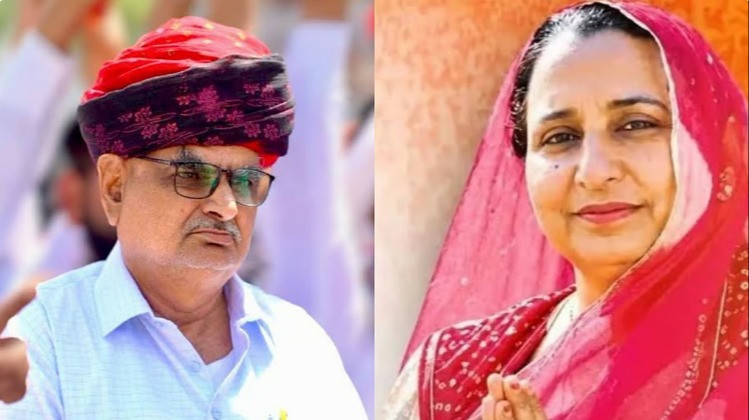
In Sikar, the most discussion revolved around the defeat of four family members of the state's Urban Development and Housing Minister Jhabar Singh Kharra. His wife Shanti Devi lost to Congress's Sarita Devi by 51 votes in Ward-17 of the Ajitgarh Panchayat committee. His two sons also lost elections to Congress candidates in their respective wards. The minister's sister-in-law, Pratima Kharra, was defeated in Ward-23 of the district council.
The defeat of family members of a minister does not, by itself, serve as proof of public sentiment against the government. However, when four candidates from the same family lose elections and Congress gains a significant lead in the same district, it certainly raises questions about local political discontent and the organizational performance of the BJP. The minister's family's defeat has also given symbolic significance to the election results, sending the message that holding a powerful position in government does not guarantee victory in local elections.
The results from Jhalawar were somewhat different from the broader picture of the state. At the Panchayat committee level, Congress gained a lead. In six out of the district's eight Panchayat committees, Congress and the BJP had influence in two. Congress secured 95 and the BJP 79 seats in a total of 178 Panchayat committee wards. Three seats went to independents and one to the Aam Aadmi Party.
In these elections, besides Congress and the BJP, regional parties also made their presence felt. Initial figures showed RLP with 468, BAP with 251, Bahujan Samaj Party with 55, CPI(M) with 50, and Aam Aadmi Party with two seats. Subsequent figures indicated an increase in the number of seats for RLP and BAP. According to The New Indian Express, RLP won 496 and BAP won 276 seats in the Panchayat committee elections. Independent candidates also secured 627 seats. In the district councils, RLP obtained 37 and BAP got 22 seats.
An important aspect of these results is that rural politics in Rajasthan is not just a direct battle between Congress and the BJP. The influence of Hanuman Beniwal's RLP in western Rajasthan, the presence of BAP in southern Rajasthan, and the success of independent candidates in several areas indicate different centers of local politics. In many Panchayat committees, no single party secured a clear majority. In such situations, the role of smaller parties and independent members could be decisive during board formation.
Congress leaders have interpreted these results as a sign of public discontent against the state government. Congress leader Pratap Singh Khachariyawas also linked it to dissatisfaction with the government. State Congress President Govind Singh Dotasra targeted the government over unemployment, inflation, and development works. Congress claims that the rural populace has delivered its verdict on the performance of the BJP government.
A Warning for BJP, a Test for Congress
These results serve as a significant warning for the BJP government in the state. The Bhajanlal Sharma government has failed the test of popularity in rural areas, and it is natural for these results to weigh heavily on the BJP, which was buoyed by its recent victory in municipal elections.
Congress is enthusiastic, but it will also need to organize itself and increase its influence in urban areas before the next assembly elections.