
Chandipura virus claims 25 children in Gujarat

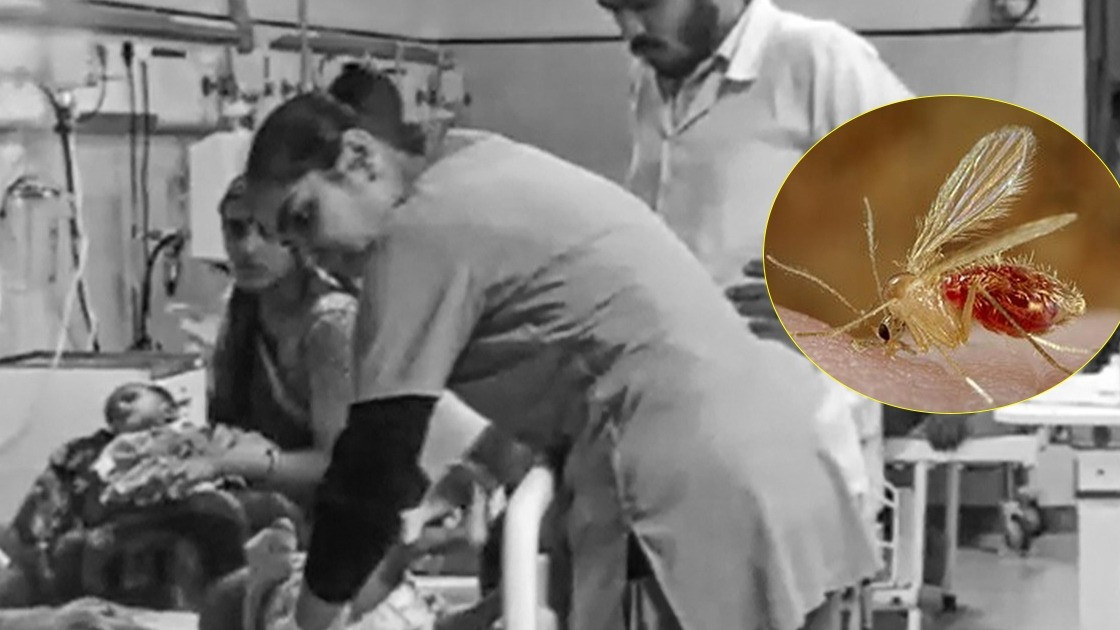
Doctors and health experts have found no trace of the virus in the samples tested so far.
In Gujarat, the death toll from the Chandipura virus has risen to 25 over the past five weeks. However, it is surprising that doctors and health experts at government hospitals have not found any trace of the virus in the samples tested so far. The most common carrier of the Chandipura virus is considered to be the sandfly, which is usually found in cracks of mud houses or around animals.
Indian Express reports that a large-scale screening campaign was launched following the outbreak that began on June 30. Thousands of sandflies were examined, and later, other potential carriers like mosquitoes and ticks were also included in the investigation. But all sample reports came back negative.
The question remains for researchers as to where exactly the virus is thriving and how it is reaching humans.
During the 2024 outbreak, similar investigations yielded no clear answers. At that time, 28 out of 78 children showing symptoms of the disease had died. In the current outbreak, the Gujarat government has confirmed 39 children infected with the Chandipura virus, of whom 25 have died.
Chandipura Vesiculovirus (CHPV) primarily affects children under the age of 15. The infection manifests as Acute Encephalitis Syndrome (AES). So far, deaths from this disease have occurred in Gujarat and Rajasthan. Another concerning fact is that while sandflies are mainly found in eastern Gujarat, patients infected with the Chandipura virus, and in some cases, those who have died, have also been found in the Saurashtra region of western Gujarat. This initially raised the suspicion that there might be more than one insect vector spreading the disease among humans.
Under the National Joint Outbreak Response Team (NJORT), state researchers and scientists from five national institutions working in Gujarat have not found any trace of the virus in over a thousand samples of sandflies and other potential carriers during the 2024 and current 2026 outbreaks in Gujarat and Rajasthan.
Confirmed cases of CHPV infection in the current outbreak have been found in 12 districts of Gujarat and 3 districts of Rajasthan. Patan district in Gujarat has reported the highest number of 5 cases, while Sabarkantha has reported 4 cases.
An official from the Animal Husbandry Department told The Indian Express that,
there is no cluster of human cases. Only one case is emerging from each area. Even multiple cases are not being found from the same locality. Therefore, we estimate that the number of vectors is also low. Generally, in any vector-borne disease, the higher the number of victims, the greater the likelihood of identifying the carrier of the disease.
In a 2018 outbreak, sandflies were established as carriers of CHPV. In a research paper titled “Molecular Evidence of Chandipura Virus from Sergentomyia species of Sandflies in Gujarat,” researchers from ICMR-NIV stated that
the highly animal-attracted sandfly species Sergentomyia in Gujarat was found to be a potential carrier of CHPV. According to the researchers, this was possibly the first instance in India where male sandflies were found CHPV positive in RT-PCR tests. The disease was first identified in 1965 in a small village named Chandipura near Nagpur in Maharashtra, from where it got its name.
A senior scientist from a national institute studying vector-borne diseases stated, “We have collected several hundred samples of sandflies, and they are currently being tested through Reverse Transcription–Polymerase Chain Reaction (RT-PCR) to determine if they are infected with Chandipura Vesiculovirus. Unfortunately, no positive sample has been found so far. The situation was similar during the 2024 outbreak when we did not find any infected sandflies. However, we are also examining mosquitoes of the Aedes aegypti and Culex species to see if they have played a role as carriers of CHPV, but no positive result has been found in them either.”
Testing of samples from cattle present in areas surrounding human infections has also not provided any clue as to which animal might be the natural reservoir of the virus, i.e., the organism in which the virus can persist for a long time.
In response to questions sent by The Indian Express to the Ministry of Health and Family Welfare, the PIB stated, “A major objective of the investigation is to understand the infection cycle of the virus. Although sandflies are considered established carriers of the Chandipura virus, scientists are also investigating whether other arthropods, including mosquitoes, ticks, and mites, may play a role in spreading the infection. A large number of potential carrier samples have been collected from affected areas, and laboratory testing is underway. Officials have emphasized that it would be premature to identify the carrier responsible for the current outbreak before the scientific investigation is complete.” The statement also mentioned that no specific carrier could be conclusively held responsible during the investigation of the 2024 outbreak.
Dr. Sujata Sunil, Group Leader of Vector-Borne Diseases at the International Centre for Genetic Engineering and Biotechnology (ICGEB) in Delhi, expressed concern that researchers
might miss identifying the virus's carrier due to the “depth of surveillance during and outside the infection period.” Dr. Sujata is not involved in the current investigation but has been working on the Chandipura virus with other researchers in Maharashtra for several years, where the disease was first identified.
Dr. Sujata said,
During the 2005 chikungunya outbreak, the virus was able to shift from its traditional Aedes aegypti mosquito to the non-traditional Aedes albopictus mosquito. This happened due to just one mutation in the virus, which enabled it to change its vector between these two mosquito species.