
Why Gen Alpha students are protesting in schools across India

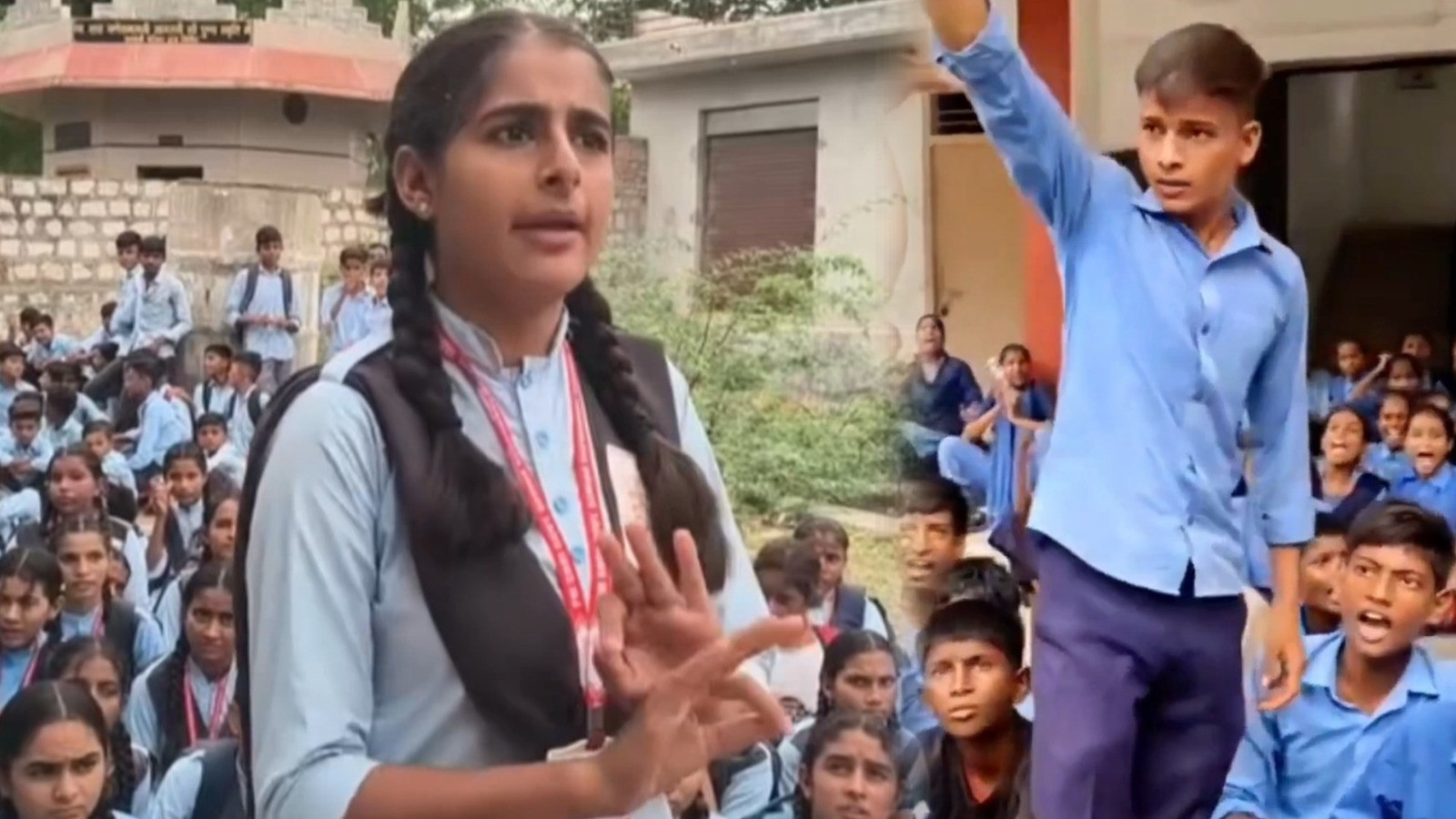
Students in a government school in Jalore, Rajasthan, protested against the shortage of teachers.
Now, in Rajasthan's Jalore district, students of a government school protested outside the school against the severe shortage of teachers. The students locked the main gate of the school in protest against the lack of teachers. More than 150 students from classes 1 to 12 study in this government school, but only one regular teacher was posted there.
Villagers say they have informed the education department about this issue several times, but no action was taken. According to reports, more than 1.5 lakh teaching positions are vacant in Rajasthan's government schools. Meanwhile, across the country, there are still over one lakh government schools where education is being conducted with only one teacher. After the students' protest, education department officials deployed two teachers at the school and assured that more appointments would be made soon. According to the standards of the Ministry of Education, the student-teacher ratio in schools should be approximately 30:1.
Similarly, in Bihar's Gaya district, students of a government school in Tikari protested over broken fans and damaged desks and benches. Annoyed by the poor condition of the school, the students refused to talk to junior officials of the education department and demanded the direct presence of the District Magistrate (DM).
Young children protested over essential facilities like broken fans, damaged benches, and faulty hand pumps, as well as complaints about the mid-day meal and toilets. When a junior staff member was initially sent to handle the situation, the children stood firm and insisted, “We want to talk to the DM.” Later, the DM of Gaya himself visited the school and spoke directly with the agitated students. The DM promptly formed an investigation team comprising the Block Development Officer and an Executive Magistrate to address the complaints within a few days.
It should be noted that just a few days earlier, the new generation of students, Gen Alpha, had not only alarmed the government of Uttar Pradesh with their protest but also had their demands immediately met. The protest by children born between 2013 and 2020 at a government inter-college in Fatehpur district went viral on social media. This protest took place at Sarvodaya Inter College in Kishanpur, where students gathered outside the school demanding basic facilities like electricity, clean drinking water, proper ventilation in classrooms, and better infrastructure.
In the viral video, students alleged that the fans in the classrooms were not working and there was no electricity supply. There was also no provision for clean drinking water. Some students complained about the condition of the school's toilets and the principal's misconduct. These claims have been widely shared on social media, but they have not been independently verified.
What caught the most attention was the method of protest. Instead of just handwritten slogans, many students used artificial intelligence (AI) tools to design posters and placards with their demands. The banners held by the children clearly stated,
‘Improve the college's facilities, secure the children's future.’ The angry students even said that when they raise their voices against the principal of 'Sarvodaya Inter College', they are threatened with failure. The principal is playing with the students' future.
This blend of digital tools and protest quickly drew national attention. Many users on social media called it the "first Gen-Alpha movement" in Uttar Pradesh. This is why the protest had an immediate impact. After discussions with education officials, District Inspector of Schools (DIOS) Rakesh Kumar gave a written assurance accepting the students' main demands. The education officer stated that,
four ceiling fans will be installed in every classroom, faulty electrical wiring will be repaired, desks and benches will be provided within a month, and an RO water cooler will be installed in the school premises.
It should be noted that the students had given an ultimatum of three days to the school principal and education officials. They also warned of gheraoing the BSA if the issues were not addressed. However, seeing the matter escalating, the officials quickly agreed to improve the facilities.
These events have sparked widespread debate on social media, not only because the protesters were school children but also because of the issues they raised. Many have noted that the demands were focused on basic educational infrastructure rather than broader political or ideological concerns. Many have questioned why public protests were necessary for action on such essential facilities.
Beyond the immediate outcomes, this incident reflects changing patterns of civic engagement among younger generations. While 'Gen-Z' is rapidly uniting over issues of employment, examinations, and public policy, the protests in Fatehpur, Rajasthan, and Bihar indicate that 'Gen-Alpha' students are becoming aware of institutional accountability at a young age and are using peaceful collective action along with digital technology to drive change. Their use of AI-generated posters also shows how new technologies are shaping civic engagement among school-going children.
While it remains to be seen what long-term impact this protest will have, the written promises made by education officials will now be closely monitored. Whether the promised improvements are implemented on time could determine if this viral event remains a one-time success story or becomes an example of how student activism in the digital age can influence governance at the grassroots level.