
BJP faces organisational shake-up amid Gen Z disconnect
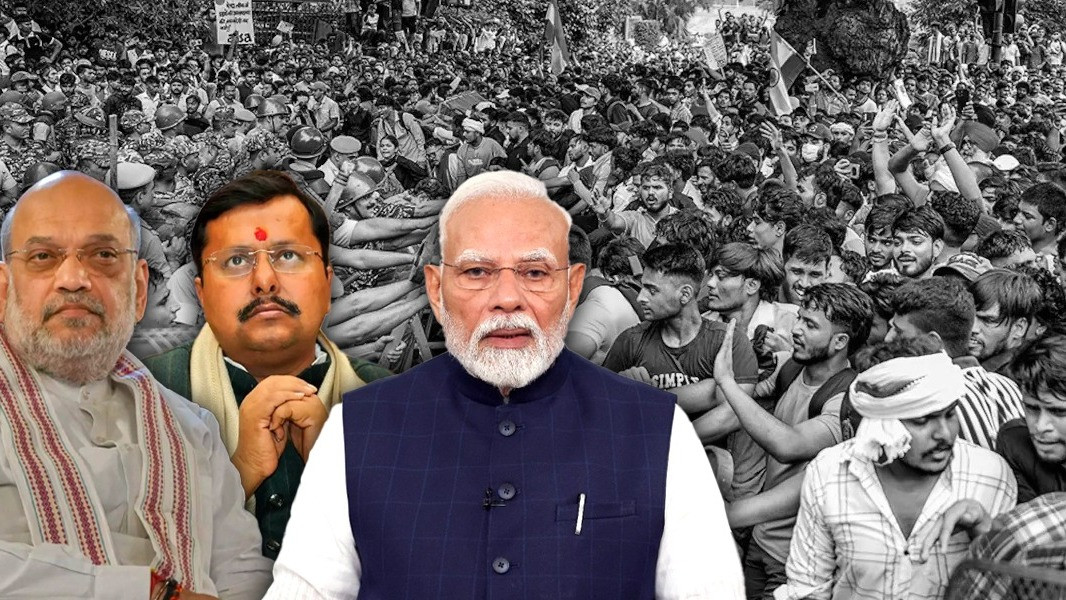
Without a shift in priorities, the BJP's organisational upheaval will remain a symptom, not a cure.
In August 2026, the organisational reshuffle within the Bharatiya Janata Party was not merely a game of changing names. The new team led by Nitin Nabin, the replacement of Amit Malviya with Deepak Mhaske, and the return of figures like Smriti Irani and Ram Madhav seem to be the result of significant political pressure. The results of the by-elections in Bankipur and Datia shook the party. The Bankipur seat, considered safe for three decades, went to Prashant Kishor. The vote share plummeted from over 60 percent to around 34 percent. This defeat was not just a loss of a seat; it questioned the machinery long deemed invincible.
The problem of not connecting with the youth, especially Gen Z, is now evident. The Cockroach Janata Party movement was not just a protest against exam leaks or unemployment. It was the anger of a generation demanding employment, educational credibility, and future security. The party's traditional strategy—temples, Hindutva, and cultural symbols—no longer impacts this generation as it once did. Urban and educated youth now want results, not just slogans. The drop in vote share in urban seats in the by-elections indicates this.
Under this pressure, the party hastily revamped its entire organisational structure. The IT cell, which had been the party's digital weapon under Amit Malviya's leadership for 11 years, is now in new hands. Mhaske's arrival indicates that the party acknowledges that the old digital language is not reaching Gen Z. Discussions about AI-driven reels, fake narratives, and conveying the right message to the youth are now happening openly. However, changing the structure does not necessarily solve the problem. The issue lies at the root—the growing gap between the aspirations of the youth and the party's priorities.
The question of religion and hate-based politics has become even more complex. For a long time, Hindutva mobilisation remained electoral capital for the party. But now, that very capital seems to be turning into a Bhasmasura in some places. When the language of hate becomes too loud and visible, it can create tension not just for the opposition but within the party itself. The government of Yogi Adityanath in Uttar Pradesh has been perceived as tough and strict towards Muslims. Many political observers have suggested that the leadership in Delhi—Modi and Amit Shah—might be uncomfortable with this extremism. The reason is clear.
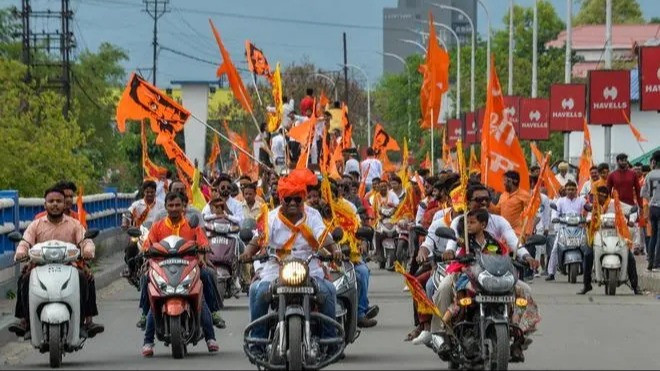
To run power at the national level, alliances, social balance, and international image also matter. When a state's model begins to display too much hatred, it can affect the Centre's strategy.
This is not a new conflict. There have always been two streams within the party—one that emphasises organisational and electoral pragmatism, and the other that focuses on ideological purity and hard Hindutva. Yogi's style seems to strengthen the latter stream.
But after the Bankipur by-election results and youth protests, there must be growing thought in Delhi that if hate politics goes out of control, it can prove detrimental to the party itself. For a significant portion of Gen Z, employment and future security have become more important than religion. If the party continues to rely solely on hatred against one community, it could lose a large portion of young voters.
Now, let's talk about the numbers. India's position in scientific and technological progress is mixed. In the Global Innovation Index 2025, India is ranked 38th. This is a slight improvement from 66th in 2019, but China has entered the top 10, and countries like the USA and South Korea are far ahead. India's expenditure on Research and Development is still around 0.8 to 0.9 percent of GDP (0.84 percent in 2023-24, estimated 0.90 percent in 2025-26). In comparison, China spends 2.4-2.6 percent, the USA over 3 percent, and South Korea 4-5 percent. This gap is not just a number; it indicates where we stand in scientific approach and innovation.
In the field of AI, India's position appears relatively better. In Stanford's Global AI Vibrancy Index, India has reached the third position (after the USA and China). In the IPCIDE report, India ranks fourth in AI performance. India has the world's second-largest AI talent pool. In GenAI patent filing, it ranks fifth. However, the lack of capital and compute infrastructure remains a significant hurdle. In private AI investment, the USA is billions of dollars ahead. If the foundation of scientific thinking and education is not strong, the talent pool also migrates. In the Stanford report, India was at the top in net outflow of AI research talent. This means talent is being created but not staying in the country.
This is where the opportunity cost of religious extremism comes into play. When political energy and resources are spent on hate mobilisation, communal polarisation, and battles over cultural symbols, attention is diverted from scientific education, research funding, and infrastructure. This is not a direct cause-and-effect claim, but the numbers clearly indicate that priorities have been in the wrong direction. Look at the condition of schools for Gen Alpha (born around 2010 onwards). According to UDISE+ 2025-26,
out of approximately 14.6 lakh schools across the country, drinking water is available in 99.5 percent of schools, electricity in 95 percent, and girls' toilets in 98.5 percent. But computers are in only 69.9 percent of schools, and internet in 67.4 percent. About one lakh schools are still run by a single teacher.
According to ASER 2024,
76 percent of Class 3 students cannot read a Class 2 text. More than half of Class 5 students cannot perform simple division. These are the same children who will step into the world of AI, quantum computing, and climate science tomorrow.
It is a matter of shame that while young people across the country are on the streets over issues of exam paper leaks, unemployment, and the quality of education, schools still lack fans, clean water, adequate classrooms, desks, chairs, and trained teachers. In many states, teacher vacancies are in the thousands. States like Karnataka are just beginning the recruitment process for 15,000 teachers. Basic facilities are improving, but learning outcomes and digital access remain weak.
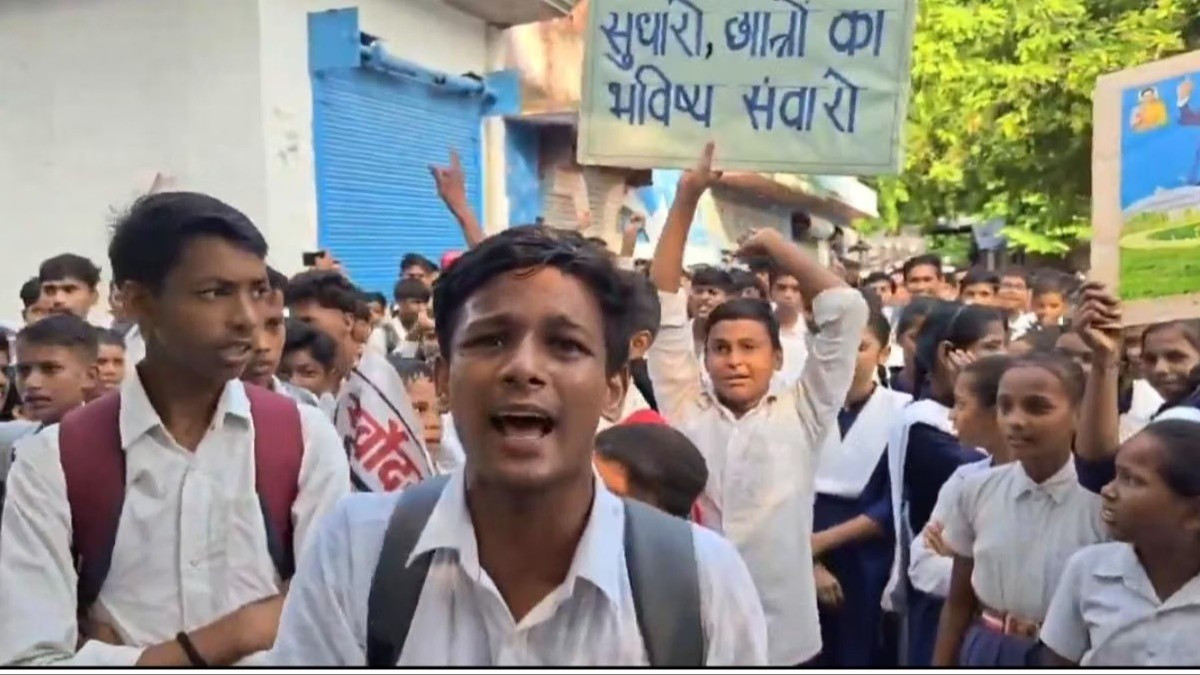
Gen Alpha is sitting in these schools dreaming of the future, while political debates revolve around temples, mosques, and hate.
The path to resolution is not easy. On one hand, there is the popularity and electoral strength of leaders like Yogi, and on the other, the compulsion to maintain balance at the national level. The power in Delhi can no longer fully control this Bhasmasura, as it is an extension of the politics that has been promoted for a long time. If there is a solution, it is to slightly step back from ideological rigidity and focus on development, employment, scientific education, and institutional credibility. But this is not an easy decision. The ideological faction within the party will see it as a weakness.
Organisational changes, the new face of the IT cell, and the defeat in the by-elections in Bihar and Madhya Pradesh are all different chapters of the same story. The party is trying to fix its machinery. But the real question is whether it will understand the language of the youth? Will it be able to keep hate politics under control, or will it consume the party itself?
The 2027 Uttar Pradesh elections will provide a significant answer to this question. For now, the BJP has become cautious, but the path from caution to reform is still long. When Bhasmasura awakens in politics, it is not easy to stop it. And when children sit in schools without fans, without water, and without adequate teachers, claims of leading the AI race seem hollow. The future belongs to those children who are in classrooms today. If priorities do not change, organisational upheavals will remain mere symptoms, not a cure.
Iqbal Ahmad
इक़बाल अहमद पेशे से फ्रीलांस लेखक हैं और यू ट्यूब पर पाँच साल से सक्रिय पत्रकारिता कर रहे हैं। द क्रेडिबल हिस्ट्री पर इनका साप्ताहिक शो ‘द मुस्लिम एंगल’ दर्शकों में लोकप्रिय है।