Nvidia AI chips allegedly smuggled to China through Malaysia
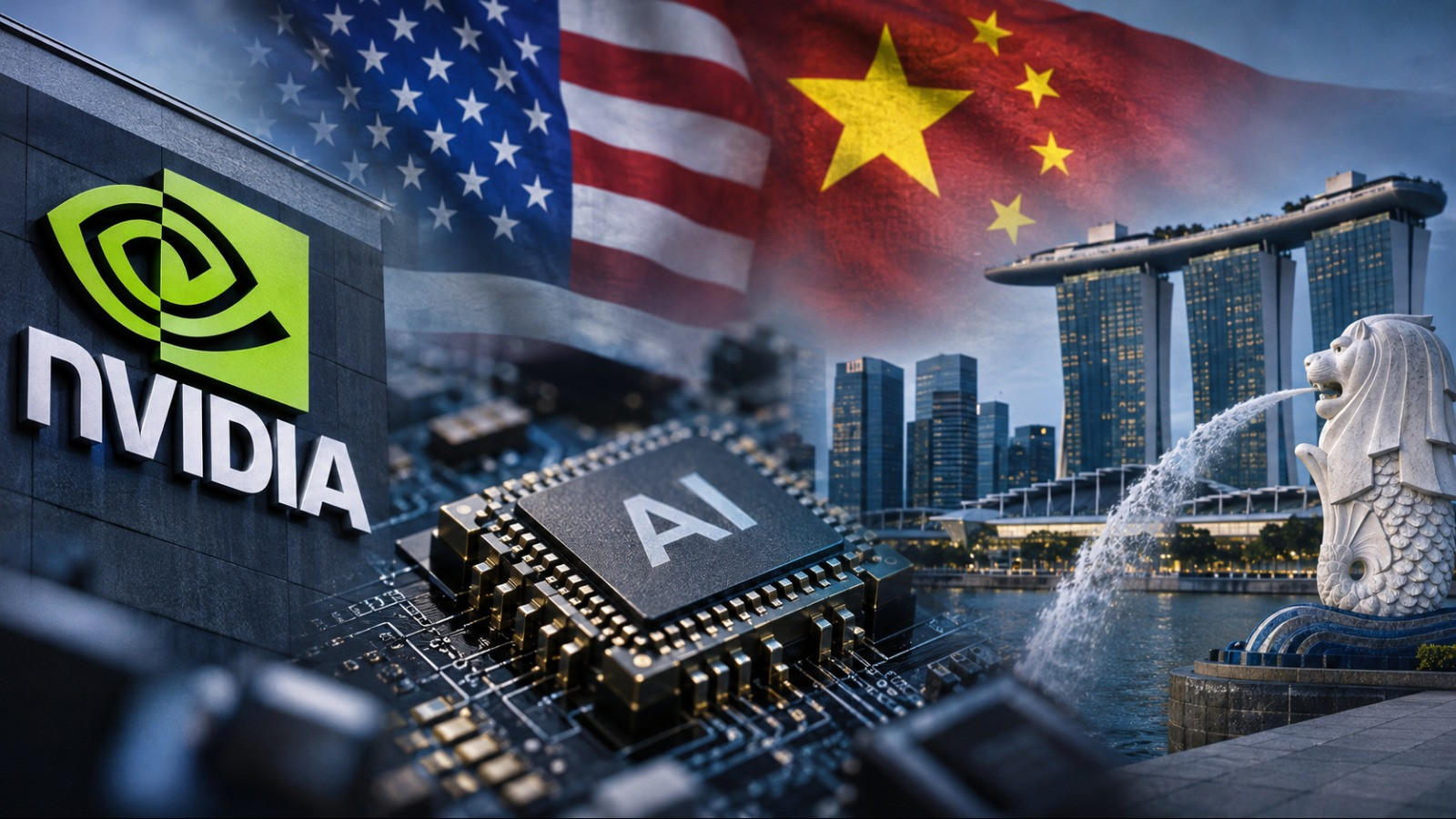
The Wall Street Journal reports that servers were shipped via Malaysia. Lee is facing a fraud trial in Singapore.
The global race in artificial intelligence (AI) is no longer just a contest among technology companies. It has also become an important front in the strategic rivalry between the US and China. At the centre of this competition are Nvidia’s advanced semiconductors, which are used to build large AI models and run massive data centres. The US has imposed strict restrictions on exports of these chips to limit China’s military and technological capabilities. But a case that has emerged in Singapore shows how serious allegations can be about companies and business networks in Southeast Asia being used to circumvent these restrictions.

According to an investigation by The Wall Street Journal (WSJ), 52-year-old Chinese businessman Li Ming, who is out on bail in a criminal fraud case in Singapore, is accused of playing a key role in a network involved in sending servers containing advanced Nvidia chips to China. The report said the business arrangement involved Singapore-based Megaspeed, servers set up in Malaysia, and Chinese companies such as Century Longteng and Century Litong . Li Ming is accused of actively participating in running the network and making major business decisions. However, Megaspeed has not been charged in the Singapore fraud case against him.
According to Singapore prosecutors, Li Ming told US suppliers, while purchasing servers, that they would be used by his Singapore-based company, Luxuriate Your Life. The servers were allegedly sent to Malaysia first, instead of being brought to Singapore, and then transported to a third location. The arrangement was allegedly intended to conceal the identity of the actual buyer and end user. Action in the case began in February 2025, and Li is currently out on bail. Criminal proceedings against him are ongoing. It is important to note that the prosecution’s allegations have yet to be proved in court.
The WSJ report also links the network to Alice Huang and her husband, Kang Wei. According to Chinese corporate records, the couple established a cloud-computing company called Century Longteng in 2021. A social media post in January 2023 described Li Ming as Century Longteng’s chief strategy officer at a Shanghai-based AI equipment company. According to the report, Li, Huang and Kang developed an arrangement with business partners in Southeast Asia to provide advanced computing capacity to Chinese customers.
Megaspeed’s role in the network is said to have been particularly important. According to the report, the group acquired the Singapore unit of a Chinese video game company and renamed it Megaspeed. Alice Huang was appointed its director, while Li Ming was involved in the company’s operations and major business decisions. Megaspeed told Nvidia that Alibaba was its main customer. In November 2023, the company joined Nvidia’s Cloud Partner Programme, giving it priority in buying Nvidia’s new processors.
Megaspeed subsequently set up servers in Malaysia and provided computing capacity to Alibaba. But according to the WSJ report, some servers were also delivered to Shanghai-based Century Litong. By 2024, Century Longteng was among Century Litong’s major shareholders. Thus, while Nvidia was told that the servers would be used for authorised business customers, some hardware was allegedly delivered to Chinese businesses that could be subject to US export controls.
US investigative agencies began investigating Megaspeed’s activities in 2024. According to a joint statement issued by the US Departments of Commerce and Justice on November 16, 2026, the Department of Commerce identified suspicious activity while monitoring potential semiconductor diversion and began an investigation in 2024. In May 2025, it sought documents from Nvidia on chip sales made directly or indirectly to Megaspeed. In June 2025, Nvidia put Megaspeed on its ‘no sale’ list. That month, the Department of Commerce’s Bureau of Industry and Security and Singapore law enforcement officials visited the company’s premises to investigate the actual use of the equipment and questioned then CEO Alice Huang. The US Department of Justice subsequently took over the criminal investigation.
Alice Huang left Megaspeed in August 2025. Singapore officials questioned her and held her passport for some time. However, Singapore Prime Minister Lawrence Wong clarified on November 24 that, after an investigation, the authorities found no basis for further prosecution against her and released her. Singapore’s Ministry of Home Affairs had also clarified that the Government had not investigated alleged links between Alice Huang and China’s intelligence agency. This clarification is important because some media reports had alleged possible links between her and China’s intelligence agency. Such allegations cannot be treated as established facts. <Cite refs=
But the investigation linked to Megaspeed did not end there. Following action by US officials, the company’s Singapore operations almost ground to a halt. According to the WSJ, people from the same business network then launched a new venture called Novagate Cloud. The company’s website says it is an Nvidia cloud partner and operates at least two data centres equipped with the company’s Blackwell processors. Based on shipment records, the WSJ claimed that a Malaysian unit of Novagate received at least $300 million worth of hardware containing Nvidia chips in the first five months of 2026. The report also mentioned corporate links between Novagate and companies related to Century Litong. However, these links alone do not establish that the new venture also violated export controls.
The events of November 23, 2026, are significant in this case. The US Department of Commerce added Megaspeed and six other companies linked to it to its Entity List. The companies are based in Singapore, Malaysia and Thailand. Inclusion on the list means that special authorisation is required to export US products and technology, and the likelihood of obtaining such authorisation may also be limited. The US took this step because of the risk that advanced computing technology could reach unauthorised users.
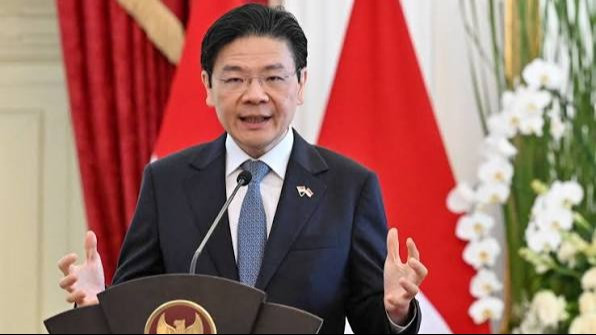
Singapore has also clarified its position on the action. Prime Minister Lawrence Wong said on November 24 that his country was developing arrangements to share information and cooperate with the US in enforcing chip export controls. He said Singapore does not implement US export restrictions as its own laws, but does not want its territory to become a route for evading those restrictions either. Singapore’s investigation is focused on whether Megaspeed violated its domestic laws. According to Wong, the authorities need to verify documents relating to the chips’ end users and the transactions. He also acknowledged that some information requested from the US had not been fully provided.
The case also presents a major practical challenge for US policy towards China. The US wants to prevent Nvidia’s most advanced AI chips from reaching China, but the modern semiconductor business depends on supply chains spread across several countries. A chip may be designed and manufactured in the US, a server assembled in another country, a data centre set up in a third, and its customer based elsewhere. In such circumstances, restricting direct exports alone is not enough. Monitoring the end user, actual ownership and control, payments, and the physical movement of equipment also becomes necessary.
Southeast Asia is particularly important in this context. Singapore is a major financial and trade hub, while Malaysia is expanding its role in data centres and the semiconductor supply chain. The challenge for these countries is to attract global technology investment and trade while also preventing networks from using their business infrastructure to re-export restricted technology.
Ultimately, the Megaspeed case is not merely about a business network or an investigation into a few companies. It is a test of the new global order, in which AI technology is becoming the basis of economic growth, national security and geopolitical power. The challenge for the US is to make its export controls effective; for China, it is to develop alternatives to access to advanced chips; and for countries such as Singapore and Malaysia, it is to prevent activities that circumvent restrictions from being conducted on their soil while remaining global trade hubs. The final outcome of the investigation is yet to emerge, but the case shows that global competition in AI is now being fought not only in laboratories and data centres, but also in the fields of international trade, law and diplomacy.