
A letter to the brave women of Iran
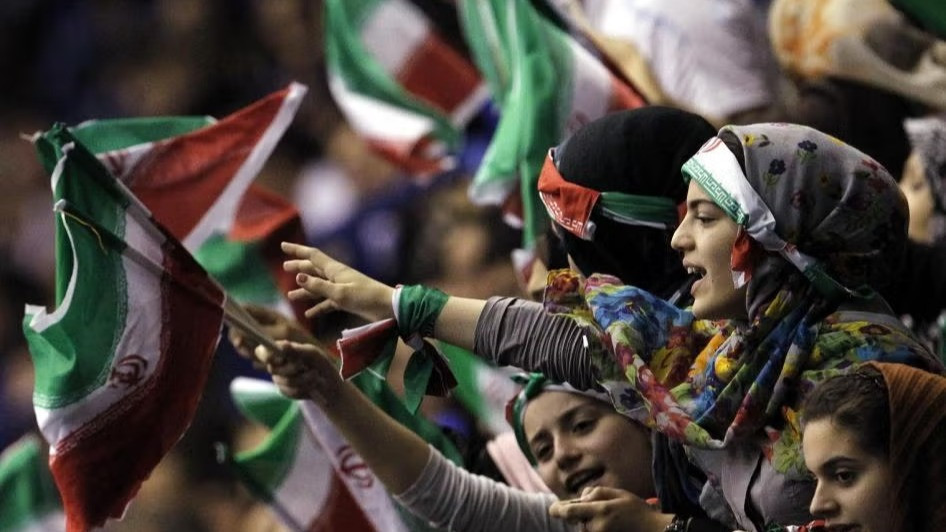
Professor Dr. Sujata from Delhi University writes a letter to the women of Iran.
Dear Iranian Sisters,
This time is filled with immense difficulty and uncertainty for you. Reactions worldwide to your circumstances are divided. Some voices express sympathy towards you, while others, alarmingly, celebrate violence in the name of freedom. The killing of innocent school children in Minab and the violation of a nation's sovereignty are not acts of liberation; they are acts of terror. No argument, however compelling, can justify bombing a country. We, the women of India, neither accept nor support such acts.
Our perspective is shaped by history. A long, painful, and instructive history. India endured over two centuries of colonial rule, leaving deep scars on our collective consciousness. That experience taught us a fundamental truth: freedom cannot be granted by an occupying power. It cannot be a gift from those who come with weapons, claiming liberation while exploiting resources, destroying institutions, and imposing their will. When an invader speaks the language of liberation, it often reveals motives far more hidden than justice or humanity.
In 2026, it is hard to believe that the world still accepts the idea that powerful nations intervene militarily to "liberate" the citizens of another country. History has given us enough lessons to recognize the contradictions between rhetoric and reality. Words like democracy, human rights, and liberation hold moral significance, but they can also be wielded as weapons. Often, geopolitical ambitions, economic interests, and strategic calculations hide behind these words, with little connection to the interests of ordinary people.
When you raised your voice against the injustices within your own system, many of us expressed solidarity with you. Your courage, patience, and determination inspired women across borders. And today, as your nation faces its own crisis, our solidarity remains steadfast. We stand with you, not out of blind allegiance, but due to a shared understanding of dignity, autonomy, and the right to self-determination.
Every woman, no matter where she is born, has the right to protect her home, her land, and her people.
For a long time, I found solace and inspiration in Virginia Woolf's famous statement in her book Three Guineas, "As a woman, I have no country." It was a thought that transcended boundaries, challenging the structures that often marginalize women. But today, amidst changing global circumstances, this statement seems more complex than ever. As the world becomes unstable and tumultuous, it has forced many of us to reconsider the truths we once held as indisputable.
The history of India's partition reminds us that the relationship between women and the nation is neither abstract nor optional. During that tragedy, millions were displaced, and women bore the deepest wounds. They were uprooted, forced across borders, and faced violence that sought to mark them as symbols of communal identity. In the rehabilitation campaigns run by India and Pakistan, many women were sent to their so-called "national homes," sometimes against their will. In those moments, it became exceedingly clear that a woman indeed has a country, one that can claim her, define her identity, and even decide her fate.
As an Indian woman, I cannot ignore the truth of what it means to be connected to a nation! A nation that is imperfect, constantly evolving, sometimes failing to do justice to its own people, yet remains profoundly significant.
Our history is filled with stories of women who did not separate themselves from the concept of the nation but struggled to make it better. During the freedom struggle against British rule, thousands of women stepped forward and paid a heavy personal price. In Mahatma Gandhi's satyagraha movements alone, around 30,000 women participated and endured imprisonment. Their courage was not merely symbolic; it was active, vibrant, and transformative.
When the Quit India Movement began in 1942 and the colonial government arrested most of the prominent leaders, women like Aruna Asaf Ali kept the spirit of resistance alive. Operating underground, she and her many companions ensured that the movement did not end despite repression. These are not isolated incidents but part of a broader historical tradition where women played a central role in defending the dignity and autonomy of their country.
Inspired by this historical consciousness, we are reaching out to you today. Perhaps we understand more deeply than others what it means to struggle against both external and internal oppression. Therefore, in this difficult hour, we wholeheartedly express our moral support for you. We are listening to your voices, even when others try to silence them or attempt to define your struggle through their ideological lens.
There are some deeply concerning aspects of how the language of feminism is being used in today's global discourse. In some places, feminism is being used to justify or downplay the realities of war. It is being presented as the necessary cost of liberating a nation's women. This raises some profound and uncomfortable questions. Can the destruction of homes, the dance of death, and the erosion of national sovereignty ever align with the ideals of women's freedom? Can violence truly be a legitimate path to liberation?
We must ask ourselves, what is freedom really? What does freedom look like for women, and who has the right to define it? Is it a universal framework determined by powerful nations, or is it a concept born from the experiences, cultures, and aspirations of women themselves? These are not merely rhetorical questions; they are central to contemporary feminist discourse.
Today, there is a growing tendency to associate freedom with certain limited standards, often rooted in Western ideologies. The right to wear certain types of clothing, the ability to participate in electoral processes, or the adoption of certain social norms are presented as the ultimate proof of liberation. Undoubtedly, these rights are important but they do not encompass the entire definition of freedom because these rights can coexist with systems that are deeply unjust or oppressive.
If freedom means the ability to choose, then we must also examine the structures within which these choices are made. Is participating in systems that perpetuate inequality, exploitation, or injustice freedom? Is it freedom if the available choices are themselves limited by external pressures, economic dependencies, or cultural erasure? And the most important question is, should any external power have the right to impose its definition of freedom on others?
These questions become particularly relevant when we consider the role of powerful countries like the United States, which claim to shape the global discourse on democracy and women's rights. These countries present themselves as champions of freedom, but their actions do not always align with their statements. This contradiction cannot be ignored but demands serious scrutiny. The recent history of Afghanistan is a clear example. Decades of intervention, occupation, and eventual withdrawal did not provide lasting freedom or stability to its people, especially women. Instead, it left behind a fractured society where the promises of liberation proved hollow.
For those of us labeled as the Global South and often referred to as the "Orient" in Western thought, the challenge is not only to resist external domination. The challenge is also to critically review the intellectual frameworks through which our struggles are understood and presented. If feminism is truly a global movement, it cannot be confined to a single culture or ideology. It must encompass diverse voices, histories, and experiences.
Now is the time to liberate feminism itself from a colonial mindset. This does not mean rejecting the fundamental principles of equality and justice on which feminism is based, but rather expanding its scope and making it more inclusive. It means acknowledging that women in different parts of the world may define freedom in various ways, and these definitions are equally valid.
Dear Sisters, your struggle is complex, multifaceted, and has its own historical and social contexts. It cannot be confined to a simple binary, nor should it be used for geopolitical agendas. In these challenging times, know that there are women around the world who see you, respect your autonomy, and stand with you. Not as saviours or protectors, but as allies.
With solidarity and hope,
We are with you.
----------------------------------
This article was published in English in The Wire, and is being published here with the author's permission.
Cover photo courtesy of Human Rights Watch
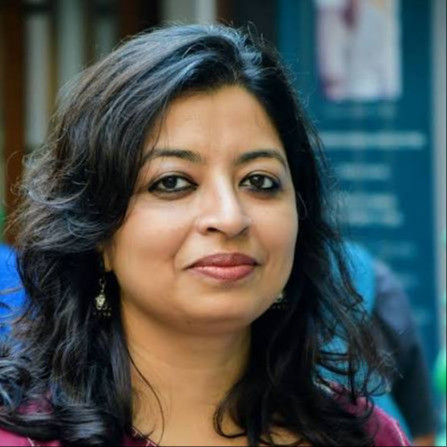
Sujata
डॉ सुजाता दिल्ली विश्वविद्यालय में प्रोफेसर, लेखिका और स्तंभकार हैं। समाज, स्त्री-अधिकार, लैंगिक समानता, साहित्य और समकालीन सामाजिक-राजनीतिक मुद्दों पर उनकी लेखनी अपनी बेबाक दृष्टि और संवेदनशील विश्लेषण के लिए जानी जाती है