
Gen-Z Connect Yatra puts Yogi government on edge
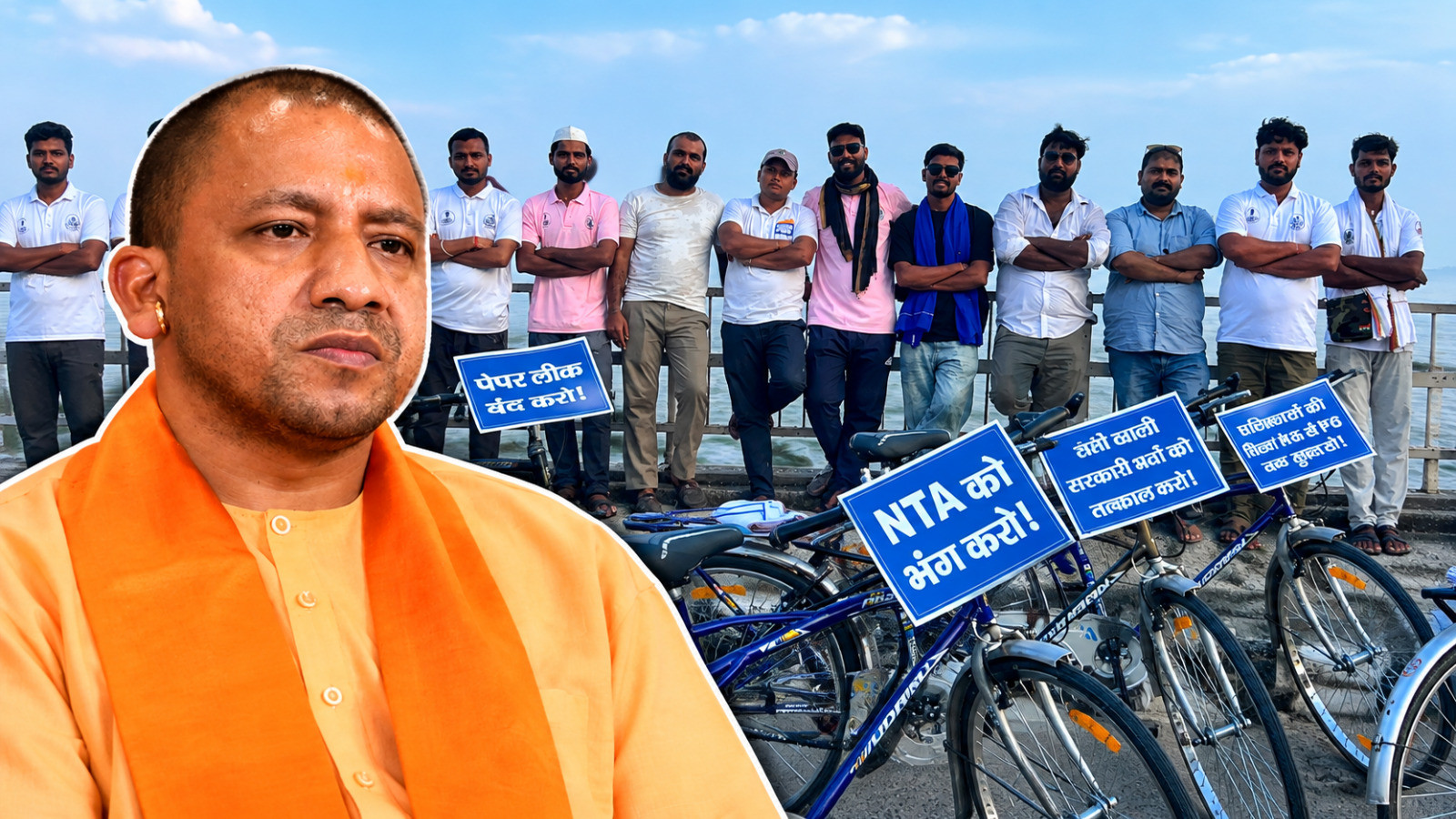
The 40-day journey has left the Yogi government feeling the pressure.
In Uttar Pradesh, for the past several months, students and youth have been conducting bicycle rallies in various districts of Purvanchal and Awadh, uniting students and young people by going from city to city and village to village on the issues of education and employment. This rally has been named Gen Z Connect Yatra . The Yogi government of the state has become tense due to this 40-day long journey.
In response to the police baton charge during the protest at Jantar Mantar in Delhi, large demonstrations took place in Lucknow and several cities in Uttar Pradesh, naturally led by these youth. It was then decided to unite students and youth from across the state under an umbrella front.
It is noteworthy that on August 9 (Quit India Movement Day), a founding conference was held in Lucknow, followed by a press conference on August 10 announcing the Justice Front, reiterating the commitment to struggle for the rights to education, employment, and health, and releasing a 10-demand charter.
To raise movements on these issues in the state, a 40-day bicycle rally was announced, named Gen Z Connect Yatra .
This bicycle rally, which began with questions about education, employment, transparency in recruitment, and the arbitrary actions of private schools, is engaging in dialogue with students, youth, and the general public while passing through different parts of Uttar Pradesh. The aim of the journey is not to limit these questions to youth preparing for colleges and competitive exams but to bring them to the villages, towns, and the general public of the state.
This journey began on August 20 from Chauri-Chaura, paying tribute to the martyrs of the country in Chief Minister Yogi Adityanath's stronghold of Gorakhpur. The Gen Z Connect Yatra has now completed 33 days.
The journey is entering Awadh from Pratapgarh (Kunda), engaging with students and youth in 12 districts of Purvanchal, including major educational centers like Gorakhpur, Banaras, and Allahabad University.
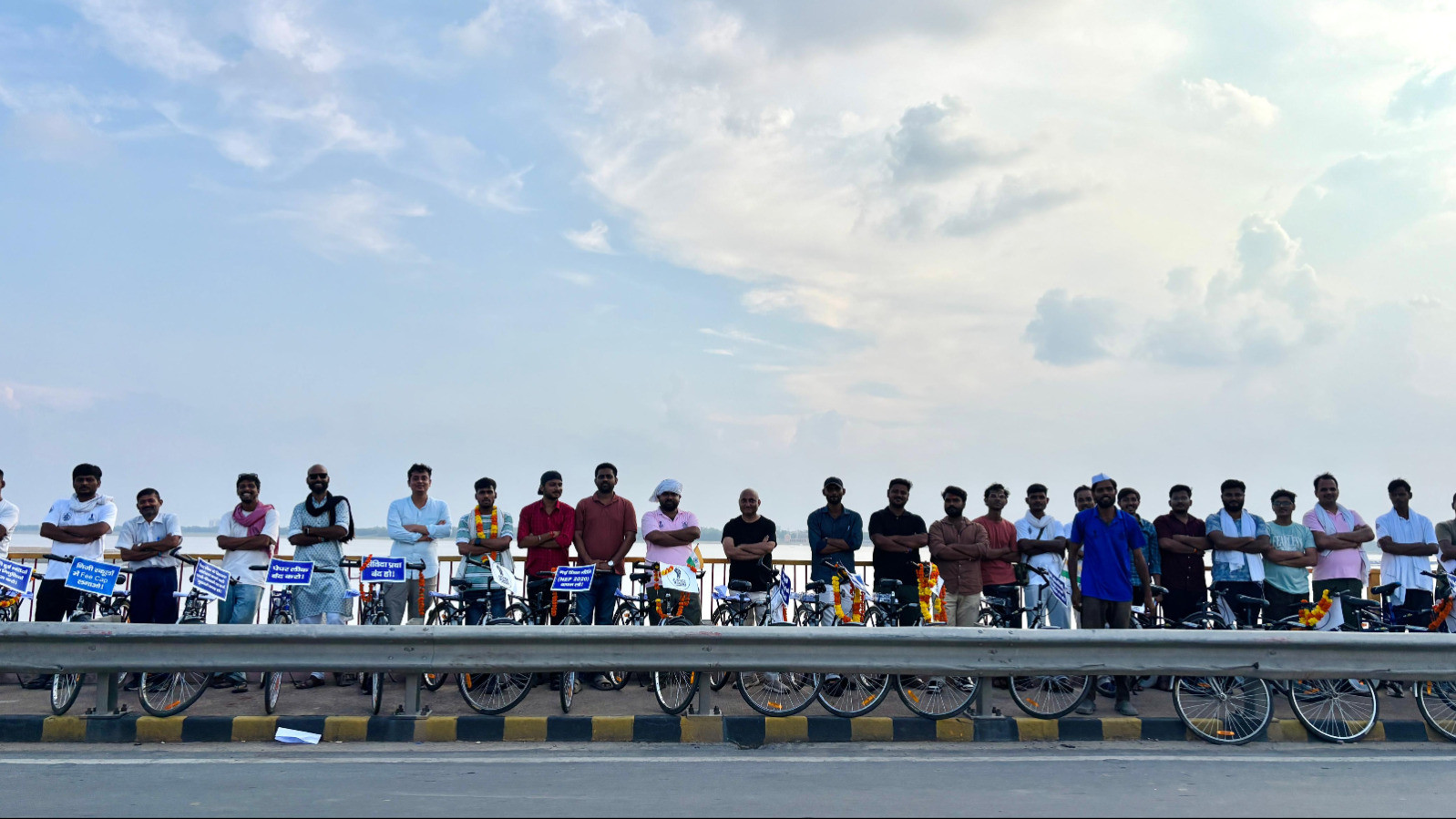
Gorakhpur
On the occasion of the journey's start, local women blessed the traveling youth by applying tilak. The women stated that this fight is not just for the youth but also for the future of their children. They expressed their desire for everyone to take this struggle to its destination and return only after achieving their demands. This was an emotional and significant moment for the welcome. The cyclists were not just travelers; they carried the hopes of families whose children have been waiting for better opportunities in education and employment for years.
Banaras
In Banaras, former national president of NSUI and UP Congress eastern in-charge Varun Chaudhary also welcomed the journey at the court. He participated in the rally by cycling alongside the youth, showing support for their struggles and issues. The journey then reached Mahatma Gandhi Kashi Vidyapeeth around 2 PM.
Here, the administration, alarmed by the voices of the youth, closed the university gates. People associated with ABVP threatened to abuse the youth participating in the rally. Ink was thrown at the traveling group, preventing the proposed public meeting at the Vidyapeeth. Throughout this incident, the role of the police also came under scrutiny.
However, shortly after, the journey was stopped at Bhelupur police station from proceeding to BHU, citing that permission to go there was not granted, leading the students to park their bicycles on the road and sit in protest. After 30-40 minutes of struggle, the police ultimately had to grant permission to proceed.
Upon reaching the gate of BHU, students and professors welcomed the Gen Z Connect Yatra with slogans. The voices and slogans of the youth echoed at Lanka Gate.
A "Gen-Z Public Meeting" was organized at the gate, where Neha Bora, a leader of the Jantar Mantar movement, participated and stated that Banaras is becoming a witness to Gen Z unity as both the Gen-Z Connect Yatra and Gen-Z Rising Campaign are demonstrating commitment to solidarity on youth issues.
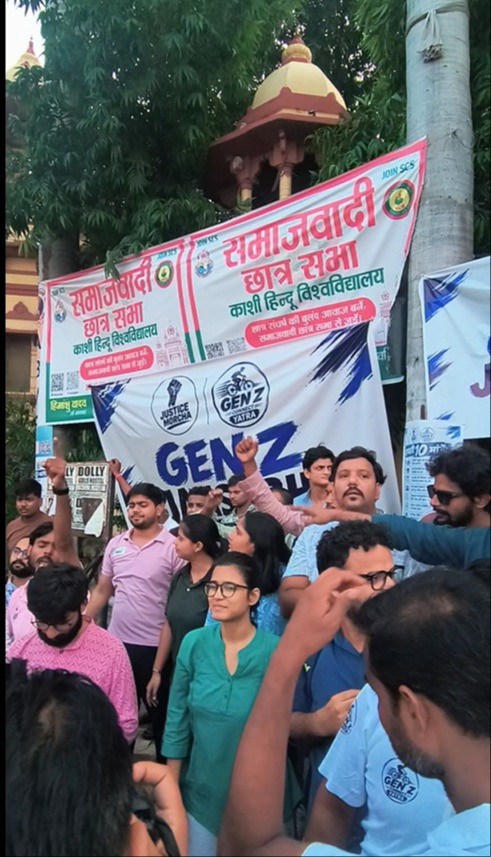
During this time, Rajat Singh, a youth from Deoria, also addressed the Gen Z public meeting. An FIR had been filed against Rajat Singh for highlighting the deplorable condition of justice schools. The youth sent a clear message that FIRs, police pressure, and administrative restrictions cannot silence their voices.
Allahabad
On its 32nd day, the journey started from the Union Hall of Allahabad University, passing through Kareli Ganj, University Chauraha, Science Faculty, Manmohan Park, Kachahari, Beli Road, Mamford Ganj, and Teliar Ganj, reaching Fafamau. Students in Allahabad welcomed this journey warmly. The bicycle rally transformed into a foot march in Allahabad. Members of the journey also interacted with students at various coaching institutes. Discussions were held on issues such as improving the education system, transparency in the recruitment process, timely examinations, and employment opportunities. Students were invited to participate in the concluding program of the journey on October 2 in Lucknow.
During the journey, members also joined the TGT-PGT recruitment movement at the Stone Church, meeting with candidates who have been on an indefinite hunger strike since September 5, supporting their demands and encouraging their movement by singing revolutionary songs and chanting slogans throughout the night. TGT-PGT candidates are demanding the implementation of the old rules for recruitment.
Millions of youth in Uttar Pradesh have been waiting for competitive exams and recruitments for years. Teacher recruitment has been stalled for a long time, UPSSSC recruitments have been pending for years, and issues like paper leaks and irregularities in exams such as UPSI, Lekhpal, RO-ARO, and Assistant Professor have raised serious questions about the future of the youth. Meanwhile, the neglect of government schools and the arbitrary actions of private schools are closing the doors to quality education for common and poor students. The centralization of education and examinations by NTA and other institutions is becoming a centralization of corruption. The entire implementation of NEP is an attempt to lead government universities towards privatization in the name of self-financing and self-reliance.
Bicycles as a Medium of Dialogue with Students
The most significant feature of the journey is its direct public dialogue. By reaching villages and towns on bicycles, conversations are being held with the youth. Local youth, students, and citizens are being met along the way to understand the problems related to education, employment, and the recruitment system. Students and youth encountered along the route are being urged to walk a few steps with the journey and advance this campaign in their areas.
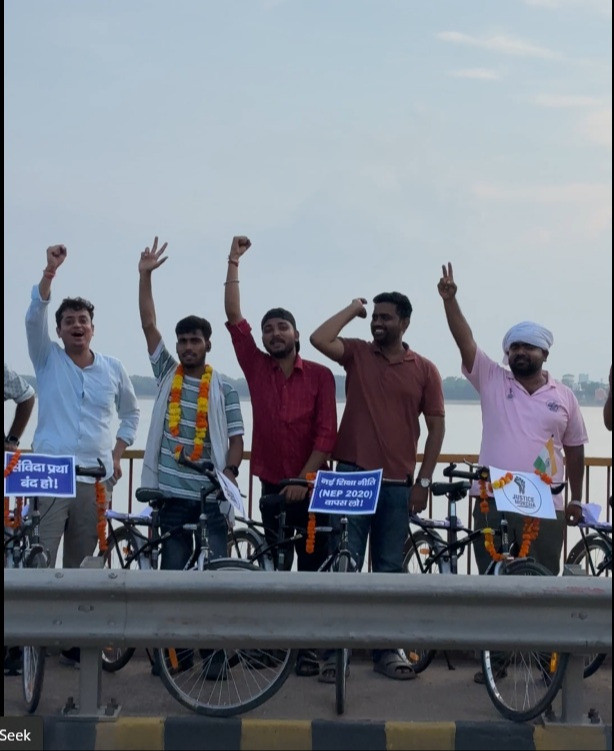
During the Gen-Z Connect Yatra, street meetings are being continuously organized. In these meetings, issues related to education and employment are being raised among the youth, and information about the 10-point demands is being provided. The working style of the journey is that it stops at a crossroads or market, distributes pamphlets to local people, informs them about its campaign, and then the travelers address the local people and youth at a street corner.
Exposing Schools, Hospitals, and Roads
The journey began with questions of education and employment, but the issues raised during interactions with the public along the way have broadened its scope. At the request of the public, the condition of government schools, hospitals, roads, and other public facilities is also being recorded during the journey.
“For us, the crisis of education and employment is not a singular issue; it is a question of fixing the system that is responsible for providing citizens with better schools, hospitals, roads, and employment.”
During the journey, a continuous social audit of the condition of government schools, hospitals, and public facilities is being conducted in various villages and towns. Where serious deficiencies in the system are observed, they are being recorded and presented to the public through social media. The aim of raising these issues is to turn the everyday problems of the public into public questions and to hold the government and administration accountable.
Perhaps the most beautiful, pleasant, and encouraging aspect of this journey is public cooperation. When we come down after giving a speech, people standing there come to meet us, praising our efforts; some say, “You are doing extremely important work,” while others pray that your fight and struggle reach their destination.
In these 32 days, Gen Z Connect Yatra has felt that the questions of education and employment are not just the concerns of youth preparing for competitive exams. They are the questions of every family that hopes for a better future for their children.
This journey, which started from Chauri-Chaura, is still ongoing. The road is long, and the destination is to gather in Lucknow on October 2 with the questions of the youth. This journey continues to raise the voice for education, employment, and justice from Chauri-Chaura to Kakori (Lucknow).
With the preparation for a major movement on education and employment, there is a commitment to make education, employment, and health the issues of this election, and the plan is to continue the campaign/journeys in 75 districts.
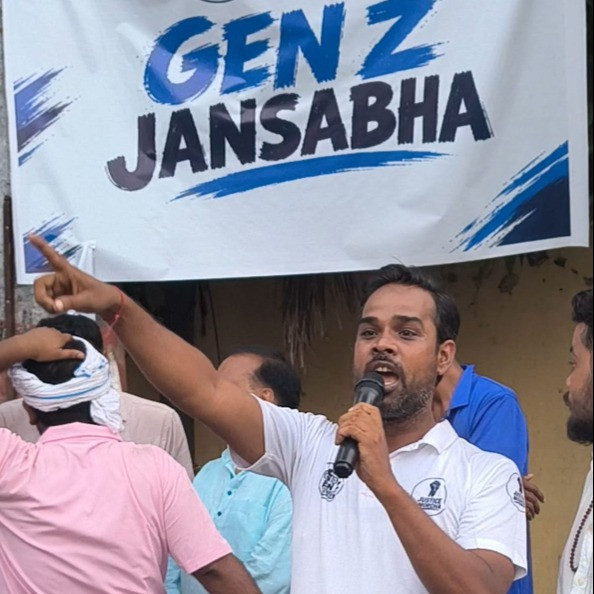
Dr. Sudhanshu Vajpayee
डॉ सुधांशु बाजपेई, जस्टिस मोर्चा के सदस्य हैं और Gen-Z Connect Yatra के माध्यम से शिक्षा, रोजगार और स्वास्थ्य के मुद्दे पर अभियान चला रहे हैं।