
Can India forge consensus among BRICS nations amid US-Iran war?

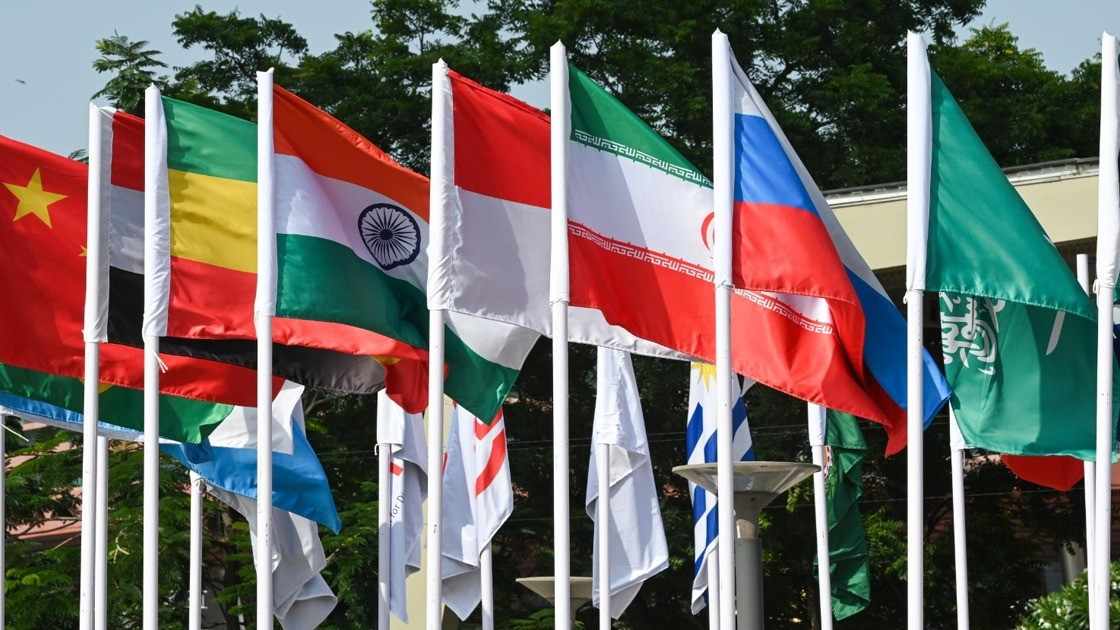
Achieving consensus at the BRICS summit will be a significant diplomatic test for India.
The 18th BRICS Summit is taking place this weekend in New Delhi at a time when the US–Iran war and the deepening crisis in West Asia have posed new challenges to the world. As the chair of BRICS, India's biggest challenge will be to forge a common consensus by balancing the conflicting interests of member countries.
The official theme of the summit, which will be held on September 12 and 13 at Bharat Mandapam, is “Building Resilience, Innovation, Cooperation, and Sustainability”. BRICS began in 2006 as an informal group of BRIC comprising Brazil, Russia, India, and China. Today, the organization includes 11 major emerging and developing economies in the world. The expanded BRICS also includes Iran, UAE, and Saudi Arabia. The positions and interests of these countries regarding the current conflict in West Asia are different. Meanwhile, India has significant strategic and economic ties with the US and Gulf countries. This makes New Delhi's role extremely crucial.
Harsh V. Pant, Vice President of Studies and Foreign Policy at the Observer Research Foundation (ORF), stated,
Reaching a consensus at the BRICS summit will be a major diplomatic test for India.
Pant told the PTI news agency,
There is increasing fragmentation in the world, and major powers are at odds. Wars are ongoing from the Middle East to Europe, and there seems to be no end in sight. Developing countries have become more insecure due to the weakening of the multilateral system and ongoing wars in various parts of the world. At such a time, India must play a central role in seeking practical solutions for the Global South through BRICS.
The term 'Global South' is primarily used for developing, underdeveloped, and emerging countries in Africa, Latin America, Asia, and Oceania. The impact of the US–Iran war is not limited to diplomacy. It is likely to have serious implications for energy security, maritime trade, and the international oil market. The Strait of Hormuz has emerged as the most sensitive center of this crisis.
According to experts,
Prolonged disruptions in this critical maritime route could cause significant damage to energy-importing economies like India. West Asia is extremely important for India due to energy supply, trade relations, and the large Indian community residing there. A prolonged crisis could increase India's import bill, intensify inflationary pressures, and affect the country's economic prospects.
Analysts believe that,
The US–Iran war has also exposed the fundamental contradictions within BRICS. While the organization talks about being an alternative to the Western-dominated global order, the interests of its member countries appear to diverge during real geopolitical crises.
Senior negotiators from the 11 member countries, known as BRICS Sherpas, are working to finalize the New Delhi Declaration. It is reported that the language used regarding the war in West Asia has become a major point of contention in the discussions. With Iran, UAE, and Saudi Arabia present at the summit table, it will not be easy to prepare a shared statement acceptable to all parties.
According to a report by Indian Express ,
Officials from Russia, Brazil, and Egypt, along with India, are trying to reduce differences between Iran and UAE. Indian officials are attempting to persuade representatives of both countries separately to agree on the Delhi Declaration. Iran has already tried to build a common opposition against US military action through BRICS. It has urged the chair, India, to help prepare a unified stance.
Prime Minister Narendra Modi met Iranian President Masoud Pezeshkian during the 26th Shanghai Cooperation Organization (SCO) summit held in Bishkek, Kyrgyzstan, on August 31. This was the first meeting between the two leaders since the start of the US–Iran war.
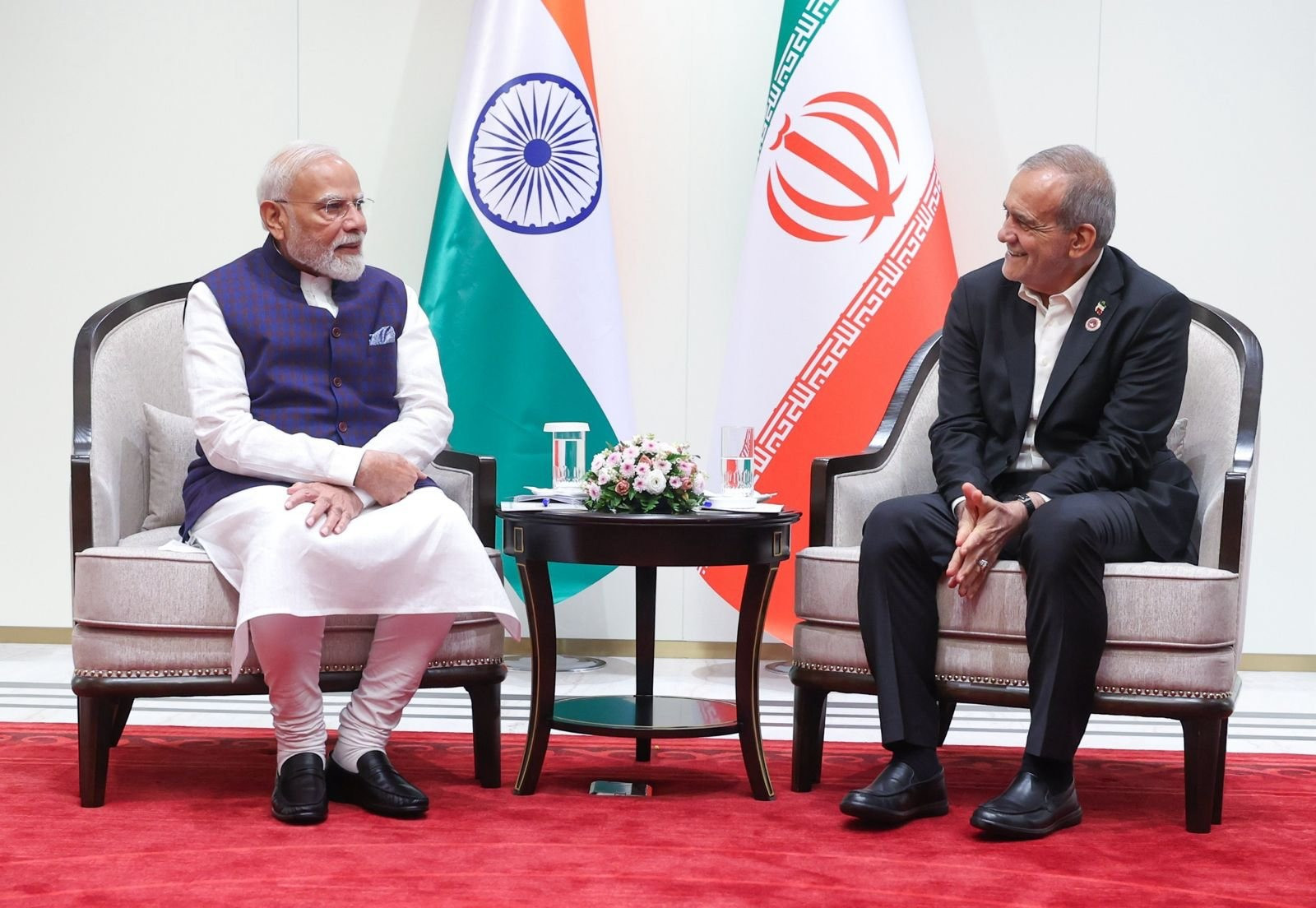
Masoud Pezeshkian appealed to Modi to use India's extensive contacts with various parties to help them return to dialogue and agreements, leaving the path of war and bloodshed.
Since the war began in February, Iran has targeted US military bases located in the Gulf region, including those in the UAE. This has further escalated tensions between Iran and UAE. Author and commentator Dr. Brahma Chellaney wrote in Project Syndicate that,
Over the past 20 years, BRICS has made remarkable progress, but its extraordinary internal diversity also poses a significant challenge. The organization includes countries with liberal democratic and authoritarian regimes, major energy exporters and importers, manufacturing powers, and commodity-based economies. It also includes geopolitical rivals like India–China, Iran–Saudi Arabia, and Egypt–Ethiopia. There are also differences in the perspectives of the founding countries. India and Brazil advocate for reforms in existing international institutions, while China and Russia want to challenge the US-led world order more openly.
Chellaney stated,
If there were expectations that BRICS would evolve into a monetary union, single market, or unified political alliance, those have not materialized. However, BRICS has exceeded expectations in terms of providing a platform for emerging economies, strengthening South-South cooperation, and pushing for reforms in international institutions.
Russian President Vladimir Putin has confirmed his participation. Chinese President Xi Jinping is also expected to attend the summit. Iranian President Masoud Pezeshkian, South African President Cyril Ramaphosa, and Indonesian President Prabowo Subianto are also expected to participate in the summit.
Brazilian President Luiz Inácio Lula da Silva will not attend this meeting. A senior representative from the Brazilian government will be sent in his place.
Prime Minister Modi's bilateral meetings with Putin and Pashinyan are scheduled for Friday. The meeting between Modi and Xi Jinping is likely to take place on Saturday, the first day of the summit.
The summit will begin on September 12 with a closed-door meeting of the leaders of the BRICS member countries. The theme will be “Strengthening Inclusive Global Governance and Multilateralism.” The first day's events will conclude with a dinner hosted by Prime Minister Modi. On September 13, leaders of BRICS member countries, partner nations, and special invitees will participate in an open session. The theme of this session will be—“Resilience, Innovation, Cooperation, and Sustainability: Shaping the Future of Inclusive Global Development.”
The biggest question ahead of the summit is whether India can forge consensus among the divided members over the US–Iran war and advance BRICS as a platform that presents concrete solutions for the Global South.