
Workers to launch protest in Delhi from December 1, seek better pay, pensions and permanent jobs

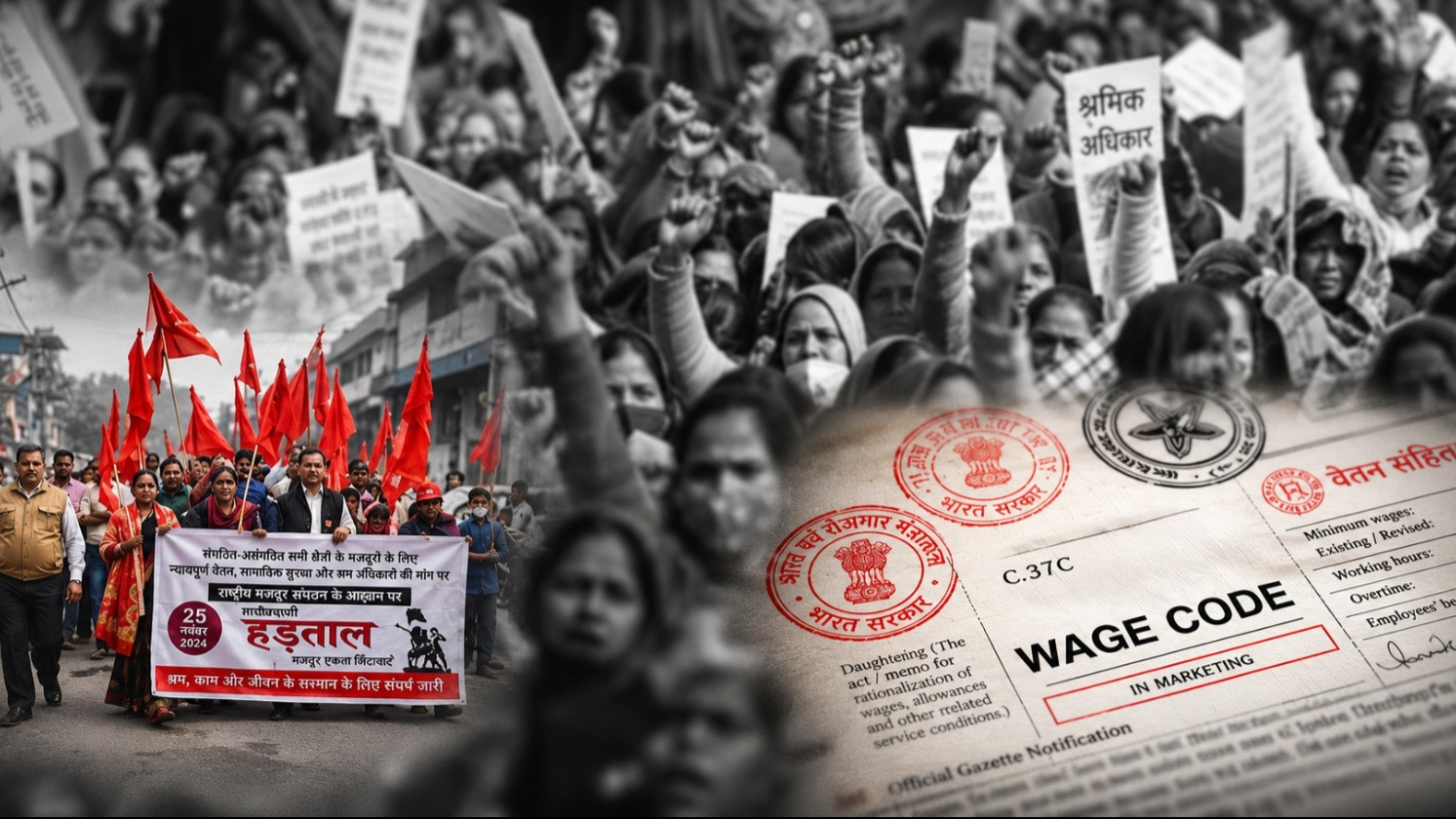
Workers say it has been made difficult for them to organise and press for their demands.
Amid rising inflation across the country, workers are preparing to take to the streets demanding better wages and secure employment. They want to earn enough to provide properly for themselves and their families. Women workers associated with ASHA, Anganwadi and Mid-Day Meal services will also join the movement. Workers from different parts of the country are expected to reach Delhi in the coming days to take part in the protest.
The Centre of Indian Trade Unions, or CITU, has called for a protest and a Parliament march in the capital from December 1 to 3. The organisation says more than one lakh workers may take part. Their main demands include higher wages, job security, pensions and the withdrawal of the four labour codes.

According to information available so far, workers will gather at Ramlila Maidan at 10 am on December 1. They then plan to march towards Parliament. The BSNL Employees Union has also backed the programme and urged its units to participate. However, the route of the march and other arrangements will depend on the administration’s permission.
The main demand of the protest is a monthly wage of at least ₹42,000 for all workers. CITU is also demanding a minimum monthly income of the same amount for families dependent on self-employment. The organisation wants a monthly pension of ₹21,000 for everyone. It is also demanding that vacant posts in the government and public sector be filled and contract workers be regularised.
Behind these demands is the question of everyday expenses. A worker’s earnings do not go only towards food. The same money also pays for house rent, children’s fees, medicines, electricity and travel. The difficulties increase if a person loses their job or someone in the family falls ill. That is why, when fixing a minimum wage, it is important to consider how much income a family needs to live with dignity.
Women workers’ participation will be an important part of the movement. According to the organisers, around 50,000 women workers associated with ASHA, Anganwadi and Mid-Day Meal services are expected to lead the march. CITU is demanding that they be given legal recognition as workers and the benefits that come with it. These women work in villages and settlements, providing healthcare, nutrition and childcare. They ask why, despite carrying out such essential responsibilities, they do not receive adequate wages and financial security.
The four laws relating to labour legislation are also a major reason for the protest. The government had announced that they would come into effect on November 21, 2025. They consolidate 29 central labour laws into four codes, covering matters such as wages, industrial relations, social security and workplace safety. The government says this will simplify old and complex rules and benefit both workers and industry.
CITU does not agree with this claim. The organisation alleges that the new system has weakened job security and made it difficult for workers to organise around their demands. It says restrictions on union activities and strikes have increased. In response, the Labour Ministry says strikes are not prohibited, but a 14-day notice is required. According to the government, this gives time to resolve disputes through discussions.
The government says the new labour codes expand the scope of timely wages, appointment letters and social security. It also says that employees hired for a fixed term will receive the same benefits as permanent employees. But the usefulness of any rule for workers depends on how it is implemented. They need to be assured that wages will be paid on time, assistance will be available in case of an accident and they will not lose their jobs for raising a complaint.
The appointment of contract workers for work of a permanent nature is also a cause of discontent. The demand for regularisation and equal pay for equal work is linked to this. This means that people doing the same work should not face a major difference in wages and benefits solely because of the manner in which they were hired. Resolving the issue will require discussions that take into account the nature of the work, the number of employees and existing service conditions.
The position on permission for the protest also needs to be clarified. According to a November 27 report by Newslaundry, the organisers had sought permission to gather at Ramlila Maidan and march towards Parliament, but approval had not been granted by then. The administration should provide information about permission, the route and traffic arrangements in good time so that protesters and the public can plan accordingly.
The government now needs to listen seriously to the demands of workers’ organisations and hold discussions to find a solution. The organisers, too, must ensure a peaceful protest and the necessary facilities for participants. The importance of this movement will not be determined merely by the size of the crowd. The real question is whether it leads to concrete progress on wages, job security and pensions.
Workers make a major contribution to building the country and running its economy. They should have safe working conditions, adequate wages and a dignified life. Improving the economic condition of working people is also necessary to narrow the gap between the rich and the poor. The success of any labour policy will be judged by how much it improves the lives of workers and their families.