
Proposal for 850 seats is murder of democracy, Rahul Gandhi attacks delimitation Bill

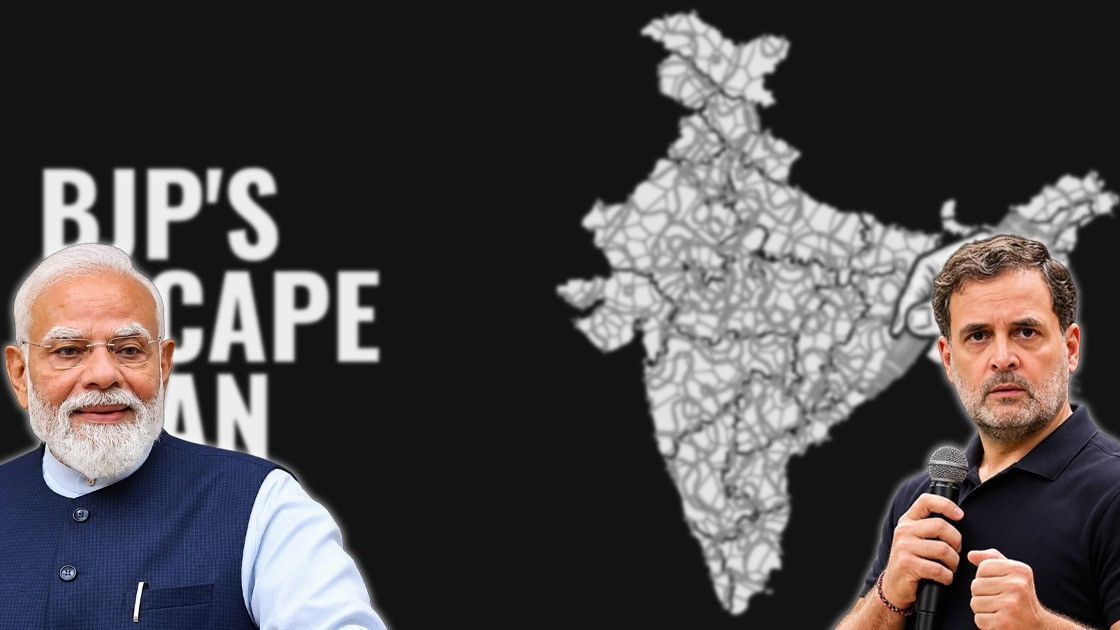
If the Bill is passed, the country will move towards dictatorship and democracy will be murdered.
The political confrontation over the delimitation bill to be introduced at a special sitting of Parliament has intensified. Leader of the Opposition in the Lok Sabha Rahul Gandhi has said that if the bill is passed, the country will move towards dictatorship and democracy will be murdered. The government says it is a step towards implementing women’s reservation and increasing representation, while the Opposition is questioning the fairness of the electoral process.
On Saturday, November 28, Rahul Gandhi alleged that the proposed delimitation would give the BJP an opportunity to redraw the country’s electoral map in its favour. He described the proposal to raise the maximum strength of the Lok Sabha to 850 as “the murder of Indian democracy”. He said that if constituency boundaries were drawn to suit the ruling party, it could gain a political advantage even before votes were cast.
The Union government on Friday approved the 132nd Constitutional Amendment and new bills related to delimitation. Under the proposal, the number of existing Lok Sabha seats in each State and Union Territory will be increased by 50 per cent. It provides for raising the maximum constitutional strength of the Lok Sabha to 850 and of State Assemblies to 650. The Lok Sabha is scheduled to meet on November 30 and the Rajya Sabha on December 2.
Raising the Lok Sabha’s maximum strength to 850 does not mean that it will have exactly 850 members after delimitation. Likewise, increasing the number of seats in States and redrawing constituency boundaries within them are two different matters. Rahul Gandhi’s main objection is to the process of drawing boundaries. He says that even if States’ share is protected, electoral equations within them can be changed. According to him, even after seats are increased, the government will not listen to the concerns of ordinary people, nor will this bring any real increase in women’s reservation, because the government’s only intention is to gain complete control over Parliament.
In simple terms, delimitation means drawing or redrawing the boundaries of constituencies. Which seat voters in an area are assigned to can affect the electoral contest. For instance, dividing voters from a community across several constituencies or concentrating them in a few can alter its political strength. However, not every change is biased. The real question is what rules and data will be used to draw the boundaries, and on what basis public hearings will be held. A look at the figures from Assam and other States will make it clear that the Union government has weakened regional parties through this process.
Rahul Gandhi alleged that Prime Minister Narendra Modi, Home Minister Amit Shah and Chief Election Commissioner Gyanesh Kumar were being given a free hand to redraw the country’s electoral map. Citing delimitation in Assam and Jammu and Kashmir, he claimed that the process could weaken the influence of certain communities and Opposition leaders. He has called for a delimitation commission with participation from both the ruling party and the Opposition. These concerns should be examined in light of the commission’s composition, its independence and its decision-making process.
On the other hand, the government says the initiative is a step towards increasing women’s political participation. Home Minister Amit Shah has appealed to all parties to support it, saying it will pave the way for implementing one-third reservation for women in the Lok Sabha and State Assemblies. Prime Minister Narendra Modi has also reiterated his commitment to fulfilling the promise made to women. The government is emphasising increased women’s representation, while the Congress is questioning how it will be implemented.
The Congress wants women’s reservation to be delinked from the condition of increasing the number of seats. Rahul Gandhi has called for reservation to be implemented within the existing 543-seat structure and for sub-reservation for women from the Other Backward Classes. However, the 2023 law linked the implementation of women’s reservation to delimitation after the publication of figures from a new Census. Therefore, the relevant constitutional provisions will have to be amended to implement it immediately.
Another point of contention is the data on which delimitation will be based. The new plan proposes using the 2011 Census to draw constituency boundaries. It says that the States’ share of seats will be protected until the relevant figures from the first Census conducted after 2051 are published. Congress president Mallikarjun Kharge has expressed concern that this could push aside the question of representation based on the current population of Scheduled Castes (SCs) and Scheduled Tribes (STs).
Rahul Gandhi has also appealed to regional parties not to limit their focus to the number of seats in their own State. His argument is that protecting a State’s overall share does not guarantee fair delimitation within it. Both the balance of representation between States and the fairness of constituencies within each State are important. Solving one problem does not automatically resolve the other.
Meanwhile, indications of support for the bill from Tamil Nadu’s DMK and the Sharad Pawar faction of the Nationalist Congress Party (NCP) have posed a new challenge for the Opposition. The stance of these INDIA bloc parties shows that the Opposition also has differing priorities on delimitation. For some parties, protecting their State’s share is the main issue, while the Congress wants a wider debate on the entire delimitation process.
In the coming days, the government should clarify the State-wise seat calculations, the appointment of the commission, the criteria for delimitation and the process for hearing public objections. The Opposition, too, will have to put forward concrete examples and practical alternatives alongside its concerns. An increase in the number of MPs does not in itself amount to the murder of democracy, but biased delimitation can undermine electoral fairness. The real test will be how equal political opportunities are ensured for every voter and community while increasing women’s representation.