
US lawmaker questions proposed law against Christians in India

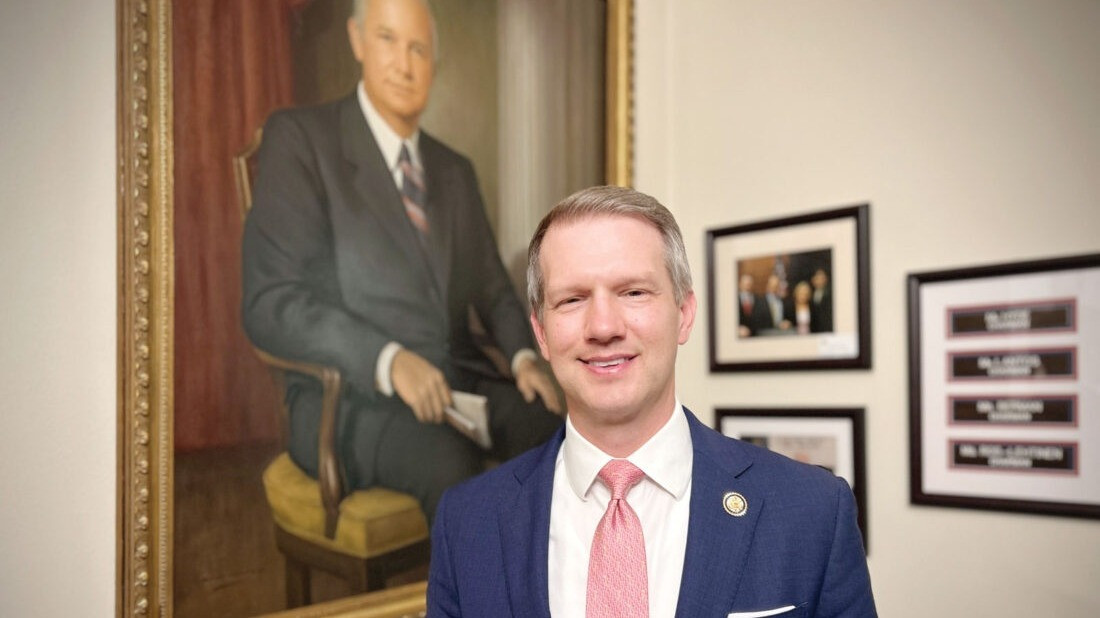
US Congressman Riley Moore expresses concern over proposed amendments to India's FCRA.
US Congressman Riley Moore has expressed concern over the proposed amendments to India's Foreign Contribution Regulation Act (FCRA). He warned that these changes could become a major issue in India-US relations. The American lawmaker stated on Tuesday that the proposed amendments to the FCRA would allow the Indian government to take control of churches and religious charity organizations, calling it a "direct attack on Christians."
Republican Congressman Moore from West Virginia said in a post on X, "The history of Christians in India dates back to when St. Thomas the Apostle arrived on the Malabar Coast just decades after the resurrection of Lord Jesus Christ. Despite this long Christian history, the Indian Parliament is considering amendments to the Foreign Contribution Regulation Act (FCRA) that would allow the government to take control of churches and religious charity organizations." Moore, who was elected to the US Congress for the first time, said,
"This is a direct attack on Christians. If this bill progresses in its current form, it will be a major concern in our bilateral relations with India."
The Foreign Contribution (Regulation) Amendment Bill, 2026 proposes to give the government the authority to create a "Designated Authority." If an organization's FCRA registration is canceled, it surrenders its registration, or its registration expires due to non-renewal, this authority will be able to manage the foreign contributions received by the organization and the assets created from them. The bill also states that if such an asset is a place of worship, the authority must ensure that its religious character is maintained. The proposed law also includes a provision to reduce the maximum penalty for violating the act from five years of imprisonment to one year.
The bill also proposes setting a minimum usage limit for foreign contributions for FCRA registration renewal. Organizations that have received or used less than ₹10 lakh in foreign contributions during the last two financial years may no longer be eligible for renewal. Other proposed provisions include strict restrictions on transferring foreign contributions to other organizations, stringent timelines for receiving and using funds from abroad, and detailed requirements for public disclosure of information related to projects, activities, websites, and social media accounts.
According to the Ministry of Home Affairs, between 2019 and 2022, a total of ₹55,741 crore in foreign contributions was received by 13,520 organizations. According to the FCRA portal, as of 15 July 2026, 14,449 FCRA certificates were active, while 22,498 certificates had been canceled, and 15,212 were considered expired. Opposition parties, non-governmental organizations (NGOs), and several civil society groups argue that these amendments will give the central government extensive control over organizations dependent on foreign funding.
Churches and religious organizations have particularly expressed concern that schools, hospitals, welfare institutions, and other properties built with foreign donations over decades could come under government control if their FCRA registration is terminated or canceled.
These concerns have been particularly prominent in Kerala, where many Christian organizations run large educational and health institutions and have historically relied on foreign contributions. However, the government has defended the proposed amendments, stating that their purpose is to increase transparency in the use of foreign funds, strengthen the monitoring system, and ensure greater accountability.
Newslaundry reports that over 300 incidents of violence against the Christian community have been reported in the country this year. Uttar Pradesh has seen the highest number of attacks on the Christian community. These figures are cited from the 'Christian Under Attack' report. The report was prepared by independent journalist Alishan Jafri, senior journalist Prashant Tandon, Meenakshi Singh from Unity of Compassion, Laiq Ahmed Khan from United Against Hate, and Nadeem Khan.
According to the report,
attacks against Christians in North India have increased rapidly over the past nine months. Between January 1, 2021, and September 2021, 66 cases were reported in Uttar Pradesh, 47 in Chhattisgarh, 30 in Jharkhand, and 26 in Madhya Pradesh. In these four states alone, 169 incidents of violence against Christians occurred in the past nine months. Uttar Pradesh recorded the highest number of 66 violent cases against Christians.
According to this report, Christians in places like Shahjahanpur, Rae Bareli, Lucknow, Lakhimpur Kheri, Varanasi, and Azamgarh in UP have been intimidated. When they tried to file FIRs against such individuals, cases were instead registered against them by the administration.