
Is the US looking to exit the Iran conflict?
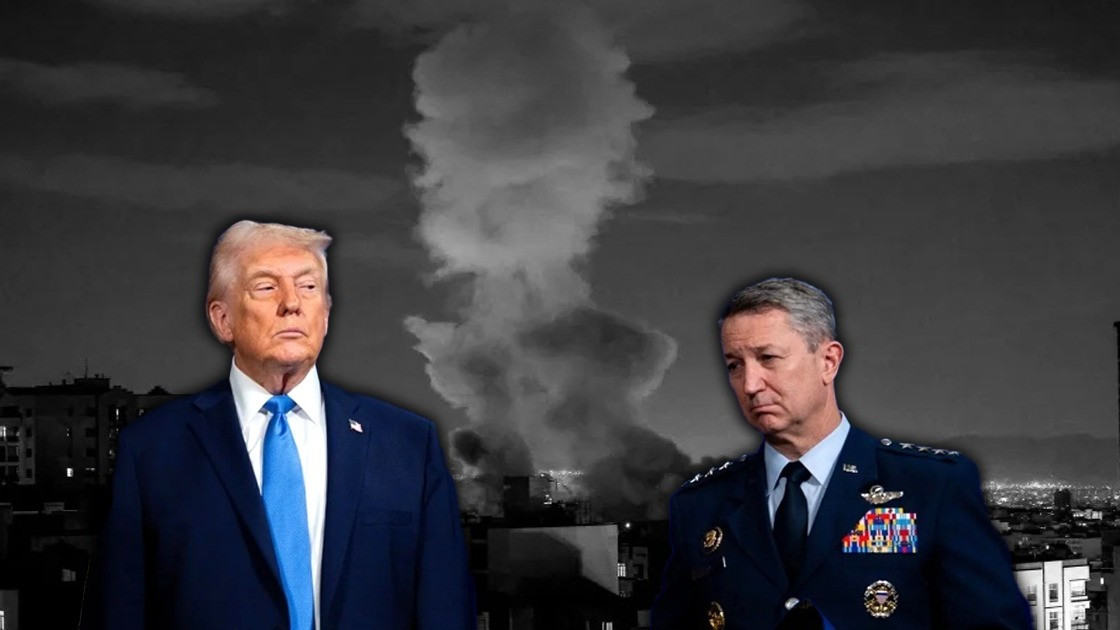
The US is eager to find a way out of the conflict with Iran.
America is now desperately trying to exit the war with Iran. In the battle of stubbornness and saving face, America has lost quite a bit. The stock of weapons is depleting. The air defense system, i.e., missiles, is also not much left with America, so in such a situation, America cannot turn its back and run away in the middle of the fight. Therefore, America is desperately searching for other options and ways to exit the war.
CNN reports that in recent weeks, the Chairman of the Joint Chiefs of Staff, General Dan Caine, has privately made it clear to Trump's other top advisors that America needs to find a way out of the war with Iran. The reason is that the available military options to escalate the conflict could backfire, and achieving President Donald Trump's declared goals solely through airstrikes is difficult.
In clear words, a source told CNN,
Caine is looking for a way out of the war. Caine is not alone in believing that the war has now reached a decisive point. He has also discussed his concerns about military options for escalating the conflict with CIA Director John Ratcliffe, Secretary of State Marco Rubio, and Vice President JD Vance, among other key cabinet officials, and raised the issue of finding a way out of the war.
America's top general has recently held separate discussions with some of Trump's key advisors who share similar views. The aim was to coordinate among various agencies and ensure that everyone moves forward with the same understanding before meetings with the President. The purpose of these discussions was to clarify the limitations of the available military options and the associated risks, including those options that would not require deploying American ground troops.
Trump has consistently avoided the idea of sending ground troops to Iran. Instead, he has indicated that he believes Iran can be forced to compromise on his terms through aerial bombardment. However, Caine and some other Trump cabinet officials privately consider this impossible. Instead, they are trying to prepare other options that are within the President's set limits.
The war has been ongoing for about six months. It began with the claim that Iran's military capabilities had been significantly destroyed. The main declared goal of the President in the war has been to prevent Tehran from acquiring nuclear weapons. In such a scenario, it is crucial that Trump's most senior general is privately saying that there is no easy military solution to end the war.
When CNN sought a response to this report, Caine's spokesperson Joseph Holstead said,
We do not discuss the Chairman's confidential conversations with the President, the Secretary of Defense, or other senior leaders. Nor do we comment on these conversations being presented in an agenda-driven manner by anonymous sources who were not part of these discussions.
The war has now reached a point where many of Trump's top national security officials, based on military doctrines, assessments by American intelligence agencies, and common understanding, agree with what Caine told lawmakers in a public hearing last month.
“Air power has its limits.” For these reasons, Caine and other Trump administration officials were cautious about the plan to launch more aggressive new attacks at the end of July. They feared that escalating the conflict could have serious consequences. However, the President initially appeared ready to greenlight the campaign, which he described as a “massive” campaign.
Only some elements of CENTCOM were in favor of this campaign. It also reported that Israel broadly supported the campaign to escalate the conflict.
However, after discussions with Middle Eastern allies, Trump finally decided to back down. According to a senior administrative official, these countries had told Trump that they feared Iran's retaliation, especially potential attacks on their energy infrastructure. The official also said that the President has not completely ruled out the possibility of these attacks in the future.
In recent weeks, Caine has been more vocal about the second and third-order effects of potential American military expansion. CNN had previously reported that he had expressed particular concern about America's dwindling ammunition stockpiles in at least two recent meetings with Trump. But during this time, Caine also reiterated that if Trump approves a campaign to escalate the war, the American military could inflict heavy damage on Iran. This is a delicate balancing act for Caine. Privately, he has been telling people that he wants to restore trust in the position of the country's top general and broadly in the American military, while Trump has been accused of politicizing both.
However, Caine is not alone in this thinking. Many within the administration and outside analysts also agree that the only way to decisively defeat Iran would be a large-scale military campaign involving ground troops. Such a campaign could cost the lives of thousands of American soldiers. The Pentagon plans for every kind of scenario, so such plans exist, but currently, no one in the administration is advocating for such a drastic step.
Therefore, Caine and other officials are continuously trying to ensure that Trump is aware that even relatively less aggressive military steps can produce negative results. The focus is now on finding a path that allows the President to achieve at least a “symbolic” victory, which he can present as an achievement to the American public, while also not closing the door to potential diplomatic success. The first step in this direction could be an agreement to reopen Hormuz.

Satish Verma
सतीश वर्मा पेशे से पत्रकार हैं। हिंदी की मुख्यधारा की पत्रकारिता में इन्हें 20 साल से ज्यादा का अनुभव है।