
Can Trump impose tolls on ships passing through Hormuz?

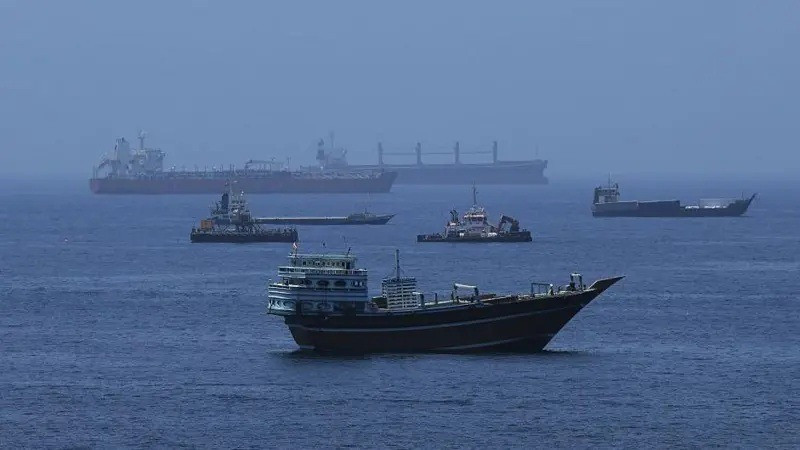
A new controversy arises over the control and security of the Hormuz Strait.
The Strait of Hormuz has long been a major point of tension between the United States and Iran. A new dispute has now arisen between the two countries over the control and security of this crucial maritime route. U.S. President Donald Trump announced that the U.S. is the "guardian" of the Strait of Hormuz and will charge a 20 percent toll in exchange for ensuring the security of this maritime route.
In response, Iran's top military headquarters, Khatam al-Anbiya, stated that it will not allow the U.S. to interfere in the management of the Strait of Hormuz in any way.
Commenting on Trump's statement, Iran's Foreign Minister Abbas Araghchi took a jibe on X, writing, "The U.S. President is absolutely right. Whoever ensures the safe passage of cargo ships through the Strait of Hormuz should be paid for this service." He further stated that Iran has always been and will always remain the guardian of the Strait of Hormuz.
Meanwhile, in response to recent U.S. attacks, Iran has begun targeting American military bases located in Gulf countries.
Reacting to this, Trump told the media at the White House that the U.S. will continue to provide security to Gulf countries, but they will now have to pay in return. He said, "I want us to be paid because we are protecting one of the wealthiest regions in the world. Our money is being spent on this." Trump further stated, "Saudi Arabia, UAE, Qatar, Bahrain, Kuwait, and other countries we are protecting will pay us. We do not need these countries; rather, they need us. We have enough oil, including from Venezuela."
According to Reuters, a spokesperson for the United Nations agency monitoring global maritime traffic, the International Maritime Organization (IMO), said that
there is no legal basis for imposing mandatory fees on ships passing through international maritime routes. The IMO spokesperson stated, "We strongly oppose the imposition of fees for passing through straits used for international maritime navigation."
Shipping industry officials have also expressed concern over this proposal, stating that such a move could violate international law. An official, who did not wish to be named, questioned Trump's announcement, asking, "How will this make the passage of ships more secure, and what is the guarantee?" It is currently unclear how Trump's announcement will be practically implemented.
According to United Nations regulations, any country has rights over territorial waters extending up to 12 nautical miles (approximately 22 kilometers) from its coastline. The narrowest part of the Strait of Hormuz and its shipping lanes fall entirely within the territorial waters of Iran and Oman. Therefore, both countries are considered to have rights over this area. Meanwhile, under Article 38 of the United Nations Convention on the Law of the Sea (UNCLOS), more than 100 international straits, including the Strait of Hormuz, grant all ships the right to "transit passage" without any hindrance.