
Sweden introduces strict jail terms for corrupt politicians

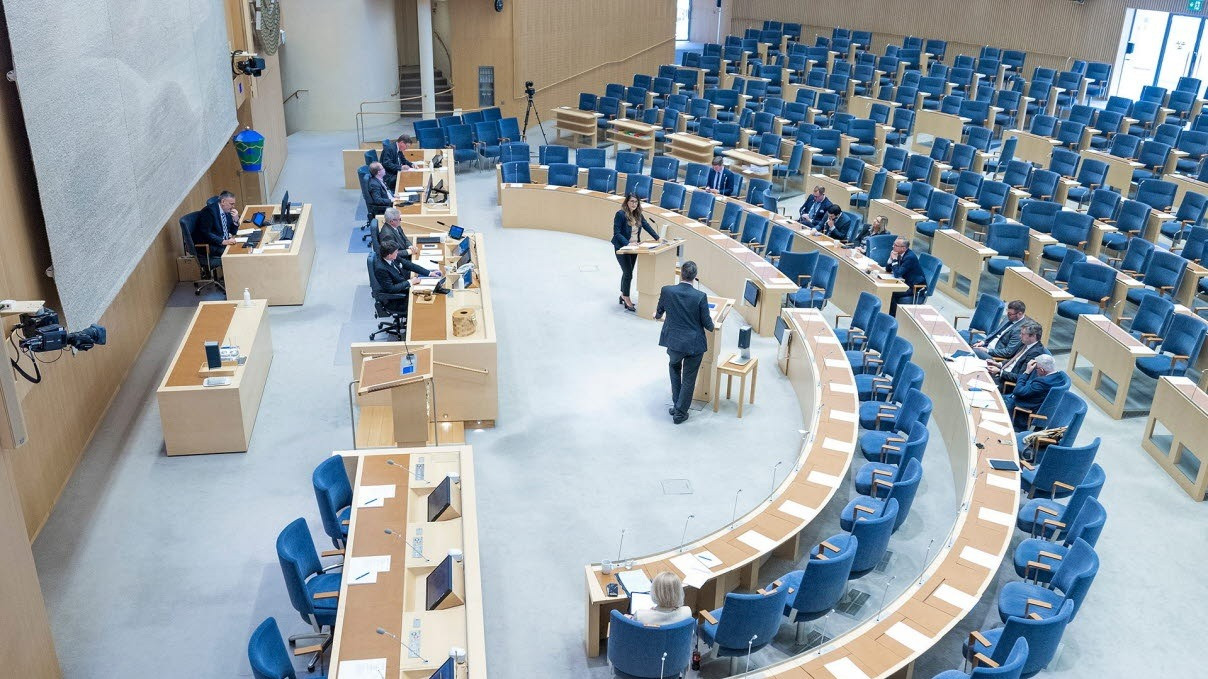
A new criminal law targeting abuse of public office took effect in Sweden on August 1.
Sweden has implemented a new criminal law related to the abuse of public office from August 1. Earlier, on June 15, Sweden's parliament, the Riksdagen, approved the main part of this reform by a vote of 174 to 172. The Social Democrats, Left Party, Centre Party, and Green Party voted against it.
According to The Nordic Times, under this reform, if a person in public service, while holding a public office or performing public duties in any other form, deliberately violates any law or other rule, they can be punished if the intent is to provide undue benefit to themselves or another person or to cause undue harm to someone. This new offence is termed 'Abuse of Public Position'.
It has been included in Section 2 of Chapter 20 of the Swedish Penal Code. In general cases, a guilty verdict can result in a fine or a maximum of two years in prison. In serious cases, the provision is for a minimum of one year and six months and a maximum of six years in prison.
The most significant difference between the new offence and the existing 'Misconduct in Office' is its scope. The existing offence of misconduct in office is related to the exercise of public rights, while the new provision also encompasses other public duties and activities. It can include government and public sector employees as well as elected representatives.
Sweden's parliament, the Riksdagen, described this reform as an expansion of the criminal liability of public officials. Additionally, the minimum sentence for serious misconduct in office has been increased from six months to one year and six months. However, this law is not a return to the old and extensive accountability system for public officials that was gradually phased out in the 1970s. Instead, a new criminal provision has been added to the existing misconduct in office rules, which requires the intent to deliberately commit wrongdoing for the offence.
The Green Party had demanded the complete rejection of the government's bill. In the decisive vote on the new offence, the Social Democrats, Left Party, Centre Party, and Green Party supported the objection against the proposal. Meanwhile, the Sweden Democrats, Moderate Party, Christian Democrats, and Liberals voted in favour of the proposal, while the votes of independent MPs were divided. Critics have warned that the broad scope of this provision could create uncertainty among public sector employees.
The TCO Confederation, the civil service employees' union ST, and Vision had warned before the parliament's decision that the new law could make government administration overly cautious, leading to longer case resolutions and an increase in the number of complaints. However, the majority in parliament approved the reform despite these concerns. Now, the practical test of these new rules in Sweden's legal system can begin. The actual limits of the new accountability law will ultimately be determined by court decisions.
There is unrest among civil service employees and politicians in Sweden regarding this new law. The 'Abuse of Public Position' law is facing criticism from various quarters. There is also discussion among people about the adverse effects after the law's implementation. People believe that as soon as the law became effective, officials and politicians have become more cautious, and the risk in public administration has increased.
People believe that despite the unclear boundaries, this reform strengthens legal certainty. But its true test will be in court when a corrupt or criminal character politician is sentenced. If an official or politician emerges unscathed from the court, then questions will be raised about this law. In such a situation, the courts will have to clarify soon how this law will be implemented.
However, those in favour of the law believe that the criticism is exaggerated. Accountability of politicians and officials holding public office is necessary.