
Subhash Chandra settles Rs 22,000 crore debt for just Rs 6.5 crore

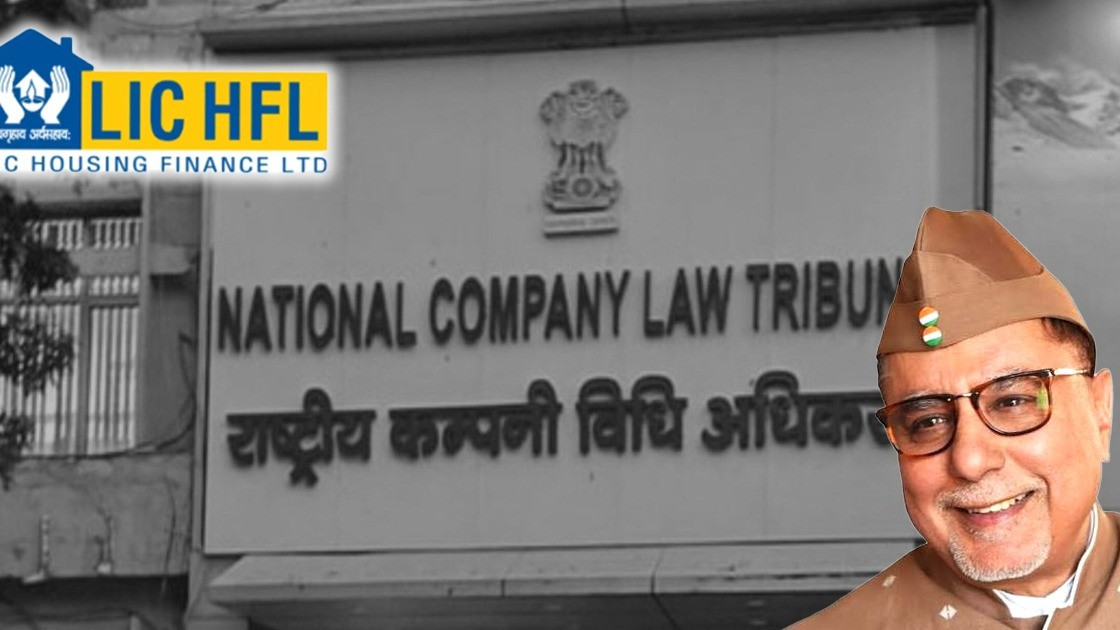
Subhash Chandra's massive Rs 22,000 crore loan settled for a mere Rs 6.5 crore.
A loan of ₹22,000 crore settled for just ₹6.5 crore. Yes, you heard it right. The banks that lent to the bankrupt owner of ZEE TV, Subhash Chandra, have been given a 99.97% haircut by the National Company Law Tribunal (NCLT). Yes, haircut means a reduction in the recovery of the loan amount. The banking system and insolvency laws have some peculiar rules. It seems banks have different rules for industrialists, businessmen, and the super-rich, and different ones for farmers. A 99% haircut for bankrupt industrialists and full recovery from farmers.

Now, the question is, what exactly is this haircut? It does not mean cutting hair. It refers to the reduction in loan recovery facilitated by the government. When a bank gives a 'haircut' to borrowers, it means the bank accepts less than the amount due on a particular loan account. For example, if a borrower owes the bank ₹10,000 and the bank agrees to take back only ₹8,000, it takes a 20% haircut. Banks do this for accounts where full recovery is unlikely. Instead of losing all the money or letting the asset's value depreciate over time, banks sometimes choose to settle for a lesser amount.
Recently, India's insolvency laws have been criticized as banks have taken significant haircuts on some large accounts. Critics argue that with banks accepting haircuts of up to 90-95% on loan amounts, India's insolvency laws are proving ineffective in debt recovery.
According to a report by CNBC, the NCLT has approved the repayment plan presented in Dr. Subhash Chandra's personal insolvency resolution process. Under this, creditors will receive only ₹6.5 crore against the approved claims (loans) of ₹22,006.57 crore. This means a massive cut of about 99.97% has been accepted. This order was pronounced by judicial member Nilesh Sharma as the third member. Earlier, on 3rd September 2025, a two-member bench of the NCLT had differing opinions on this matter. To resolve the disagreement, the NCLT chairman referred the case to Sharma in February 2026. His decision formed a majority in favour of approving the repayment plan.
The seriousness of the matter can be gauged from the figures of LIC Housing Finance. Its claim is about ₹1,322.39 crore, while the repayment plan mentions it will receive approximately ₹38.09 lakh. This means a recovery of about 0.028%. Some banks and financial institutions opposed this repayment plan. However, the plan received support from 80.81% of the debtor's voting share.
It is noteworthy that in the creditors' meeting held in November 2024, this plan was approved by 80.814% votes, which is above the required 75% threshold under the Insolvency and Bankruptcy Code (IBC).
Creditors opposing the plan included LIC Housing Finance, HDFC Bank, Axis Bank, Canara Bank, RBL Bank, IDBI Trusteeship (Franklin Templeton Fund), and Union Bank, whose total voting share was less than 20%.
Under Section 115 of the IBC, this plan will now be binding on all creditors who voted against it. The tribunal stated that even if the plan was rejected, dissenting creditors were unlikely to receive more than this amount. According to the resolution professional's assessment, the value of Chandra's assets is significantly lower than the proposed payment.
The tribunal dismissed several objections from dissenting creditors. The court said there was no serious legal violation in the process of approving the plan. The argument that voting was influenced by entities related to Subhash Chandra was also not accepted. According to the tribunal, the disputed entities do not fall under the statutory definition of 'associate' under Section 79(2)(g) of the IBC, and this definition cannot be arbitrarily expanded.
Creditors also raised the issue of a significant difference between Chandra's past and current total assets. Certificates submitted earlier stated his total assets were about ₹45,888 crore in 2017 and ₹40,562 crore in 2018. In contrast, his currently declared total assets are approximately ₹31.79 crore.
The tribunal said that this difference alone cannot lead to a conclusion of asset concealment or fund transfer. Also, appointing a forensic auditor before approving a repayment plan is not mandatory under the IBC. However, the plan has been approved with an amendment. Claims filed by Anil Kumar and Sunil Jain on behalf of 1,260 people will be excluded from the final list of creditors. The resolution professional has been directed to redistribute the repayment amount among the remaining eligible creditors.
Now, this matter will return to the original two-member bench for passing a formal order in accordance with the majority opinion under Section 419(5) of the Companies Act, 2013.
This case began in 2022 when Indiabulls Housing Finance Limited applied under Section 95 of the IBC to initiate insolvency proceedings against Chandra as a personal guarantor. Proceedings were stayed for some time due to an interim order from the Supreme Court. After the stay was lifted, in April 2024, the NCLT included Chandra in the personal insolvency resolution process.
Fugitive businessman Vijay Mallya also reacted to this development. He wrote on the social media platform X,
If this is true, then many congratulations to my friend Subhash. Banks and the government have accepted that ₹14,100 crore has been recovered against my judicial debt of ₹6,203 crore. Many other borrowers have settled for much less. Perhaps this is Indian debt resolution justice. No questions from the media.
Vijay Mallya left India for the UK on 2nd March 2016. At that time, a consortium of Indian banks, including several government banks, was taking action against him to recover outstanding loans related to Kingfisher Airlines.