
Oman's new proposal may open Strait of Hormuz
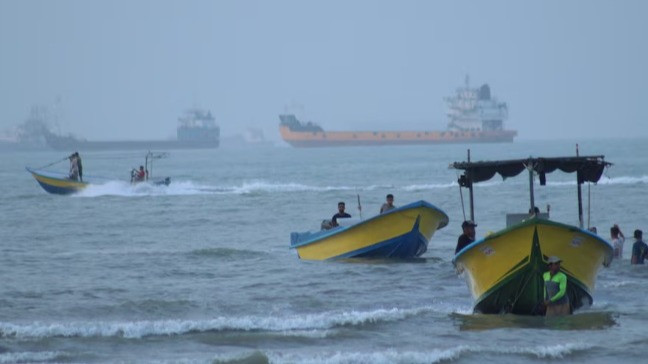
The proposal could allow Iran to charge fees for passage through the Strait of Hormuz.
Amidst ongoing tensions in West Asia for several months, a new diplomatic initiative has emerged concerning one of the world's most crucial maritime routes, the Strait of Hormuz. With the support of Gulf countries, Oman has prepared a proposal that could allow Iran to collect voluntary service fees from ships passing through this route. However, in return, Iran will not have the sole right to control the Strait of Hormuz. The aim of this proposal is to normalize the movement of ships and stabilize the global oil and gas supply.
The Strait of Hormuz is considered one of the busiest energy routes in the world. Before the war with the United States and Israel began, about 20 percent of the world's oil and LNG supply was transported through this route. However, after the attacks by the United States and Israel at the end of February, Iran halted the movement of ships other than its own. This affected the global energy supply and led to sharp fluctuations in oil prices.
According to a Reuters report, Oman's proposal has received support from several Gulf countries. Under this, the operation of the Strait of Hormuz will be managed by a joint regional arrangement rather than a single country. Iran will not impose any mandatory fees on ships but will only accept voluntary contributions. This model is inspired by the Strait of Malacca, where Indonesia, Malaysia, and Singapore accept voluntary contributions from ships for environmental protection, search and rescue operations, and maritime security.
According to Al Jazeera, Oman has also suggested forming a regional group involving Iran and Gulf countries to manage the security and movement of ships passing through the Strait of Hormuz.
The proposal includes creating three separate routes for ships - one through Iran's maritime area, another through international maritime routes, and a third through Oman's maritime area. Under the proposal, Iran may also be tasked with removing sea mines laid in the international route. However, discussions on the technical aspects of this plan are ongoing, and no final agreement has been reached yet.
Last week, several rounds of talks on this issue took place between Iranian and Omani officials in Tehran.
According to Israeli media Ynet global, Iran's Foreign Minister Abbas Araghchi also held separate talks with the foreign ministers of Oman and Saudi Arabia. The report states that these meetings agreed that cooperation and dialogue are the best options for maintaining stability in the region.
Meanwhile, US President Donald Trump has stated that talks with Iran are progressing, but if no agreement is reached, the US may resort to military action again. He said that if the talks succeed, it would be beneficial for everyone, but if they fail, the US is prepared to take action as before. On the other hand, Iran has stated that it has not requested new talks with the US and has accused Washington of violating previous agreements.
Professor Paul Musgrave of Georgetown University in Qatar believes that,
Oman's proposal could prove to be a relief for Iran's economy. He told Al Jazeera that the biggest loss of the Strait of Hormuz being closed is being borne by ordinary Iranians. However, he also mentioned that it is not yet clear whether the hardline factions within Iran will accept this proposal.
Musgrave also noted that voluntary contributions in the Strait of Malacca raise about $70 million annually, while some reports suggest that Iran had previously proposed charging service fees of up to $1 million per ship passing through the Strait of Hormuz. In such a scenario, Oman's model could pave the way for an agreement between both parties.
Currently, efforts are ongoing to resolve several disputes, including the nuclear program, between the US and Iran by the end of August. However, differences between the two countries over the Strait of Hormuz remain. In the coming days, it will be important to see how successful Oman's mediation proves in resolving this dispute.

Md. Tousif
मोहम्मद तौसिफ़ राष्ट्रीय और अंतर्राष्ट्रीय खबरों पर नजर रखते हैं और ‘द क्रेडिबल हिस्ट्री’ में रिसर्चर के रूप में कार्यरत हैं।