
Nine employee organizations oppose ISRO privatization

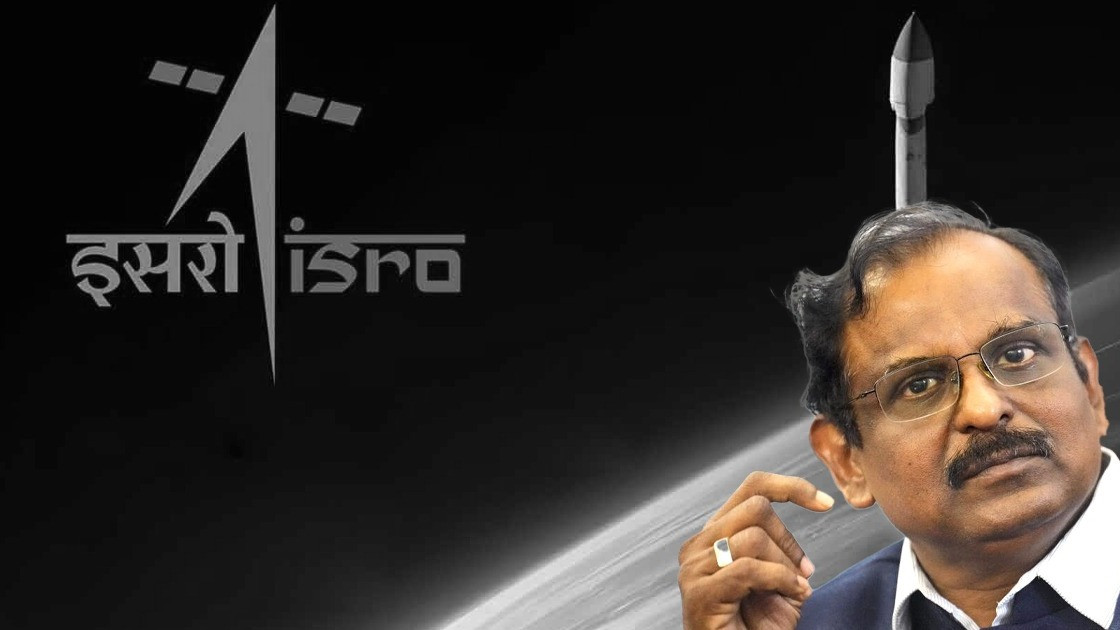
Nine organizations of ISRO employees have raised concerns over the government's policy to open the space sector to private companies.
Indian Space Research Organisation (ISRO) employees from nine organizations have raised questions about the central government's policy to open the space sector to private companies. The employees say that it is their right to obtain information about the government's intentions and future plans.

Department of Space (DoS) in a written statement submitted, the employees said,
“Private sector participation in defined commercial activities can coexist with a strong and publicly owned ISRO. However, such a policy cannot be accepted without any debate, which reduces ISRO to merely a limited research and development institution and takes the construction of the country's launch vehicles and the operation of launch infrastructure out of public control.”
According to a report by Hindustan Times, nine employee organizations have signed this statement. These include the ISRO Staff Association, Shar Employees Association, ISAC Employees Association, ISRO Staff Association-LPSC, ISRO Staff Association-BEBU, NRSA Employees Union, Space Employees Association-BEPU, ISRO Staff Association-IPRC, and SAC Employees Welfare Association. These organizations have sought a written response from the Chairman of the Space Commission regarding the concerns raised.
This letter was submitted on the same day that the historic GSLV-F17 launched the Earth observation satellite EOS-05 from Sriharikota. According to ISRO, EOS-05 is India's first imaging satellite to take pictures from geostationary orbit.
The letter states that,
This concern has arisen following a recent statement by Pawan Kumar Goenka, Chairman of the Indian National Space Promotion and Authorization Center (IN-SPACe). He had said at an event, “Ultimately, ISRO will not manufacture any launch vehicles. This entire work will be done by the private sector or public sector undertakings (PSUs).”
The employees stated that,
The process of assigning responsibilities to the private sector has already begun with small satellite launch vehicles (SSLVs) and may later expand to Polar Satellite Launch Vehicles (PSLVs) and LVM3.
The employees also expressed concern over reports regarding the transfer of production of these launch vehicles to the private sector, the relocation of regular satellite manufacturing outside ISRO, and the opening of new launching infrastructure, including the space launch complex at Thumba, to private entities. The letter also mentions that nearly 120 scientists from ISRO have already been transferred to the private sector.
The statement also references a recent comment by Pawan Goenka, Chairman of the Indian National Space Promotion and Authorization Center (IN-SPACe). Goenka had stated that,
In the future, ISRO will cease to manufacture launch vehicles. The employees have asked whether this is the official stance of the central government. The statement said, “If such a policy has been approved, please provide the date of the decision, the approving authority, and the original text of the policy.”
The letter also inquires about the future role of ISRO employees. The employees argue that manufacturing launch vehicles for ISRO is not merely a “manufacturing contract,” but part of the organization’s “core expertise, institutional memory, and strategic capability.”
The employees expressed concern that,
current employees may be declared “excess” or deprived of meaningful work, while the same responsibilities will be handled by private contractors using technology developed with public funds. They also expressed concern that there may be further declines in regular appointments across all categories of positions.
ISRO has recently been in the news following reports of a significant number of scientists leaving their jobs. However, ISRO has not released official figures, but according to media reports,
between 100 to 120 scientists associated with major programs left the organization in the early months of this year. Following this, ISRO tightened the rules regarding voluntary retirement and resignations for scientists working on important missions like Gaganyaan.
On this entire matter, ISRO clarified that there are no plans to privatize the institution or limit its role under the ongoing reforms in the space sector.
Amid ongoing speculation about potential changes in the organization, ISRO stated that,
“Such reports are completely ‘baseless and false.’ As the leading institution for advanced space research and technology development in India, ISRO will continue to fulfill its responsibilities.”
ISRO emphasized that its role will remain central in national and strategic missions, space science and exploration, as well as the development of critical and cutting-edge space capabilities. According to the agency, the aim of increasing private sector participation is to expand India's space ecosystem. This will provide ISRO with the opportunity to focus more on next-generation technologies and complex national missions.
ISRO stated, “The change is not in the importance of ISRO, but in the size and structure of India's space ecosystem.”
The agency noted that the reforms initiated in the space sector since 2020 and the Indian Space Policy 2023 aim to institutionalize these changes to create a more comprehensive, robust, and globally competitive space framework in India.