Is West Asia heading towards a new power balance?
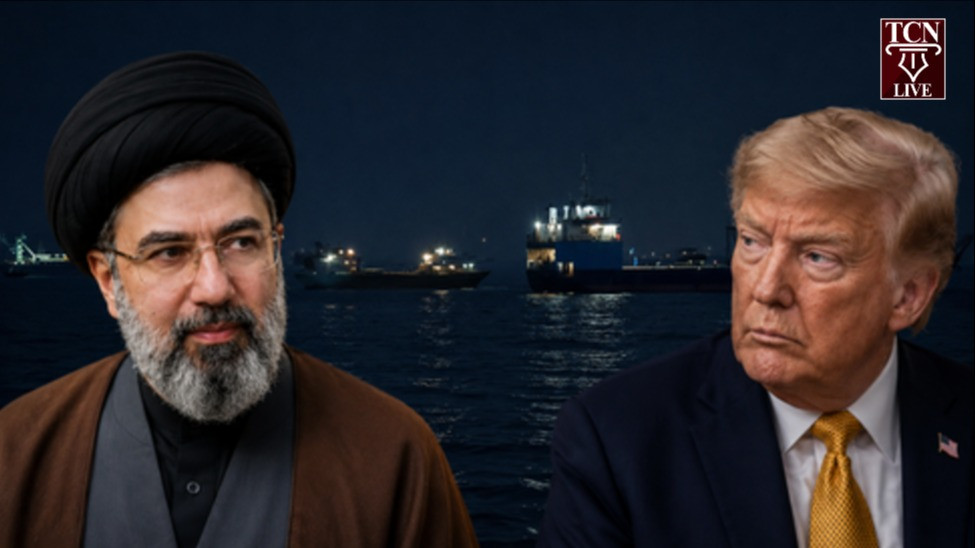
What does the recent US-Iran confrontation signify?
The recent events in West Asia are not just a series of military actions. They also indicate a shift in the region's power balance. It seemed that after military confrontation, dialogue would eventually pave the way for a solution. However, recent developments suggest that diplomacy and military pressure are proceeding simultaneously, with no signs of either side backing down at present.
At the center of this entire scenario is the Strait of Hormuz. A significant portion of the world's maritime oil trade passes through this narrow sea route. Therefore, control over this area is not just a dispute between Iran and the United States, but also a question of global economy and energy security. This is why every military or political movement here impacts the oil market and international politics.
Recent developments suggest that Iran now considers its strategic position stronger than before. Hence, it does not seem willing to move towards any agreement it perceives as detrimental. On the other hand, the United States appears to be adopting a policy of pressure to maintain its military and political presence in the region. As a result, both sides are not completely ruling out the possibility of dialogue while continuing military preparations.
Both sides are interpreting the Memorandum of Understanding regarding Hormuz differently, where the United States believes that the maritime route should be fully restored to its previous state, while Iran interprets the agreement as being under its control.
An important aspect of this confrontation is its ideological side. Recently, Mojtaba Khamenei's message mentioned Karbala and the martyrdom of Imam Hussain. This is not just a religious reference. Its purpose is also to provide moral and historical legitimacy to the struggle. When a war is presented not just as a question of borders or security but as a struggle between justice and injustice, its political meanings change. In such a scenario, the scope for agreement becomes limited, as retreat is seen not just as a strategic but an ideological defeat. His message of avenging his father's death echoes the sentiments of a section of the Iranian populace. On the other hand, the path of dialogue has not been completely closed. Thus, a strategy emerges where the possibility of dialogue remains while preparations for military response continue.
Meanwhile, Trump appears eager to turn a losing battle into a victory. The attempt to achieve in negotiations what was not gained on the battlefield does not seem to be succeeding in Iran. His strategy of targeting civilian sites after military bases actually reflects the frustration of the American administration.
On the other hand, Iran's military strategy is centered on American military bases. The mention of American military bases in Kuwait, Bahrain, the United Arab Emirates, and Oman was made in this context. The message of this strategy is that the conflict is not with the people of these countries but with the American military infrastructure present on their land.
The mention of Oman holds special significance. Oman has long played a role in dialogue and mediation in West Asia. Thus, targeting any American military facility located there can be seen not just as a military action but also as a political message. It can also be viewed as a warning to other Gulf countries that if their land is used for American military operations, they themselves could also be caught in the conflict.
The most immediate impact of this entire crisis is visible on the global energy market. Increasing tensions in the Strait of Hormuz mean that uncertainty regarding oil supply will rise. This is why every new military action is accompanied by fluctuations in crude oil prices. If this situation persists for a long time, its impact will not be limited to West Asia but will also affect major economies worldwide.
The current picture does not suggest that any side wants a full-scale regional war immediately. Instead, both sides appear to be adopting a strategy where limited military actions, retaliatory strikes, and political messages are used to maintain pressure from time to time. This can be called a state of controlled tension. However, history also shows that prolonged controlled tension often escalates into a widespread war due to an unexpected event.
This is the biggest challenge of the entire crisis. West Asia today is not just witnessing a confrontation between two countries. Here, energy security, regional power balance, ideological politics, military strategy, and global diplomacy have become interconnected. In the coming days, it will be determined whether this conflict remains limited or moves in a direction from which returning will not be easy for any side.