
Iran rejects Oman's proposal on Strait of Hormuz control

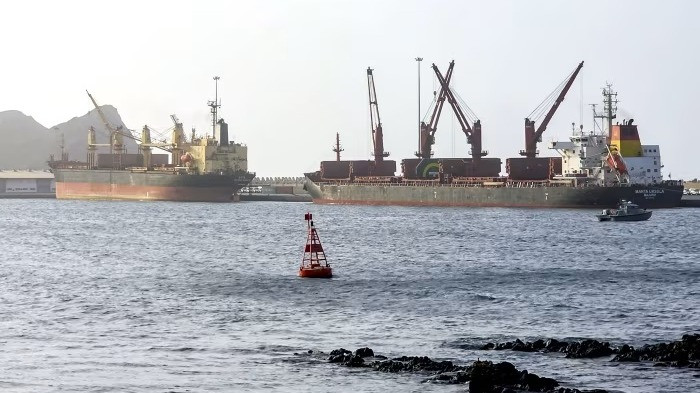
Iran dismisses Oman's joint management proposal for the Strait of Hormuz.
Iran has rejected Oman's proposal for the joint management of the strategically crucial Strait of Hormuz and has instead presented its own new proposal. Iran's Foreign Minister Kazem Gharibabadi stated that Iran will have full control over this waterway. Although discussions between the two countries regarding the future of this waterway are ongoing, no agreement has been reached on the terms of a final settlement.
According to a report by Al Jazeera, Iran's Deputy Foreign Minister Kazem Gharibabadi said on Tuesday on state TV that Oman's proposal does not address Iran's security concerns. He mentioned that under Iran's new proposal, Tehran's surveillance and control over the Strait of Hormuz would be greater than ever before.
The Strait of Hormuz, one of the world's busiest maritime trade routes, has been a focal point of tension between the United States and Iran in recent months. Following attacks on Iran by the US and Israel at the end of February, the region became a major warfront. Before the conflict, nearly 20 percent of the world's crude oil and LNG supply passed through this waterway.
Shortly after the war began, Iran closed the Strait of Hormuz to ships, severely impacting global energy supply and maritime trade. In response, the US imposed its blockade on Iranian ports.
Later, on June 17, a Memorandum of Understanding (MoU) was signed between Iran and the US, which called for the reopening of the Strait of Hormuz for at least 60 days without any fees. However, the lack of clarity in this agreement led to a dispute over who would ultimately control the Strait of Hormuz. The strait passes through the territorial waters of both Iran and Oman, leading to disagreements over the passage routes and monitoring responsibilities.
These disagreements have reignited military tensions between the US and Iran. The US launched further attacks on Iran, while Iran retaliated against American military bases and infrastructure in the region. Although the conflict between the two sides has temporarily subsided last week, diplomatic talks over the control of the Strait of Hormuz are still ongoing.
Gharibabadi revealed that Oman had proposed a plan,
under which the operation of Hormuz would be shared 50-50 between the two countries. According to the proposal, Iran would control the movement of ships in its territorial waters, while Oman would manage the route passing through its maritime area.
He stated that under Oman's plan, ships could enter through Iran's maritime area and exit through Oman's waters. Additionally, the proposal included the collection of Voluntary Service Fees from passing ships, which would be shared between the two countries. This model is believed to be inspired by the Strait of Malacca in Southeast Asia, where Indonesia, Malaysia, and Singapore collect voluntary contributions from ships, which are used for navigation safety, environmental protection, and search and rescue operations.
It is reported that Oman's proposal has received support from several countries in the Gulf region. On Tuesday, the foreign ministers of the Gulf Cooperation Council (GCC) held a meeting to discuss regional security and issues related to Hormuz.
However, Iran rejected this proposal citing national security concerns. Gharibabadi stated,
that under Iran's new proposal, a major maritime route would remain entirely within Iran's territorial waters, while a portion of the second lane would also pass through Iran's maritime area. He said this would allow Iran to effectively monitor ships traveling in both directions.
He warned that if Oman does not accept Iran's proposal, the Strait of Hormuz will remain closed. He also mentioned that the arrangement of allowing ships to pass without any fees, as was the case before the war, will not be reinstated.
According to Al Jazeera's report, Oman is now considering a new option, which could involve creating three separate maritime routes. One route could pass through Iran's maritime area, another through international waters, and the third through Oman's maritime area. However, it is not yet clear what stance Iran will take on this proposal. The report suggests that Tehran is showing signs of flexibility in some matters. Several issues remain unresolved between the two countries, including the direction of ship passage, the layout of maritime routes, fee arrangements, who will set the final rules, and the removal of potential mines laid in the Strait of Hormuz.
The US alleges that Iran laid naval mines in the Strait of Hormuz during the war. Although Iran has not officially confirmed this, in April, the Islamic Revolutionary Guard Corps (IRGC) issued a new maritime route for authorized ships, claiming it would keep ships safe from potential mines. This route passed much closer to Iran's coast than before. Another major dispute is over the fees to be charged to ships.
According to Professor Paul Musgrave of Georgetown University in Qatar, the voluntary fee system in the Strait of Malacca generates approximately $70 million annually. In contrast, Iran is demanding a "service fee" of around $1 million for each ship passing through the Strait of Hormuz. Iran has previously stated that the revenue from this fee would be used to rebuild roads, ports, energy infrastructure, and other public facilities damaged in attacks by the US and Israel. Thus, the Strait of Hormuz has become not just a maritime trade route, but the most important center of regional security, global energy supply, and geopolitics in West Asia.