
Iceland's refusal to join EU and fish trade
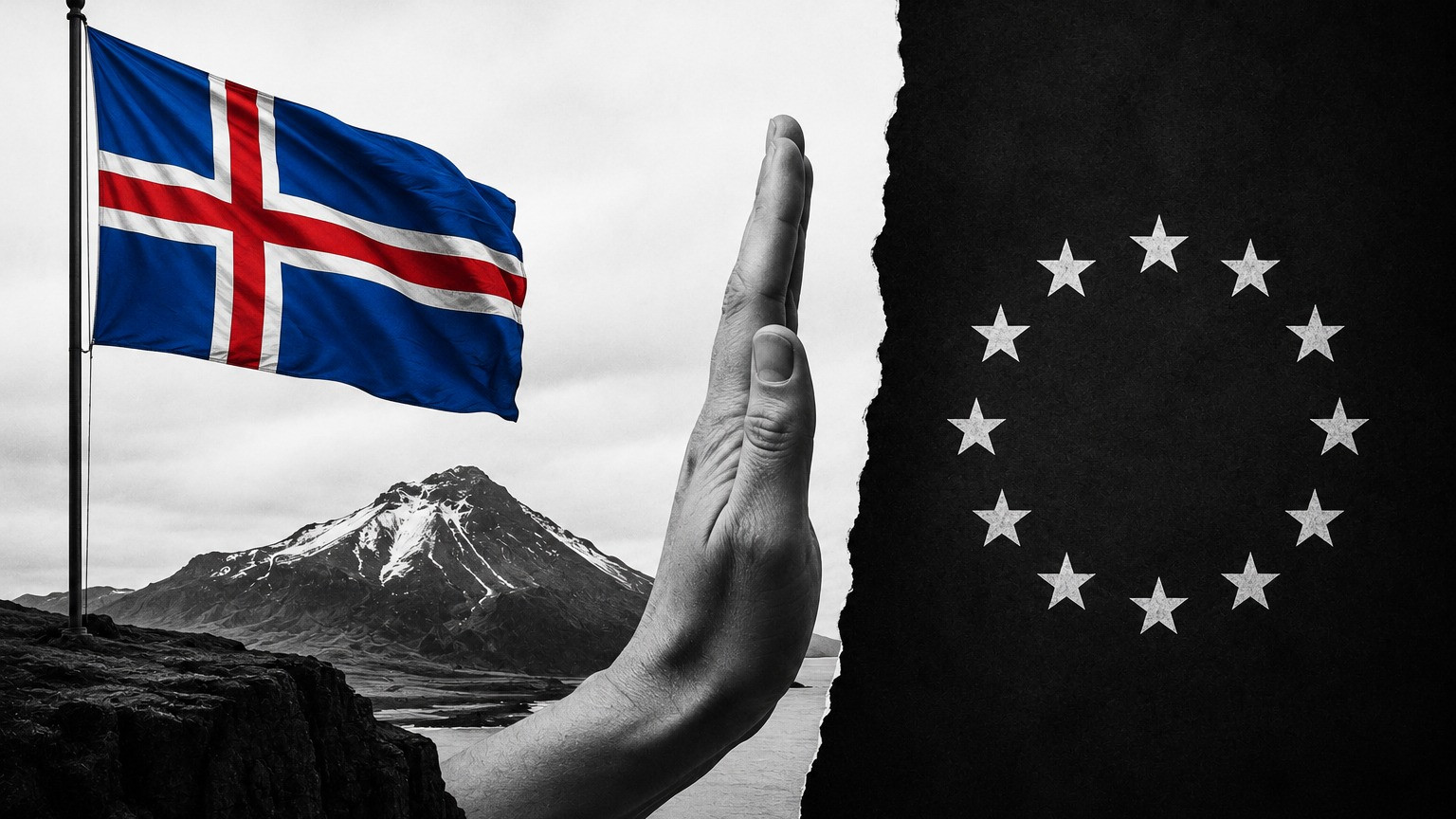
A recent referendum in Iceland raises the question: why are some wealthy nations outside the EU while remaining in Europe?
Two decades ago, in 1993, when the European Union was founded, several European countries kept their distance from it, but gradually, even those distant nations began to join. Many countries that were part of the Soviet bloc also became members of this union. We are well aware of how the speculation around Ukraine's membership took the form of war. We are also familiar with Britain's exit from the union, known as Brexit.
However, even today, there are a few European countries that are not EU members. Among them, two countries are from Scandinavia — Norway and Iceland. The other two are Liechtenstein and Switzerland.
This week, Icelandic voters rejected the proposal to restart EU membership talks. Previously, Norway had rejected EU membership in two referendums.

Iceland Chooses Distance Again
Iceland, with a population of nearly four lakh, is small in size but has once again sent a significant message in European politics.
In a consultative referendum held on August 29, 2026, voters were asked whether the country should restart talks for joining the European Union (EU). 52.8 percent of voters said 'no' and 47.2 percent said 'yes'. However, this was not a direct vote on EU membership; if 'yes' had won, talks would have begun first, and another referendum would have been required later for any final agreement. Nevertheless, the political meaning of the results is clear. The majority of Iceland's population currently does not wish to move forward towards membership with Brussels.
Out of the EU, but Not Out of Europe
It would be incorrect to label this result as 'anti-Europe'. Iceland is deeply connected to Europe's economic and political framework. It is a member of the European Free Trade Association (EFTA) and the European Economic Area (EEA). Through the EEA, Iceland, Norway, and Liechtenstein are part of the European single market with the 27 EU countries. These countries enjoy almost the same benefits as EU countries in the movement of goods, services, capital, and people. Iceland is also part of the Schengen arrangement. The difference is that it does not vote like a full member in EU institutions, and its own currency, the 'Icelandic króna', remains in place.

Fishing is Not Just Business, but a Question of Sovereignty
When I visited Iceland a few years ago, I saw only one major industry on the island — the fishing industry. Fishing here is not just an industry; it symbolizes national identity and economic autonomy. Under the EU's Common Fisheries Policy, shared European rules apply to the management of marine resources and quota systems.
EU opponents have feared that after membership, Iceland would not be able to maintain the same level of independent control over its rich fishing resources as it does today. This question is even more sensitive for small coastal communities. This is why a difference is seen in the political leanings between the capital Reykjavik and rural areas.
The Story of Membership Began with the 2008 Crisis
The dispute between Iceland and the EU is not new. During the global financial crisis of 2008, the country's banking system nearly collapsed, and the value of the Icelandic króna plummeted. After that instability, the number of people viewing the EU and the euro as options for economic security increased. Iceland applied for EU membership in 2009, and formal talks began in 2010. However, domestic opposition remained on issues like fishing policy, agriculture, and sovereignty. In 2013, the new government halted the talks. More than a decade later, inflation, currency instability, and changing geopolitics have revived the question, but the 2026 referendum currently confirms the same old hesitation.
The example of Iceland reminds one of its neighbor Norway. Norway held referendums on EU membership twice. In 1972, the majority rejected membership. In 1994, the question came before the public again, and once again 'no' won. The margin was not very large the second time, but the decision proved sustainable. Since then, Norway has participated in the single market through the EEA while remaining outside the EU. It is also part of Schengen and contributes economically to many European programs. Therefore, Norway's position is sometimes jokingly referred to as an EU partner that does not have a seat at the Brussels table.
Three EEA-EFTA Countries and Switzerland with a Different Path
Today, there are only three countries on the EFTA side of the EEA — Norway, Iceland, and Liechtenstein. Switzerland is also in EFTA, but it is not a member of the EU or the EEA. It has created a web of bilateral agreements with the EU in various areas. Therefore, it seems easy to categorize these four countries in the same category on the map of Europe, but their legal systems are different.
Norway, Iceland, and Liechtenstein are connected to the EU's internal market through the EEA agreement, while Switzerland has chosen its own model. It is also noteworthy that the free trade agreement with India was signed by EFTA countries even before the EU.

Being in NATO and Out of the EU is Not a Contradiction
Both Iceland and Norway are founding members of NATO. This fact is significant because opposition to EU membership is sometimes interpreted as a distancing from Western alliances. In reality, these countries have chosen different institutional paths for security and economic integration. NATO is a collective defense alliance, while the EU goes far beyond an economic market to establish shared decision-making in laws, trade, agriculture, regional policy, and many political areas. Therefore, a country can remain within NATO while being outside the political-institutional membership of the EU.
Statements by U.S. President Donald Trump have pushed the 2026 Icelandic debate beyond the old economic arguments. EU supporters argue that for small countries, being alone is no longer an option. They must work together. Meanwhile, EU opponents argue that security relations with NATO and economic access through the EEA are already available; in this context, why share additional rights over fish, agriculture, and national policy for full EU membership?

Do Wealthy Small Countries Feel Less Need for the EU?
Norway is rich in oil and gas, Iceland has fishing resources and renewable energy, Liechtenstein has an extremely prosperous financial and industrial economy, and Switzerland has long taken pride in its neutrality and independent institutions. These countries have the economic capacity to remain outside the EU. Yet, mere prosperity does not complete the story.
The democratic culture in Iceland has a deep sense of national autonomy. After being under Denmark for centuries, this country became a full republic in 1944 and is conscious of its language, natural resources, and institutions.
In a society of nearly four lakh people, the distance between citizens and power is also relatively small. In such a country, the argument is effective that decisions made in Reykjavik should not be sent to Brussels.
On the other hand, the new generation and urban voters ask why, when the country already adheres to many EU rules, there should not be formal voting rights in the institutions that create those rules. This is the fundamental conflict of Iceland's EU debate.
A Completely Different Story from Brexit
Britain's exit from the EU and Norway-Iceland's decision not to join the EU may seem superficially similar, but the directions are different. Britain was a member of the EU for decades before exiting. Norway was never a member; Iceland applied and negotiated but did not reach membership. Both have maintained close ties to the European market. Therefore, the model of these countries is not 'separation' but rather selective integration; where they are part of significant cooperation but remain outside full political membership.
The most interesting aspect of Iceland's recent results is that a 'no' does not mean the door is permanently closed. The voting was quite close. Approximately 47 percent of people supported resuming talks. Changing economies, currencies, security, or politics could shift the balance again in the future. In Norway, the question of EU membership also returns from time to time, but broad political support has not materialized for a third referendum. The experience of small Northern European countries suggests that integration in Europe is not simply a matter of 'in or out.'
Iceland reminded us in 2026 that in democracy, a 'no' from a small country is just as significant as a 'yes' from a large country.

Praveen Kumar Jha
प्रवीण कुमार झा नार्वे में रहते हैं। पेशे से डॉक्टर हैं, मन से लेखक। कई चर्चित किताबें प्रकाशित