
HDFC to challenge Subhash Chandra's loan settlement in court

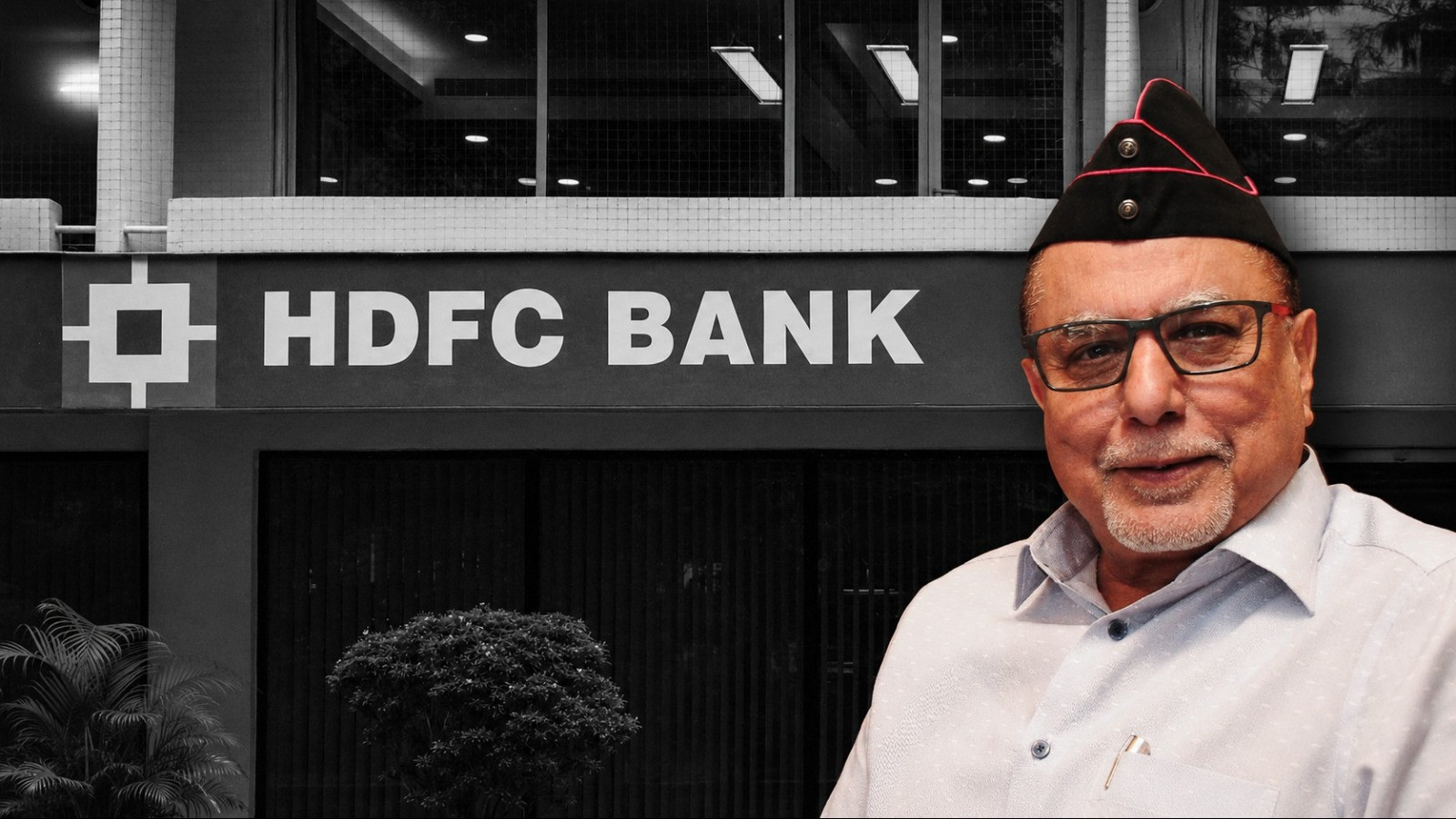
HDFC Bank plans to appeal against Subhash Chandra's loan settlement scheme in NCLT again.
HDFC Bank has challenged the National Company Law Tribunal (NCLT) order approving the loan settlement plan of ZEE TV and ESSEL Group founder Subhash Chandra. HDFC Bank will now appeal for a rehearing on Subhash Chandra's loan settlement scheme. The bank management stated that due to the approval of taking a haircut in this loan settlement scheme, creditors will receive a very nominal amount compared to their approved claims. As the saying goes, it's like a drop in the ocean.
Indian Express reports that HDFC Bank is preparing to file an appeal against the NCLT decision in the NCLT itself. The bank had opposed the voting process and the companies involved from the beginning. HDFC has a case of ₹688.56 crore, and they were sidelined with just ₹19.83 lakh.
It should be noted that in this loan settlement scheme, the NCLT approved Subhash Chandra's proposal to pay only ₹6.25 crore against a total guarantee of approximately ₹22,000 crore. This scheme by the NCLT is facing criticism nationwide. Under whose pressure did the NCLT cause such a loss to the banks? It should be noted that Subhash Chandra was also elected as a Rajya Sabha member from Haryana in 2016 with the BJP. He is counted among the close associates of Prime Minister Narendra Modi.
HDFC Bank stated that its approved claim in this matter is only 3.2 percent of the total claims. This credit facility was provided by the then HDFC Limited, which was transferred to the bank after the merger of the two entities.
The bank said in a statement released on Thursday,
In this case related to the NCLT, HDFC Bank's approved claim was only 3.2 percent of the total declared amount. This facility was initially provided by HDFC Limited, which later came to the bank. HDFC Bank opposed this settlement and voted against the loan settlement scheme. However, it was approved by a majority. The bank is now considering the possibilities of appealing in the NCLAT.”
Following the NCLT's decision, this matter has currently been saved from entering the bankruptcy process. This proceeding is related to the personal guarantees given by Subhash Chandra for the debts of companies associated with the ESSEL Group. In the case of a promoter becoming a personal guarantor for a corporate debt, the bank can recover from the guarantor under legal proceedings if the original debtor defaults on payment. The personal bankruptcy resolution process against Subhash Chandra was initiated in 2024 on the petition of Indiabulls Housing Finance. However, creditors have also questioned the approval of such a large haircut of 99.97 percent. Such a large haircut reveals a bitter truth about the arrangement of lending and then its repayment. How can such a large loan and repayment be almost zero?
In the language of banking and finance, 'haircut' refers to the amount that a bank or creditor is willing to write off as a bad debt to recover at least some money. In this case, a 99.97% haircut means that the financial institutions or creditors who lent money to Subhash Chandra/ESSEL Group received only 3 paise (0.03%) for every ₹100, and the remaining ₹99.97 was completely lost. This means Subhash Chandra, the owner of Zee TV, enjoys all the benefits while the banks suffer losses.
This matter is not limited to Zee Entertainment Enterprises alone. It is also related to Subhash Chandra's personal liability arising from the guarantees given on corporate debts associated with ESSEL Group companies. The corporate bankruptcy proceedings of companies associated with the ESSEL Group and the regulatory matters related to Zee Entertainment and its officials are separate from this.
Subhash Chandra's office questioned the claim of ₹22,000 crore in a statement released on Thursday. The statement said, “The total claim against Subhash Chandra by creditors opposing the plan in the personal bankruptcy process is only ₹3,992 crore, not ₹22,000 crore.” According to the statement, ₹620 crore of this claim has been settled, while the borrowing companies have offered to pay an additional ₹1,063 crore. The companies for which Subhash Chandra provided personal guarantees have so far repaid ₹43,000 crore. The related companies have also assured the payment of any remaining amount.
Subhash Chandra's office also questioned the valuation of his assets by the banks. The statement said,
“Subhash Chandra declared his total assets as ₹39.08 crore in Parliament in 2016, and this information is available in the public record. How can any bank consider his total assets to be ₹45,888 crore in 2017?” According to the statement, his personal assets, which were ₹39.08 crore in 2016, have decreased to ₹31.79 crore in 2024.
The order of August 25 was not the result of a straightforward and unanimous decision. Earlier, a two-member bench of the NCLT had differing opinions on the repayment plan. To resolve the disagreement, NCLT's judicial member Nilesh Sharma was appointed as the third member. He ultimately decided in favor of approving the plan.
Creditors strongly opposed the plan, citing extremely low recovery. Despite this, the tribunal concluded that their objections did not present sufficient legal grounds to reject the plan. After studying the available financial information, the tribunal concluded that the approved repayment plan could result in better recovery compared to the bankruptcy process.
The main objection of the creditors was regarding the extremely low recovery amount. They also questioned whether Subhash Chandra's assets and financial transactions were thoroughly investigated. Some creditors also suggested the need for a forensic investigation.
The NCLT did not accept the argument that a forensic investigation is mandatory before approving the plan. The tribunal also emphasized the importance of the creditors' commercial decision. It stated that when creditors have voted on a plan under the Insolvency and Bankruptcy Code (IBC), the tribunal generally does not substitute its assessment for that commercial decision. This repayment plan received the support of approximately 80.81 percent voting share, which was above the required threshold for approval. In such a case, some creditors opposing the plan cannot independently exit the process and demand a separate settlement.
This matter reveals a bitter truth about the arrangement of lending to promoters. A bank's claim can be in thousands of crores, but if there is no adequate asset or effectively enforceable guarantee behind the loan, how can the actual recovery shrink to almost zero?
Personal guarantees certainly strengthen the bank's position, but it does not mean that the entire guarantee amount is available in cash. Its actual value depends on the legally available assets of the guarantor and the outcome of the bankruptcy resolution process.
In this regard, this matter serves as a serious warning for banks and financial institutions. Having a promoter's personal guarantee at the time of lending is not sufficient; more important is the quality of that guarantee, the actual assets, and the practical ability to recover.