
Will UPI payments remain free?

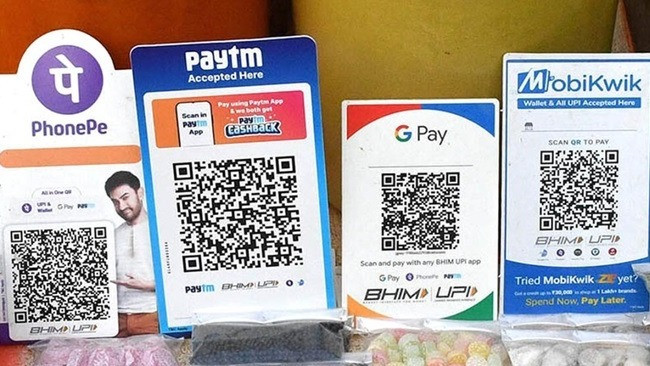
RBI Governor suggests someone will have to bear the cost.
Are the days of free UPI payments without any charges coming to an end? There is apprehension that one of the world's largest real-time payment systems, UPI or Unified Payments Interface, may soon impose charges for transactions exceeding ₹2,000. Banking experts believe this change is part of the proposed amendment to the Payment and Settlement Systems Act, which Finance Minister Nirmala Sitharaman has presented in Parliament. If this amendment is approved, it could pave the way for imposing a Merchant Discount Rate (MDR) fee on UPI payments in India. However, this is not the complete truth at present.
Governor of the Reserve Bank of India (RBI), Sanjay Malhotra, stated,
“It is premature to conclude whether a Merchant Discount Rate (MDR) will be imposed on Unified Payments Interface (UPI) transactions.”
The debate over the future of the free digital payment system in the country has intensified once again following the proposed amendments to the payment law by the government. After the Monetary Policy Committee (MPC) meeting, Malhotra mentioned that discussions are ongoing regarding the Payment and Settlement Systems (Amendment) Bill, 2027. The RBI's current focus is not on determining how the cost of this system will be borne in the future, but rather on strengthening the country's digital payment infrastructure.
In a conversation with the media after the monetary policy announcement, the Governor said,
"Someone will have to bear the cost of this. We all want this public infrastructure to continuously strengthen and become more efficient. We are working in that direction. That is our priority at the moment."
His comments came amid speculation that the proposed amendments might allow the government to reintroduce MDR on some UPI merchant transactions, especially higher-value payments, in the future. The Payment and Settlement Systems (Amendment) Bill has been presented in Parliament, but it does not include provisions for imposing MDR on UPI transactions or establishing any fee structure. Any decision to impose charges on merchants will have to be made separately through a policy decision after the law is enacted.
Currently, UPI payments are free for users and merchants under the zero MDR regime. This system was introduced to promote digital payments. In credit and debit card transactions, merchants have to pay MDR to banks and payment networks, whereas no such charge is currently levied on merchant payments made through UPI. The central government also runs an incentive scheme, under which banks are compensated for low-value UPI transactions made by small merchants, covering part of the cost incurred in processing these transactions.
Malhotra also stated,
“Even though UPI users do not pay any direct charges today, the cost of operating this payment system is being borne somewhere in the economy. It is possible that the broader economy is bearing this cost. Someone is paying for it.”
With UPI becoming India's leading retail payment platform, the discussion on this issue has intensified. According to the National Payments Corporation of India (NPCI), in July 2026, a record 23.66 billion transactions were conducted via UPI, with a total value of approximately ₹29.9 lakh crore. This is the highest transaction value in a single month since UPI's inception.
The rapid growth in UPI usage has once again raised questions about the long-term sustainability of the zero MDR model. Banks and payment service providers argue that maintaining and continuously upgrading the digital payment infrastructure incurs significant costs. However, Malhotra did not endorse any specific funding model. He stated that it is premature to speculate whether MDR will be implemented in the future or if another model will be adopted. According to him, the RBI's priority is to continue investing in a payment system that remains efficient, secure, and accessible to all.
For consumers, nothing is changing at the moment. UPI transactions remain free, and no decision has been made to impose charges on person-to-person or merchant payments. Any such step in the future would require a policy decision and detailed regulatory guidelines.