
Will Red Bull face a ban in India?

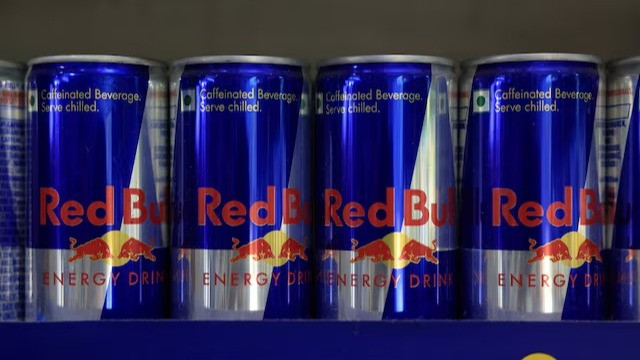
Regulators in India and globally have raised health concerns about energy drinks.
There is soon to be a crackdown on the energy drink industry. It is possible that the popular energy drink Red Bull may also face a ban. The food safety regulator FSSAI will not accept the demand from global beverage companies to extend the 90-day deadline for removing the "energy drink" label to one year. A government source provided this information on Friday. This decision is expected to impact the business of the energy drink industry.
According to a report by Reuters,
strict action is being taken regarding the type of labels that alcohol, beverage, and food companies put on their products. It is said that PepsiCo, Red Bull, Monster Beverage, and Mukesh Ambani's Reliance are in conflict with Prime Minister Narendra Modi's government's food regulator.
According to a government source, FSSAI will not agree to extend the deadline, as several states have reported that the existing stock of these beverages can be sold within 60 to 90 days. The source declined to be named as this decision is not yet public. According to three industry sources, beverage companies have requested at least a year to implement this decision, as millions of cans and bottles are present in the market or orders for imported cans are still pending.
A government official said,
"The companies have violated the rules by labeling them as energy drinks. They should be happy that India is not prosecuting them."
The official further stated, "They have not informed FSSAI about the stock they have in each state, whereas they should maintain a record to ensure the traceability of the products." Industry sources said that due to the large volume of stock, it is difficult to account for the goods present in various states.
Neither FSSAI nor Red Bull, Monster, and Ambani's Reliance Consumer Products responded to Reuters' queries. PepsiCo declined to comment. Some regulators worldwide have raised health concerns regarding energy drinks. Their concern is that,
they contain high amounts of caffeine, sugar, and an amino acid called taurine. In England, a ban on their sale to people under 16 years of age will be implemented from April next year.
Industry sources said that major beverage companies are also requesting the Indian government to stop the seizure of energy drinks by some state governments.
Last month, during an operation in Rajasthan, thousands of products from Pepsi's Sting, Reliance's Campa Energy, and Red Bull were seized. The food safety office of the Union Territory of Ladakh stated to Reuters that stock of such products will also be seized there. The office said, "The seizure action is clearly included in the ongoing inspection campaign at the district level." It also mentioned that the labels of beverages held by retailers and distributors are being checked.
According to Euromonitor, after Pepsi launched Sting in 2017, this market expanded rapidly in India. Sting, available in a ₹20 plastic bottle, became particularly popular among 15 to 19-year-olds and in rural areas.
According to industry sources,
officials from PepsiCo, Red Bull, and Monster expressed their concerns regarding the labeling of energy drinks to Food Processing Minister Chirag Paswan on Tuesday and sought his support. Paswan wrote on X that the ministry is committed to promoting "investment, innovation, and job creation" in this sector. However, he did not provide further details.
It is worth mentioning that earlier, the Food Safety and Standards Authority of India (FSSAI) had banned the sale of products from several popular liquor brands. These include brands favored by Old Monk enthusiasts to customers of McDowell's whisky. Some variants of Old Monk, McDowell's, and Royal Challenge whisky, among other popular rum and whisky brands, have come under FSSAI's scrutiny. Action against these liquor manufacturers was initiated by FSSAI for not complying with existing regulations.
Samples of rum and whisky brands from several companies were taken and sent to laboratories for testing. Lab tests revealed that these products contained external artificial or 'nature identical' flavors, leading to them being labeled as 'sub-standard' compared to the prescribed standards. However, the release further stated that under the applicable food safety and standards regulations related to liquor, the use of natural and nature-identical flavoring substances is undisputedly permitted.