
US air defense system stock running low?
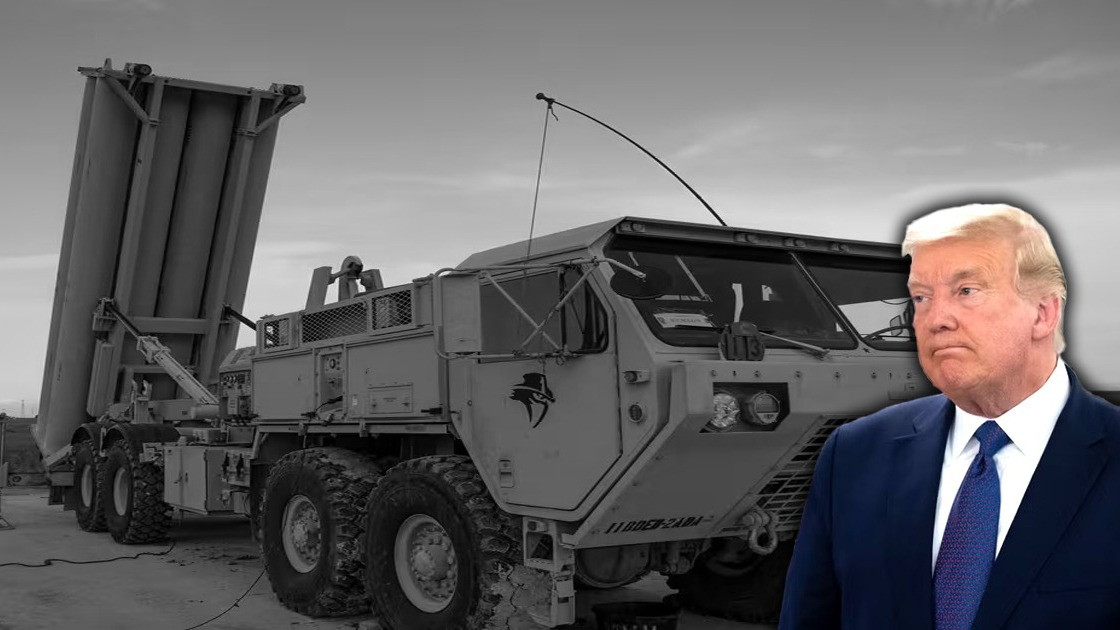
The US military has used nearly 80% of its THAAD missile reserves.
The prolonged conflict with Iran is becoming costly for the United States. The unnecessary obstinacy of Donald Trump is affecting not only the U.S. but also its allies in the Gulf region. Worry lines have appeared on everyone's foreheads. The issue is not just about depleting weapon stocks. In fact, the stockpile of America's air defense systems, on which the security of America's allies in the Gulf also depends, is running low. This is why Trump is now treading carefully and repeatedly trying to pressure Iran into negotiations.
CNN reports that the U.S. military has used up about 80% of its interceptor missiles for a crucial missile defense system. Meanwhile, senior U.S. military commanders have warned that the Pentagon's stockpile of weapons and ammunition has now reached a "dangerously low" level. Several sources familiar with the matter have also claimed this.
During the war with Iran, there has been a significant decline in the stockpile of air defense systems. According to two sources familiar with the latest inventory report,
the U.S. military has used up about 80% of its THAAD missile stockpile compared to pre-war levels. Additionally, about half of the Patriot interceptors have been expended since the war began. The extent of the depletion in the THAAD stockpile had not been publicly disclosed before.
The Center for Strategic and International Studies (CSIS) estimates that before the Iran war, the U.S. had about 2,200 interceptors of the two most advanced variants of the Patriot system and 452 THAAD missiles.
America's allies in the Gulf region have also expressed renewed concern that the shortage of air defense systems could affect their ability to counter potential retaliatory actions from Iran, especially if President Donald Trump decides to escalate the current conflict. Many of these countries rely on American air defense systems. According to several officials, these countries have acknowledged that the shortage of interceptor missiles could impact their ability to thwart Iranian missile and drone attacks—particularly if Iran targets them in response to any U.S. action.
Even before President Trump's decision to cancel new attacks on Iran last weekend, the issue of dwindling weapon stockpiles had been raised. This was at least the second time in recent weeks that Trump's senior military advisors expressed particular concern about the rapidly decreasing number of American weapons during discussions on escalating the conflict with Iran. According to a source familiar with recent internal Pentagon reports, the U.S. military has used up "almost the entire" stockpile of its highly precise and long-range surface-to-air weapons during this conflict. The specific concern about the shortage of long-range precision missiles in the U.S. arsenal was first reported by Reuters.
Along with recent warnings about the shortage of weapons, Trump was also provided with some other intelligence information. This included the potential negative impacts of attacks on Iran's critical infrastructure, particularly energy-related sites. Additionally, Gulf countries had also expressed their concerns. These concerns were so serious that even some of Trump's most aggressive advisors agreed that there were sufficient reasons to halt the proposed military campaign over the weekend.
According to a senior Trump administration official, Trump was set to advance plans for large-scale attacks on Friday, and Defense Secretary Pete Hegseth had received the final "green light" on Friday. However, after discussions with Middle Eastern allies on Saturday, Trump decided to back off from the attack. These countries informed him that they were worried about Iran's retaliatory actions, especially potential Iranian attacks on their energy infrastructure. Following this, Trump agreed to listen to them and Iran. He instructed Hegseth to halt military action for the time being.
However, the possibility of future attacks has not been completely ruled out. Pentagon's chief spokesperson Sean Parnell said in a statement to CNN,
"The U.S. military is the most powerful in the world, and it has every resource necessary to act whenever and wherever the President desires." He added, "We have conducted several successful campaigns under various combat commands while ensuring that the U.S. military maintains a vast stockpile of capabilities to protect our people and our interests."
White House spokesperson Anna Kelly told CNN that the U.S. military has "sufficient weapons, ammunition, and stockpiles to meet all of President Trump's strategic goals and beyond." Kelly said, "Operation Epic Fury has shown what happens when someone confronts America. Despite this, the President has continuously asked our defense contractors to produce more and more Made-in-America weapons, which are the best in the world."
Chairman of the Joint Chiefs of Staff General Dan Kane also raised the issue of dwindling weapon stockpiles during a White House meeting at the end of last month. That meeting discussed potential military options for escalating the conflict. According to another person familiar with the matter, there was also concern that if the U.S. resumed large-scale military operations in Iran, a significant number of civilians could die.
But the continuous estimates related to the weapon stockpile reported to CNN highlight the severity of this shortage. It also raises the question of how capable the U.S. will be in conducting a prolonged military campaign against Iran.
If the stockpile of missile interceptors has indeed become significantly low, the Pentagon has several options to strengthen its military readiness in the coming months and years. One way is to increase orders for the production of both THAAD and Patriot interceptors. With additional funding from the government, weapon manufacturers can increase their production capacity. However, due to the highly complex nature of the manufacturing process, it generally takes time to significantly increase production.
The U.S. Department of Defense may also review deployment priorities for missiles to ensure that available interceptors are stationed in areas considered to have the highest strategic threat. Closer coordination with allied countries that use missile defense systems compatible with American systems could also be more important. Many of America's allies have Patriot batteries or are part of a regional integrated missile defense network, which strengthens collective security capabilities.

Satish Verma
सतीश वर्मा पेशे से पत्रकार हैं। हिंदी की मुख्यधारा की पत्रकारिता में इन्हें 20 साल से ज्यादा का अनुभव है।