
SBI suffers ₹1 lakh crore loss due to NCLT haircut

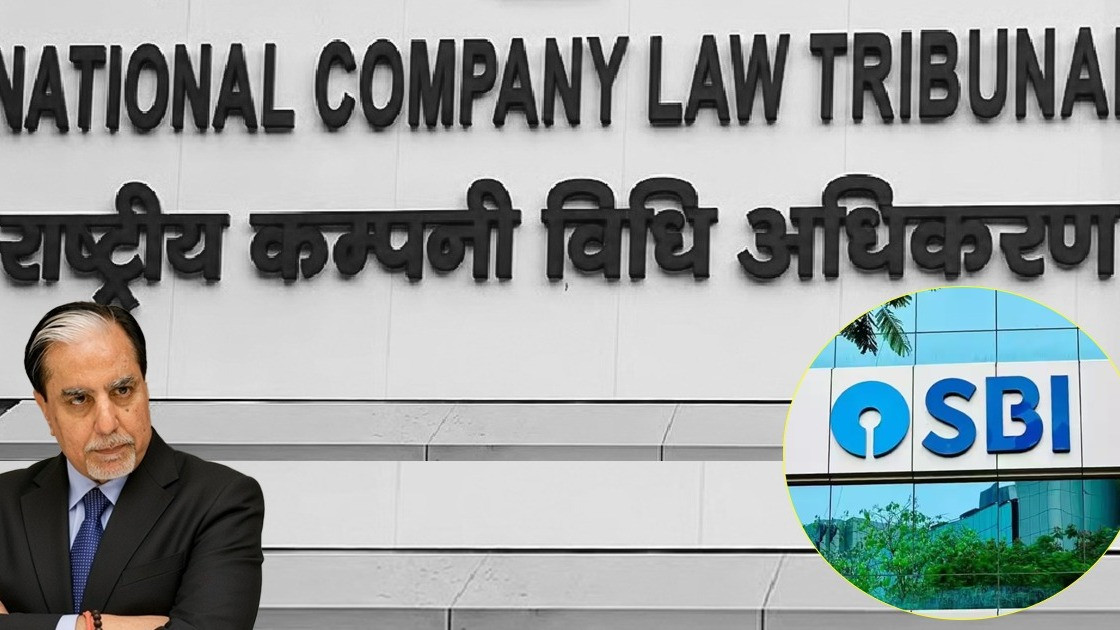
The National Company Law Tribunal's haircut has led to significant losses for India's largest bank, SBI.
The founder of ZEE Group, Subhash Chandra, faced criticism when the National Company Law Tribunal (NCLT) was ridiculed over the matter of a 99.97 haircut. Now, the NCLT has temporarily stayed its order. This indicates the government is on the back foot. The NCLT acknowledged that this haircut was excessive and illegal, causing significant losses to banks.
The newly constituted five-member bench of the NCLT has stayed the order approving Subhash Chandra's plan to pay ₹6.25 crore against approved loan claims of over ₹22,006 crore.
The bench has also prohibited Subhash Chandra from selling or transferring his assets until the case is heard afresh.
This order came just a week after the tribunal approved the repayment proposal. HDFC, Union Bank, and LIC Housing Finance had strongly criticized the meager repayment amount compared to the total claims and had rejected the haircut proposal.
The bench, headed by NCLT Chairperson Justice (Retd.) Anupinder Singh Grewal, has issued notices to all parties, including Subhash Chandra, seeking their responses. The bench clarified that the order dated August 25, which approved the plan, cannot be implemented for now, as no majority opinion could be formed among the members.
However, the NCLT's actions are not limited to Subhash Chandra alone. The haircut by the NCLT has also caused significant losses to the country's largest bank, State Bank of India (SBI), amounting to nearly ₹1 lakh crore. Over the past nine years, SBI has given a haircut of ₹1 lakh crore to several industrialists and businessmen at the behest of the NCLT, while these borrowers had an outstanding loan of ₹1,49,895 crore with SBI. In return, SBI has recovered only ₹49,727 crore in terms of recovery and repayment. This means a total loss of ₹1 lakh crore.
According to a report by MONEYLIFE, based on an RTI response, SBI has recovered nearly ₹1 lakh crore less than its claims on loans resolved through the NCLT and similar platforms over nine years.
According to data obtained through an application filed by Pune-based RTI activist Vivek Velankar,
SBI took 309 loan accounts to the NCLT or similar resolution platforms between the financial years 2017-18 and 2025-26. The total claim by the bank in these cases was ₹1,49,895 crore, while it could recover only ₹49,727 crore through resolution plans. This means SBI had to give a haircut of ₹1,00,168 crore, which is about 67 percent of the total claim. However, SBI has not disclosed the names of the borrowers who received the haircut.
This response was issued by Sibasis Biswas, the Central Public Information Officer (CPIO) and Deputy General Manager (DGM) of SBI's Stressed Assets Resolution Group. Vivek Velankar's original application was forwarded after an appeal, which led to this information being revealed.
Vivek Velankar specifically requested the names of borrowers whose outstanding loans of over ₹100 crore were written off every year from the financial year 2016-17. He also sought information on the amount written off in each account. SBI denied this information, stating that it pertains to third-party personal information held under fiduciary capacity and business confidentiality. Therefore, it is exempt from disclosure under sections 8(1)(d), 8(1)(e), and 8(1)(j) of the RTI Act.
Velankar also requested the names of borrowers whose loans were settled by accepting haircuts through the NCLT or similar platforms. He sought details of each loan amount and the accepted haircut. The bank denied this information on the same grounds.
Annual figures indicate how severe the losses were in some cases.
In the financial year 2018-19, SBI's claim on 34 accounts at the NCLT was ₹48,425 crore, but it received only ₹26,402 crore under resolution plans. Thus, in just one year, the bank had to take a haircut of ₹22,023 crore.
In the financial year 2021-22, SBI's claim on 40 accounts was ₹22,408 crore, but it could recover only ₹5,337 crore. The bank had to accept a haircut of ₹17,071 crore, meaning over 76 percent of the claim amount for that year was lost.
In the most recent financial year on record, 2025-26, SBI settled claims of ₹4,928 crore on 30 accounts for only ₹1,348 crore. Thus, the bank took a haircut of ₹3,580 crore, which is about 73 percent loss.
Separately, SBI's response indicated that between the financial years 2016-17 and 2025-26, the bank wrote off loans of ₹1,51,857 crore for large defaulters. Large defaulters refer to borrowers with outstanding amounts of over ₹100 crore each. Of this massive amount, only ₹20,838 crore, or about 14 percent, has been recovered so far.
Annual figures also tell a significant story. In the financial year 2019-20, SBI wrote off ₹46,348 crore for large defaulters. This was the largest annual write-off in ten years. Of this, only ₹4,548 crore, or about 10 percent, has been recovered so far. In the financial year 2018-19, ₹27,225 crore was written off, of which only ₹1,811 crore was recovered.
In comparison, SBI's response also indicated that over the past ten years, ₹63,103 crore was written off for small borrowers, i.e., those who took loans of less than ₹1 crore. Of this, only ₹6,815 crore, or about 11 percent, has been recovered.
Technically, when a loan is written off, it is removed from the bank's balance sheet as an asset, as the bank does not expect payment. Experts do not consider this system appropriate, but banks regularly do this as part of tax management and to clean up their balance sheets. This typically benefits some of the country's largest industrialist defaulters.
In contrast, when the value of a bad loan is reduced, some portion remains as an asset because the bank expects to recover it. However, SBI's data indicates that in most cases, the amounts written off have either no recovery or only a very minimal amount is returned.