
Iran retaliates against US strike, raising Gulf war fears
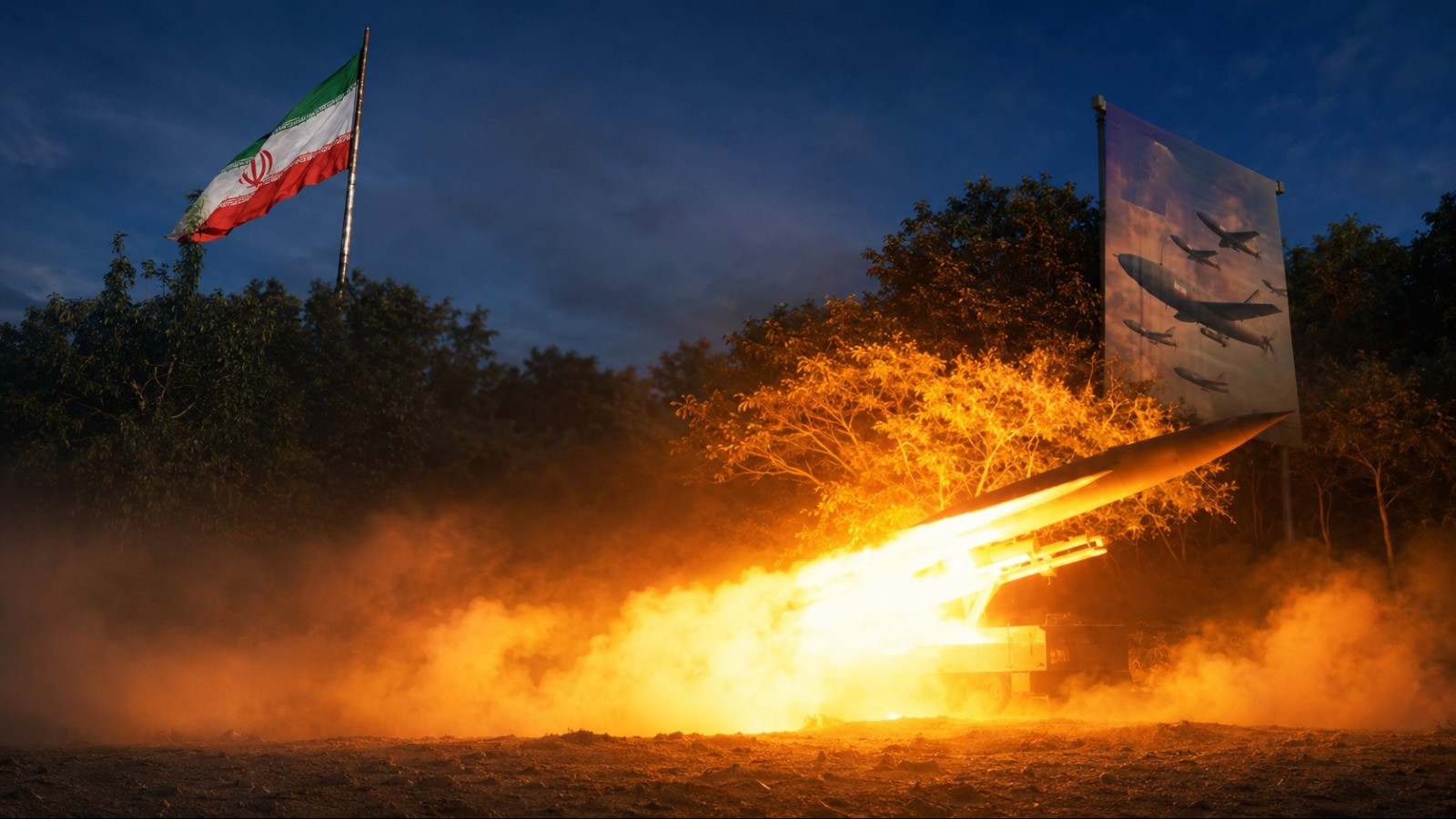
Iran and the US exchanged attacks from Sunday night to early Monday morning.
More than six months have passed since the war between the United States and Iran began. Several attempts at ceasefire and peace talks have been made, but no agreement seems to be in sight. Meanwhile, on Sunday night, the US military attacked Iran again after nearly a month. This time, the US military targeted two rocket launchers on Iran's Larak Island.
For the first time in over a month, Iran and the US launched attacks on each other from Sunday night to early Monday. This retaliatory action has increased the risk of a destructive conflict reigniting after several weeks of military calm. Iran targeted US military bases in Jordan and the United Arab Emirates (UAE) with missiles. This action was in response to the US attack on Iranian rocket launchers.
The US claims that these launchers were attempting to deliver naval mines to Hormuz. Hormuz is a crucial maritime trade route and has become a focal point of regional tension and diplomatic efforts.

AL MAYADEEN reports that Larak Island is located at a highly strategic point near the Strait of Hormuz. It is close to the narrowest part of Hormuz and near the sea routes used for commercial shipping. This makes the area significant for monitoring and overseeing maritime activities. The recent attack on Larak Island occurred against the backdrop of increasing military pressure on Iran's southern regions and its strategic military and maritime infrastructure.
The US Central Command CENTCOM issued a statement saying that Iranian Revolutionary Guards Corps (IRGC) personnel were preparing to launch rockets and naval mines into the Strait of Hormuz from there. According to the Iranian military, several soldiers and civilians were killed and many were injured in the US attack.
Just hours after the US attack, Iran claimed to have launched ballistic missiles at two US airbases in Jordan in a retaliatory strike. According to Iranian media, the King Hussein and Al-Azraq airbases in Jordan were targeted for their technical and maintenance infrastructure and the positioning of fighter jets. However, several media reports cited Jordan as saying it had intercepted all incoming missiles from Iran. The Iranian military claimed to have attacked UAE with drones, targeting sites in Al Minhad where helicopters and US troops were stationed. According to AL ARABIYA, a statement from the UAE's Ministry of Defence said its air defence system confronted several drones coming from Iran that were in UAE waters.
Additionally, the IRGC claimed to have shot down another US MQ-9 Reaper drone over the Strait of Hormuz. Anadolu Agency reported, citing Iranian media, that the drone was targeted with a missile and fell into the Persian Gulf. However, the US has not yet independently confirmed this loss.
Iranian President Masoud Pejman left Tehran for Kyrgyzstan this morning to attend the SCO Summit in Bishkek. Before departing, he stated that Iran does not want war, but it will never remain silent in the face of any attack and will respond decisively to every assault.
Following the US attack on an Iranian island in the Strait of Hormuz and Tehran's subsequent actions, international oil prices rose by more than 2% today. According to REUTERS, Brent crude prices increased by $2.21, or 2.51%, reaching $90.31 per barrel. Meanwhile, WTI crude prices rose by $1.83, or 2.19%, to $85.23 per barrel.
In response to the attack, Iran's Supreme Leader Ayatollah Mojtaba Khamenei issued a written message urging Muslim countries, especially Gulf nations, to unite. He stated that divisions among Muslims benefit their adversaries. This message was released on his official Telegram account for Islamic Unity Week, celebrated on the occasion of Prophet Muhammad's birth anniversary.
In this statement, he called for strengthening cooperation and mutual defence among Muslim countries. He said that anyone who deliberately or unknowingly creates division among Muslims aids the enemies of Islam. He questioned whether Palestinians would be left so "helpless" if Muslim countries were united. His appeal for Muslim unity aligns with his message to the Iranian public on Friday, urging restraint from activities that harm social unity and avoiding statements that could weaken public morale.
Khamenei advised the rulers of Muslim countries,
"My strong and repeated advice is that especially the countries of West Asia and the Gulf identify their real enemy, understand its plan, and counter it."

Md. Tousif
मोहम्मद तौसिफ़ राष्ट्रीय और अंतर्राष्ट्रीय खबरों पर नजर रखते हैं और ‘द क्रेडिबल हिस्ट्री’ में रिसर्चर के रूप में कार्यरत हैं।