
India considers transaction fees on UPI amid US trade deal talks
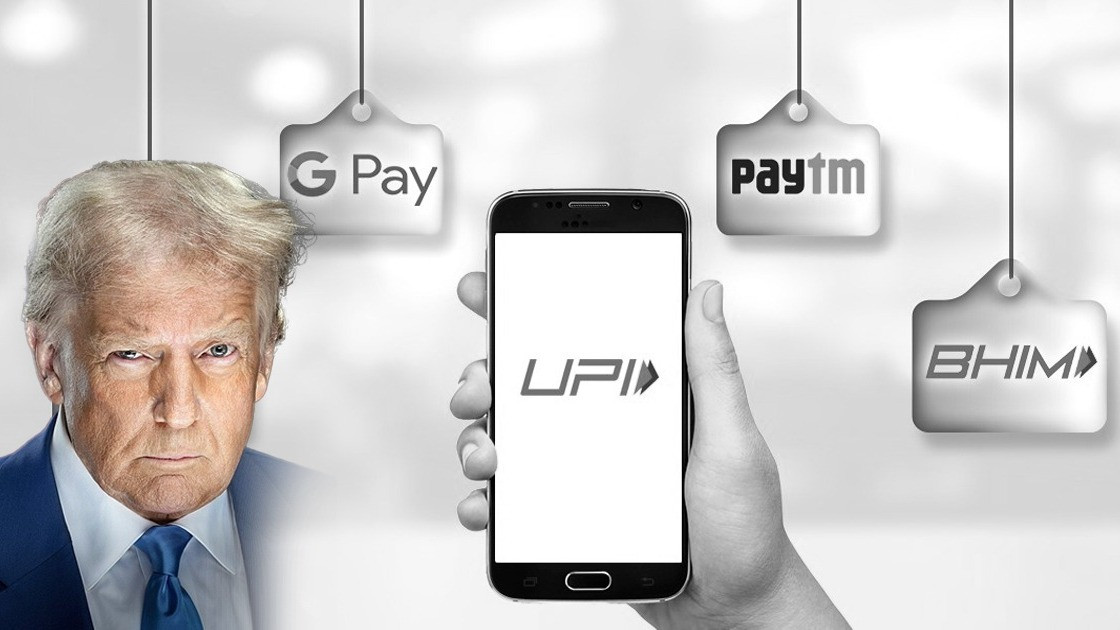
Since UPI's launch, US payment giants Visa and Mastercard have raised concerns over potential business losses in India.
At a time when the Indian government is preparing to finalise a trade deal with the United States, a bill has been introduced in Parliament that may allow the imposition of fees on payments made via UPI and RuPay Debit Card. This is not without reason. The US has consistently pressured its trading partners to create a 'level playing field' for all companies in their digital payment systems. Economic experts view the preparation to impose fees on UPI payments as a strategy influenced by the Trump administration.
According to the Indian Express, the US Trade Representative classified India's digital payment policies, which benefit domestic companies, as a foreign trade barrier in March 2026. Removing such barriers across various sectors is among the key demands of the US under the trade deal, including imposing fees on UPI payments and credit transactions. It is noteworthy that UPI's popularity in India has been growing steadily, primarily due to its convenience and the absence of transaction fees. However, with the proposed changes, banks and payment system providers may impose fees on payments made via UPI and RuPay Debit Card, potentially passing the burden onto consumers.
Since the introduction of UPI in India in 2016, American payment companies Visa and Mastercard have raised concerns about potential business losses. People in India have increasingly shifted towards free UPI payments instead of card payments.
According to the Delhi-based think tank Global Trade Research Initiative (GTRI), these companies have objected to the zero transaction charge on UPI and RuPay, the government's promotion of RuPay, and the initial advantage given to RuPay in credit card payments via UPI. GTRI states that these policies have strengthened RuPay and affected the revenue of American card companies from fees.
Visa and Mastercard operate on a model where banks, payment processors, and card networks earn fees from merchant transactions. A platform like UPI, which is extensive, interoperable, and has zero Merchant Discount Rate (MDR), limits this revenue. MDR is the fee that banks processing payments charge merchants, used to cover the costs of transaction processing, settlement, and payment infrastructure.
According to GTRI, RuPay poses another challenge for American companies as it is India's own card network and can be more closely aligned with the country's domestic policies. In March, the United States Trade Representative (USTR) classified India's digital payment policies as a foreign trade barrier, considering them favourable to domestic companies. Several such issues are among the key demands of the US in the proposed India-US trade deal.
The USTR had expressed concerns about the lack of equal opportunities for American electronic payment service companies in the UPI ecosystem, particularly highlighting the lack of equal opportunities for American companies compared to RuPay in credit transactions via UPI. In November 2020, the National Payments Corporation of India (NPCI) announced a 30% market share cap for third-party app providers initiating online payments via UPI. Initially, this cap was to be implemented from January 2023, but NPCI extended the timeline. The current deadline is set for December 2026.
According to the USTR,
By 31 December 2025, two US-owned electronic payment app companies together processed over 80% of UPI transactions in India. These companies are Walmart-backed PhonePe and Google Pay.
India has agreed to several US demands under the trade deal, especially in the digital sector. Among the most significant steps, the recent Union Budget announced tax exemptions for foreign companies establishing data centres in the country until 2047, seen as linked to a key US demand. Last year, the government also abolished the so-called 6% 'Google Tax' amid tariff pressures. The US claimed that the digital service tax was against its tech companies like Apple, Amazon, Google, and Facebook.
Jairam Ramesh, General Secretary in charge of the Congress communication department, claimed on Thursday, 6 August, on X that the real reason behind the legal amendment is US pressure.
In response, Finance Minister Nirmala Sitharaman stated that MDR applies only to merchants, not customers or end consumers. She also mentioned that no final decision has been made on the matter yet. She wrote that the process will proceed after the Taxation and Other Laws (Amendment) Bill, 2026 is passed by Parliament. This bill proposes an amendment to Section 10A of the Payment and Settlement Systems Act, 2007.
India is not the only country whose domestic payment system has faced objections from the US. Last month, the US imposed a 25% tariff on Brazil under Section 301 of the US Trade Act of 1974. This provision allows the US government to investigate and take action against countries whose economic policies are deemed discriminatory or obstructive to US trade. The action against Brazil was based on certain government measures allegedly harming US companies, including the low-cost instant payment platform 'Pix'.
The USTR stated that Brazil's Central Bank created Pix and is its owner, operator, and regulator. American companies have expressed concerns that Brazil's central bank gives Pix special privileges, harming American electronic payment service companies.
The USTR has also raised questions about the policies of several other countries. According to its report, Indonesia's National Payment Gateway (NPG) mandates that all retail debit and credit card transactions within the country be processed through switching institutions located in Indonesia. An attempt has been made to resolve this issue through a new agreement.
Regarding the member countries of the Gulf Cooperation Council (GCC), the USTR stated that several countries are developing their domestic card brands and implementing rules that limit the market access of American payment companies. The US also objected to Qatar's decision to stop accepting international cards in government institutions from February 2025. Additionally, Saudi Arabia's central bank has mandated that certain services provided by American payment networks be operated locally within the country, to which the US has also objected.
At the centre of this entire controversy is a major question: Will the zero-fee benefit for UPI and RuPay in India continue in the future, or will the current arrangement change amid the India-US trade deal and the US demand for a 'level playing field' in the digital payment sector? For now, the government states that no final decision has been made on MDR, and even if implemented, MDR applies to merchants, not directly to consumers.

Satish Verma
सतीश वर्मा पेशे से पत्रकार हैं। हिंदी की मुख्यधारा की पत्रकारिता में इन्हें 20 साल से ज्यादा का अनुभव है।