
Gujarat parties with no offices or leaders received crores in donations

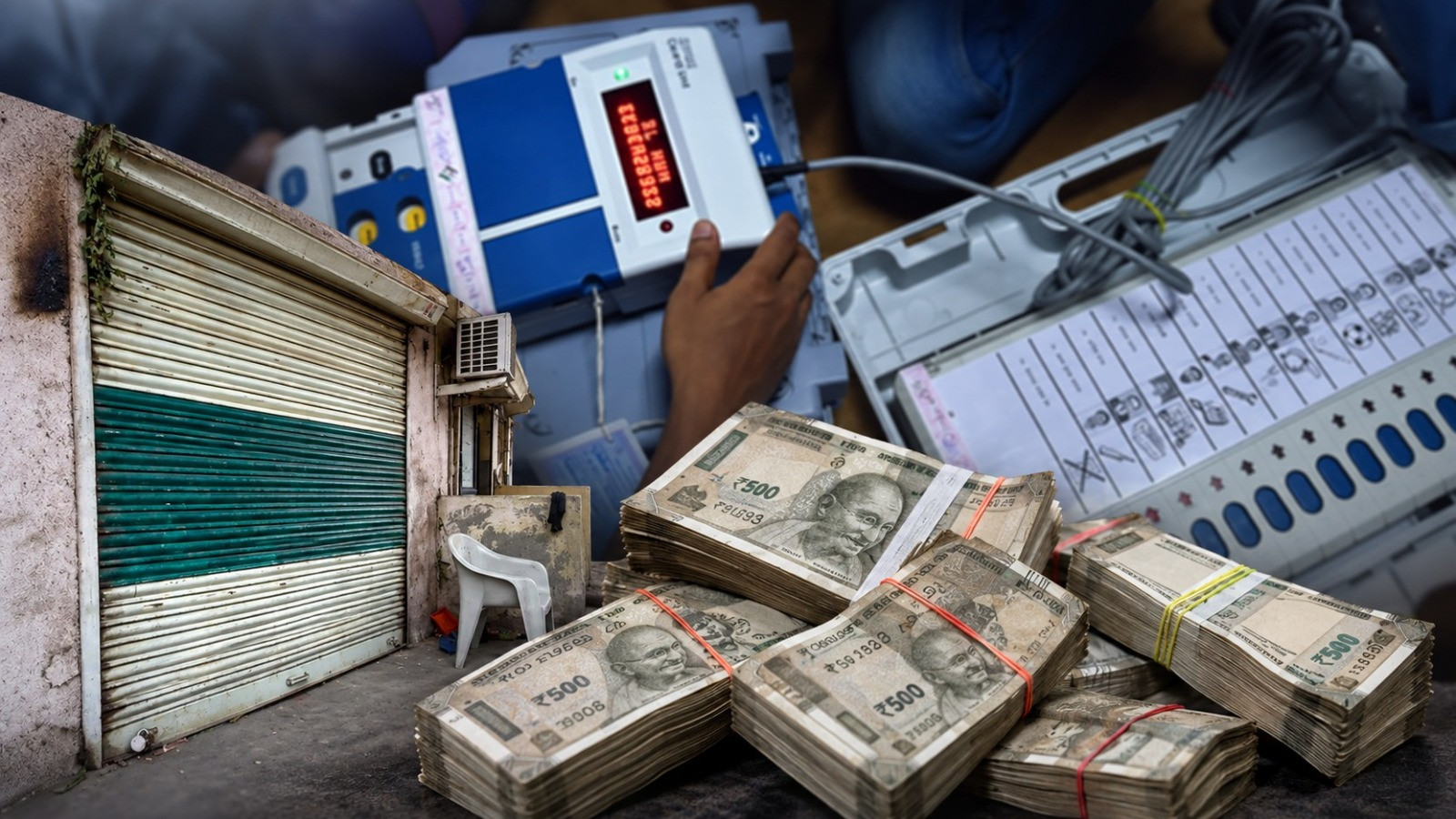
An investigation into the official addresses of these political parties revealed they were located in residential flats and commercial shops, many of which were found closed.
Gujarat has been developing a distinct identity over the last 15-20 years. The people here have a strong desire to make money. Whether legal or illegal, they want to earn money by any means. The state has even set records in share trading. Who doesn't know Harshad Mehta? However, a new scam, or scheme, has emerged from this very Gujarat. Create a political party on paper, collect donations, and disappear. No offices, no MPs or MLAs.
A BBC Hindi investigation has revealed that six registered but unrecognised political parties in Gujarat received over ₹1,500 crore in donations during the financial year 2022-23. This amount is more than the total donations received by all other national parties, excluding the BJP. These six parties include the Satyavadi Rakshak Party, Aam Janmat Party, Garib Kalyan Party, Swatantra Abhivyakti Party, Bharatiya National Janata Dal, and New India United Party. The investigation found very little evidence of significant activity at the registered offices of these six parties.
The BBC team found that their official addresses were located in residential flats and commercial complexes. Many of these offices were found to be closed. On paper, five of these parties have their headquarters in Ahmedabad and one in Anand.
The BBC investigation revealed that despite receiving donations ranging from ₹138 crore to ₹620 crore in the financial year 2022-23, these six parties fielded only 15 candidates in the 2024 Lok Sabha elections.
The BBC investigated the six Registered Unrecognised Political Parties (RUPP) that received the highest donations in 2023-24. There are over 2,800 political parties in India, but only 73 have received national or state-level recognition. The rest are RUPP.
The Aam Janmat Party received the highest donation of ₹620 crore, while the Garib Kalyan Party received the least at ₹138 crore among these six parties. The Satyavadi Rakshak Party received ₹330 crore and the New India United Party received ₹200 crore.
Under the law, registered political parties can accept donations. Both donors and political parties receive tax exemptions on these donations. These donations have not been declared illegal. However, according to the report, the Income Tax Department has investigated some donations and collected a portion of the amounts as tax from some donors.
Chartered accountants told the BBC that one possible method could be that donors obtain a donation certificate from political parties to claim tax exemptions. Subsequently, the political parties return a large portion of the donation to them after deducting some amount as a 'service charge'.
Swati Ben, president of the Satyavadi Rakshak Party, resides in another flat in the same residential complex as the party's registered office in Anand. She told the BBC that the party spent the donation money on charitable works, but no records of this expenditure were maintained.
The investigation does not clarify whether these parties stopped receiving donations after the financial year 2022-23. If donations have ceased, the mere existence of these parties on paper raises the question of whether they could receive large amounts of donations again before the next elections.
According to the report, the Satyavadi Rakshak Party fielded only one candidate in the 2024 Lok Sabha elections and claimed to have spent ₹8 crore on election campaigning. A year prior, the party received ₹330 crore in donations. The party claimed that it spent ₹316 crore of this amount on charitable works.
Approximately 2,800 political parties are registered with the Election Commission of India, but only 73 parties have received recognition from the commission. The BJP, Congress, Aam Aadmi Party, BSP, CPI(M), and NPP are the six parties recognized as national parties, while the rest are recognized as state-level parties. All registered parties are required to have their accounts audited and file annual returns with the Election Commission, which includes information about donors contributing more than ₹20,000.
This BBC investigation shows that there is no correlation between the financial transactions and political activities of these parties that receive hundreds of crores in donations. A lack of transparency is also evident in their activities and the people working behind the scenes.
A major question arises: when these parties are not contesting elections and have no offices, who is donating to them? Are these political parties possibly acting as fronts for someone involved in tax evasion, money laundering, hawala transactions, and other financial irregularities?
During a conversation with the BBC, chartered accountant Mahesh Chhajed alleged that,
some individuals misuse this system. According to them, taxpayers obtain a receipt for donating to a political party to gain tax exemption, and the party returns the remaining amount in cash after deducting its commission. In December 2025, the Income Tax Department also raised the issue of fake donations, fund transfers, hawala, and other financial irregularities through RUPP.
According to Shaili Mahajan, a researcher at ADR, some RUPP may operate as a means for money laundering and tax evasion. She questions why parties that are not electorally active are receiving such large amounts and whether they are being used as a means to legitimize funds for shell companies.
Surendra Tiwari, president of the Swatantra Abhivyakti Party, also told the BBC that his party received ₹219 crore in 2023-24, but they had no authority to use that money. He accused the party's chartered accountant of controlling the party's operations. A tax official showed the BBC an internal dossier. According to the dossier,
the department identified ₹5,591 crore in fake donations given to RUPP for obtaining tax exemptions, and ₹2,749 crore of this amount has been recovered. Additionally, ₹665 crore in foreign transactions related to the parties has also been identified.
The BBC asked the Election Commission whether it had received any information from the Income Tax Department regarding the financial irregularities of these RUPP and whether any action had been taken against the six parties involved in the investigation. No response was received on this matter.
Last year, the Election Commission removed over 800 RUPP from its list because they had not contested any elections in the last six years. However, it is unclear whether any action was taken against any of them due to financial irregularities.
In the 2023 Tripura Assembly elections, the small party from Bengal, Nationalist Citizens Party of India (NCPI), came into the limelight when 20 rebel MPs from TMC announced their merger with it. The Election Commission registered NCPI as RUPP on January 20, 2023, just a few weeks before the Tripura Assembly elections. The party contested the elections with the aim of becoming the voice of marginalized communities in the tribal areas of Tripura. It attempted to field candidates for 7 seats.
Some former candidates from Tripura told NDTV that after the elections, the party members left the area and they lost contact. One candidate stated that there was almost no campaigning and the party primarily wanted to field candidates. According to electoral records, NCPI had received only ₹1.13 lakh in total donations so far. The party's treasurer, Shevli Kundu, is also a director of two other entities registered at the same address. The party president, Uttiya Kundu, is the husband of Shevli Kundu.
On May 21, 2023, Times of India reported that several RUPPs in Gujarat informed Income Tax officials that they took commissions in exchange for helping people evade taxes. In this method, individuals donated to a political party, claimed deductions on their Income Tax based on that, and then it was alleged that the money was returned after deducting a commission. The Income Tax Department had issued notices to over 4,000 such donors.
A second investigation by Times of India on May 28, 2023, revealed that some “handlers” were using RUPPs for tax evasion. According to the report, some parties received large amounts as donations, which were then circulated through various accounts and entities to return cash.
The Week published a detailed report on RUPPs in February 2023. It cited the example of Gujarat's Bhartiya National Janta Dal, which suddenly received ₹4.32 crore in donations in a year and showed almost the entire amount as spent under “other charitable objects,” but no details of the expenditures were provided.
In September 2022, the Income Tax Department conducted raids at 110–120 locations across the country against RUPPs and associated individuals. The action was based on fake donations, tax evasion, money laundering, and suspicious financial activities. The investigation also focused on such parties that had very little or almost no political activities.