
Government approves trial of plastic notes despite high costs

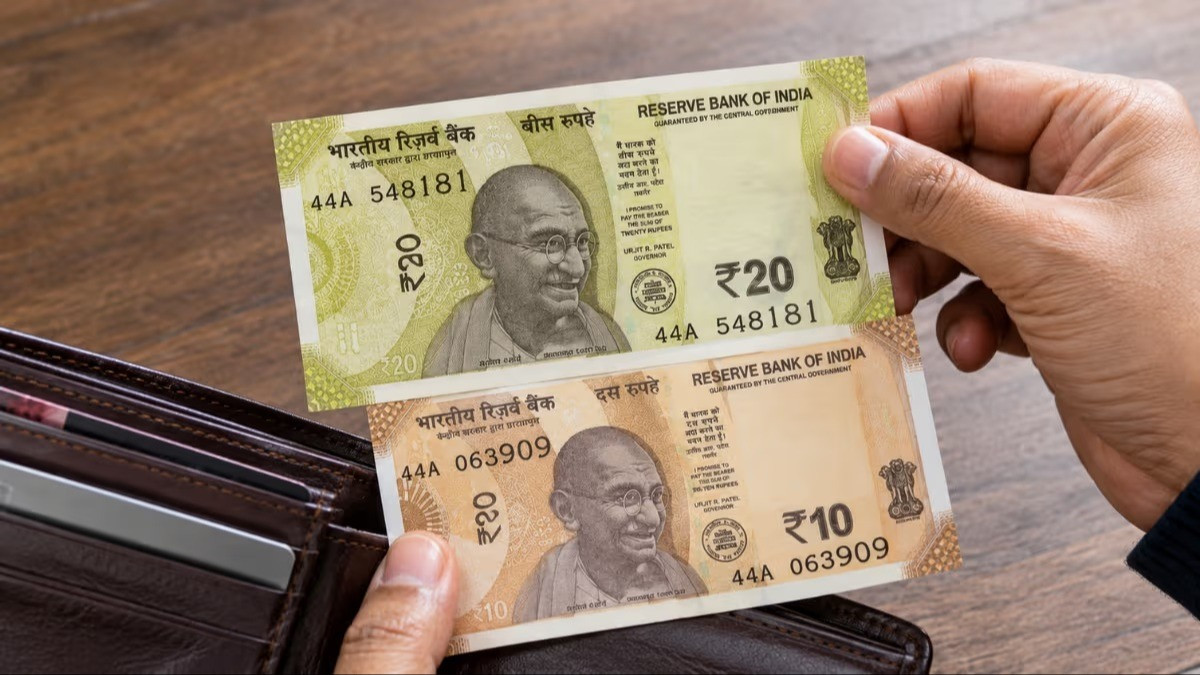
The Indian government has approved the RBI's proposal to trial ₹10 and ₹20 plastic notes.
The Central Government has approved the Reserve Bank of India's (RBI) proposal to trial ₹10 and ₹20 polymer (plastic) notes. This plan was first announced in 2012, but it could not be implemented at that time. However, the government has clarified that there is currently no proposal to completely replace paper notes with plastic ones. The new polymer notes will circulate alongside the existing paper notes.
Although the cost of producing a polymer note is higher than that of a paper note, the overall expense is reduced due to its longer lifespan. Fewer notes need to be printed, transportation is reduced, processing costs are lower, and the cost of destroying old notes decreases. This can make currency management cheaper and more effective in the long run.
In response to a question in the Lok Sabha, Minister of State for Finance Pankaj Chaudhary stated that on the recommendation of the RBI's Central Board of Directors, a proposal was put forward to issue one billion (100 crore) polymer notes of ₹10 and ₹20 each for field trials, which the government has approved. If the trial is successful, the process of regular printing and issuance of these notes will commence.
The government also stated that this plan is currently in its initial stages. Therefore, it is not yet possible to assess its impact on the digital payment system. The government maintains that cash currency and digital payments complement each other and will continue to be available to people in the future.
This decision comes at a time when RBI's subsidiary, Bharatiya Reserve Bank Note Mudran Private Limited (BRBNMPL), recently invited expressions of interest (EOI) from companies for the supply of polymer substrate. The company stated that this procurement is currently only for the needs of the field trial. If the trial is successful, large-scale procurement of polymer material for notes of different denominations will be undertaken in the future.
In fact, the idea of polymer notes in India is not new. In December 2012, the Press Information Bureau (PIB) informed that the RBI and the Central Government had decided to print notes on polymer substrate. At that time, a plan was made to test 100 crore polymer notes of ₹10 in five cities. However, this plan could not progress and remained shelved for years. Now, nearly 14 years later, it is being revived.
At that time, the government also clarified that the main objective of polymer notes was not to curb counterfeit notes, but to increase the lifespan of the notes.
Polymer notes are printed on a special type of plastic film (polymer substrate) instead of regular paper. This surface is neither fibrous nor easily absorbs moisture. In contrast, the existing banknotes in India are printed on special paper made from long cotton fibers. This means that trees are not cut down for the production of Indian paper notes.
The primary reason for introducing polymer notes by the RBI is their long lifespan. Especially, lower denomination notes like ₹10 and ₹20 pass through the hands of many people, causing them to tear and deteriorate quickly. Polymer notes can last two to six times longer than paper notes. This will reduce the need to print new notes frequently.
From an environmental perspective, polymer notes are also considered better. A study published by the International Monetary Fund (IMF) in 2016 stated that polymer notes have a lesser impact on the environment. According to the IMF, they can reduce the potential for global warming by about 32 percent and energy consumption by approximately 30 percent. Additionally, they last more than twice as long as paper notes.
Many countries around the world have already adopted polymer notes. Australia was the first to issue fully polymer banknotes in 1988. Today, nearly 60 countries use plastic currency in some form. These include countries like the United Kingdom, Canada, New Zealand, Singapore, Malaysia, Thailand, and Vietnam. Canada gradually adopted polymer notes after studying their environmental impact in 2011. Meanwhile, a study by Australia's central bank found that despite higher initial costs, polymer notes result in significant savings in the long run as they need to be replaced less frequently.
RBI's recent annual report also indicates that the demand for cash in India is continuously increasing. By March 2026, the total value of currency in circulation in the country is expected to increase by 12 percent to ₹41.23 lakh crore. Meanwhile, RBI's expenditure on printing notes decreased by approximately 24 percent to ₹4,875 crore in the fiscal year 2025-26, as fewer new notes needed to be printed. According to the report, the ₹500 note still accounts for about 86 percent of the total currency value in circulation.
The government states that this is currently only a pilot project. If the field trial of ₹10 and ₹20 polymer notes is successful, the use of this technology in other denominations may be considered in the future. For now, the general public need not worry, as paper notes will not be completely phased out and both types of currency will continue to coexist.