
FSSAI bans sale of popular liquor brands including Old Monk

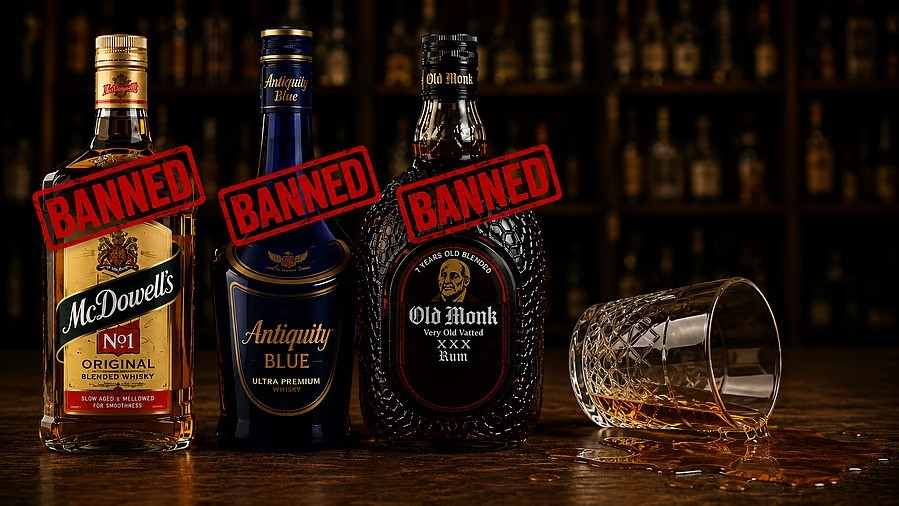
FSSAI has halted the sale of several popular liquor brands' products.
There is no longer trust in food items, then medicine, and now even alcohol. Adulterators have not spared alcohol either, including brands that are most popular among the hardworking proletariat - Old Monk Triple X Rum and McDowell's No. 1 Whisky.
A report from the liquor industry has shocked regular drinkers and enthusiasts. The Food Safety and Standards Authority of India (FSSAI) has banned the sale of products from several popular liquor brands. These include favourites from Old Monk enthusiasts to McDowell's Whisky customers. Variants of Old Monk, McDowell's, and Royal Challenge Whisky, among other popular rum and whisky brands, have come under FSSAI's scrutiny. Action against these liquor manufacturers has been initiated by the FSSAI for not complying with existing regulations.
An official release from FSSAI stated,
"Some manufacturers have been found adding external flavours to the product, which give the sensation of the product's natural aroma and taste. Despite this, they sell it as a standard product, misleading consumers." It has been stated that due to misleading claims and the use of unauthorized flavours, the sale of these products has been banned.
Samples of rum and whisky brands from several companies were taken and sent to laboratories for testing. Lab tests revealed the presence of external artificial or 'nature identical' flavours in these products, leading them to be classified as 'sub-standard'. However, the release further stated that the use of natural and nature-identical flavouring substances is undisputedly permitted under the applicable food safety and standards regulations related to alcohol.
The companies and products against which action has been taken include Messrs Mohan Rocky Springwater's Khopoli unit's Old Monk Rum's three variants - The Legend, Gold Reserve, and XXX Matured Rum, Messrs United Spirits' Baramati brand McDowell's No. 1 Rum, Messrs INBREW Beverages' Madhya Pradesh brand Bagpiper Deluxe Whisky and Old Cask Deluxe XXX Rum. Additionally, Messrs Associated Alcohol and Breweries' Madhya Pradesh brand Central Province Whisky and McDowell's No. 1 Celebration Matured XXX Rum, and Messrs United Spirits' Madhya Pradesh brand Antiquity Blue Whisky and Royal Challenge Whisky are included.
Regarding the materials used in beverage production, the authority also described the claim of "7 Years Old Blended" on a variant of Old Monk XXX Rum as misleading. According to FSSAI,
the main component of this rum is neutral spirit, which is neither matured nor aged. Meanwhile, matured rum spirit is present in very small quantities. The investigation found its quantity to be less than 5 percent.
The regulatory body stated, "This is a clear violation of existing regulations, as per the Food Safety and Standards (Alcoholic Beverages) Regulations, 2018, the age claim of any blended spirit should be based on the youngest spirit included."
It is noteworthy that earlier, FSSAI had issued a ban order against several products of Dabur India a day before, i.e., on Tuesday. The company has been prohibited from using claims like '100 percent' on products such as honey, cow ghee, and edible oils. The food regulator states that such labeling is misleading and violates food safety regulations.
FSSAI has prohibited Dabur India from selling several products, including honey, cow ghee, and edible oils, with the claim of '100 percent'. According to FSSAI, such labeling is against the law. In a post released on social media on Monday, FSSAI stated that it has,
issued a ban order against Dabur India Limited for the sale of food products that misleadingly claim to be '100 percent'. These include honey, apple cider vinegar, virgin coconut oil, sesame oil, cow ghee, coconut water, coconut milk, and other products.
Highlighting the violations, FSSAI stated that claims like '100 percent natural', '100 percent pure', '100 percent purity guarantee', '100 percent organic', and '100 percent tender coconut water' were found on several food products sold on the company's website. The food regulator clarified that the use of claims like '100 percent' violates the provisions of the Food Safety and Standards (Advertising and Claims) Regulations, 2018. According to FSSAI, such claims are vague, their authenticity cannot be verified, and they can mislead consumers.