
Congress warns UPI transaction charges will hurt small businesses

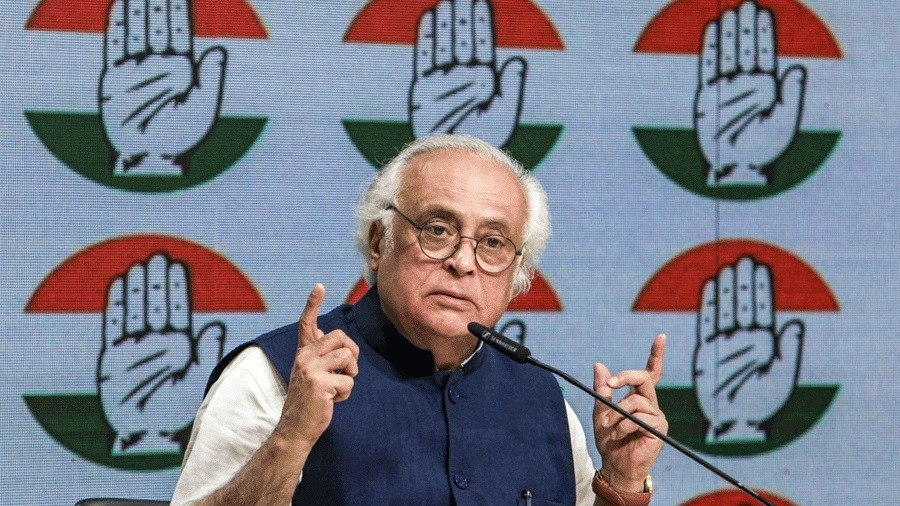
Congress leader Jairam Ramesh claims transaction costs will burden small businesses and consumers.
Congress General Secretary Jairam Ramesh on Friday stated that the proposed changes in the law related to UPI payments undermine the legal protection afforded to India's major digital payment system. This latest attack from Ramesh came after Sitharaman accused him of "spreading misleading information." The controversy is regarding the Taxation and Other Laws (Amendment) Bill, 2026, which proposes changes to Section 10A of the Payment and Settlement Systems Act, 2007.
Ramesh termed the government's claim as "misleading" and said,
“Merchants ultimately pass on the transaction costs to customers through higher prices or differential pricing, as is the case with credit and debit card charges.”
He further stated,
“MDR is charged from merchants, but it is certain that they will pass on the transaction costs to customers.” He added that those whom the Centre considers merchants are actually grocery stores, small businesses, and street vendors, who are the “real backbone of UPI.”
Ramesh also rejected the government's argument that allowing MDR would help banks and fintech companies invest more in infrastructure, innovation, and security. Describing UPI as a public digital facility, he said it is the government's responsibility to protect this system, not to weaken its security provisions.
He wrote, “Zero MDR was extremely crucial for UPI's success. It enabled small shops and roadside vendors to make and receive payments without any transaction fees.” He argued that the Reserve Bank of India can support the UPI system without imposing charges on merchants or consumers. On Sitharaman's argument that the NPCI-led UPI and Services Steering Committee has not yet made any decision on MDR, Ramesh said the concern is not about any immediate decision but about the legal framework being prepared.
In an old post on X on Thursday, he had said that the RBI has the financial capacity to support this system without charging merchants or consumers. Referring to the ₹2.86 lakh crore surplus transferred by the central bank to the central government in 2025-26, Ramesh said that even a small portion of it would be sufficient to provide financial support to the digital payment infrastructure.
He stated,
“This bill removes the legal guarantee of zero MDR under Section 10A. It leaves the decision to impose charges in the future to government notification. Government assurances or tweets cannot be a substitute for legal protection.”
The Congress leader also questioned the timing of the amendment. He said this change came immediately after the 2026 National Trade Estimate Report by the US Trade Representative, which criticized India's UPI and RuPay systems, as well as Brazil's Pix system, stating that they affected the market share of Visa and Mastercard. Ramesh alleged that while Brazil continued to strengthen Pix as strategic public digital infrastructure, the Modi government is moving in the opposite direction. He had earlier questioned whether this amendment was linked to pressure from Washington.
He also said,
“Google Pay and Walmart-controlled PhonePe together process more than 80 percent of UPI transactions. He argued that at a time when foreign-controlled platforms already dominate this system, India should strengthen its public digital payment infrastructure rather than weaken it.”
Ramesh also dismissed Sitharaman's criticism that the opposition could have debated this issue in Parliament. He blamed the government's attitude, which he described as an attempt to evade accountability, for the disruption during the monsoon session. He said repeated demands for a statement from Union Home Minister Amit Shah on police action against student protesters were ignored. His post stated, “Being present in Parliament and answering questions is not optional; it is part of a minister's constitutional responsibility.” He accused the government of taking advantage of this disruption to get the bill passed in the Lok Sabha by voice vote within minutes of its introduction.