
Banks write off ₹10 lakh crore in corporate loans over 12 years

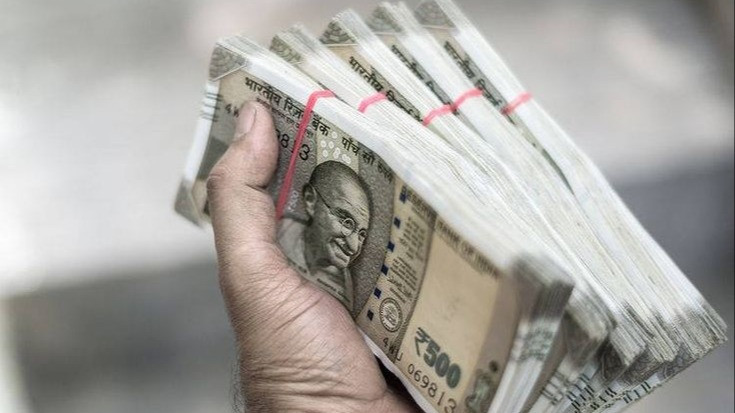
The central government disclosed this information in Parliament.
You often read about Tax Havens in business stories. But you don't read about Loan Havens. Cayman Islands, Switzerland, Singapore, Luxembourg, Bermuda, Mauritius, and Hong Kong are known as tax haven countries. Here, foreign nationals are not taxed. In these countries, big corporates and leaders from our country invest their black money and avoid paying taxes. But what would you call taking loans from banks in your own country, not repaying them, and then having them written off? Isn't this also a kind of Loan Haven for them!
It is strange that farmers are harassed by banks to such an extent to repay loans that they are driven to suicide, while the same banks give loans to corporates with both hands and then write them off. Banks have coined a very legal term for this - write-off. Under the guise of this term, banks cleverly reiterate that write-off does not mean loan forgiveness.
The Wire reports that in the last 12 financial years, banks have written off loans worth nearly ₹10 lakh crore given to large corporates and the service sector. The central government provided this information in Parliament on Monday (August 10). In a written reply, Minister of State for Finance Pankaj Chaudhary shared data from the Reserve Bank of India (RBI), stating that the outstanding loans on large industries and the service sector were ₹63,19,057 crore in the financial year 2024-25, which increased to ₹69,21,734 crore in the financial year 2025-26. According to the data, the figure for loan write-offs was highest in the financial year 2018-19 at ₹1,48,753 crore. However, it decreased to ₹20,485 crore in 2025-26.
Pankaj Chaudhary stated that according to RBI's Resolution of Stressed Assets Directions, 2025, the write-off conducted by commercial banks is an accounting process. Banks use it to adjust their balance sheets. A significant portion of the write-off pertains to technical or prudential write-offs and loans under recovery processes.
The minister clarified,
The write-off of a loan does not mean loan forgiveness. It does not absolve the borrower, whether an individual, farmer, or corporate, of their liability, nor does it provide any direct benefit. The borrower or company remains responsible for repayment, and banks continue the recovery actions initiated in such accounts.
To provide relief to stressed borrowers, the RBI issued the Master Direction on Resolution of Stressed Assets, 2025 on November 28, 2025, which has been updated until July 1, 2026. Under this, banks and other lenders are empowered to restructure the loans of financially stressed borrowers based on board-approved policies and regulatory guidelines. Earlier, in December 2025, Pankaj Chaudhary had informed Parliament that public sector banks (PSBs) had written off a total of ₹6,15,647 crore in loans over the past five financial years and up to September 30, 2025, in the current financial year.
In response to another question, the Minister of State for Finance said that the government is committed to supporting sustainable economic growth while maintaining fiscal discipline. The central government's fiscal deficit was 9.2% of GDP in the financial year 2020-21, which decreased to 4.4% in 2025-26. During the same period, the government's total outstanding liabilities decreased from 61.5% of GDP to 58.2%. Meanwhile, the government's capital expenditure increased from ₹4.3 lakh crore in 2020-21 to ₹10.7 lakh crore in 2025-26.
Domestic demand also remained strong. The growth rate of Real Private Final Consumption Expenditure increased from 5.8% in 2024-25 to 7.7% in 2025-26. Additionally, retail inflation averaged 2.1% in 2025-26, the lowest level since 2014-15.
Citing data from the Periodic Labour Force Survey, the minister stated that the unemployment rate among people aged 15 years and above was 6% in 2017-18, which decreased to 3.1% in 2025. In response to another question, Chaudhary mentioned that there were 5,85,751 cases of digital payment fraud reported in the last five financial years, involving a total amount of ₹3,590.70 crore.
He said that the government, RBI, and NPCI have taken several steps to assess emerging cyber threats related to digital payment systems, strengthen cybersecurity, improve fraud detection, increase consumer awareness, and ensure timely resolution of complaints.
India's external debt was USD 762.8 billion at the end of March 2026. The ratio of short-term external debt to GDP was 4.1%. At the end of March 2026, India's total external debt was 20.8% of GDP. Foreign exchange reserves were equivalent to 90.6% of total external debt, while short-term debt based on original maturity was 19.6% of total external debt. The country's Debt Service Ratio was 6.6% at the end of March 2025, which decreased to 5.8% in March 2026.