
Abhinandan, who shot down Pakistani fighter jet, leaves IAF

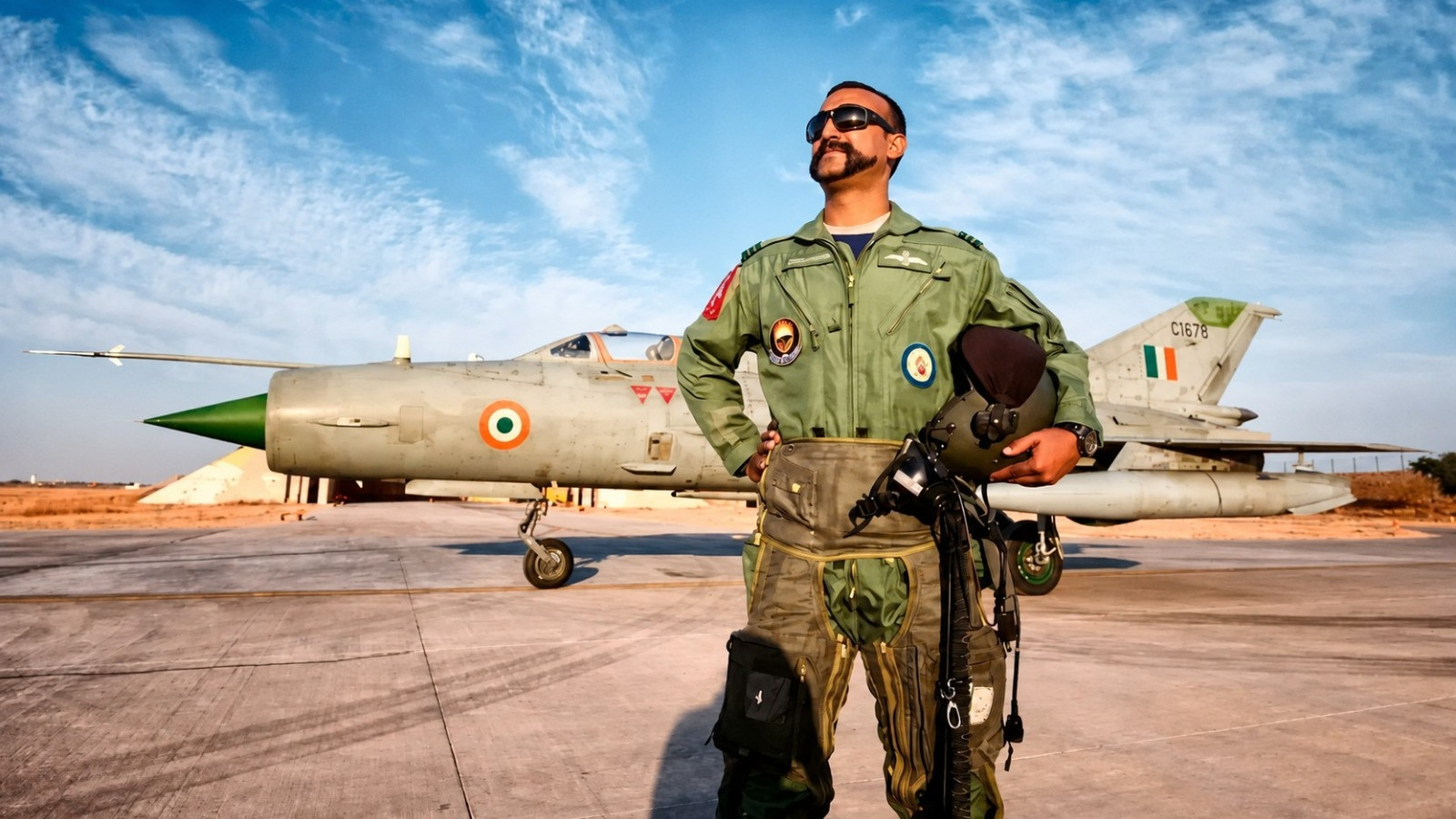
From MiG-21 to ATR. The cockpit remains the same for pilot Abhinandan, but the mission has changed.
From MiG-21 to ATR. The cockpit of pilot Abhinandan remains the same, but the mission has changed. Former fighter pilot Abhinandan Varthaman, who was awarded the bravery award, has left the Indian Air Force. Abhinandan has taken retirement from the Indian Air Force and has taken on a new responsibility as a commercial pilot with the private aviation company FLY91. According to the airline, he is currently undergoing training on the Goa-Hyderabad route.
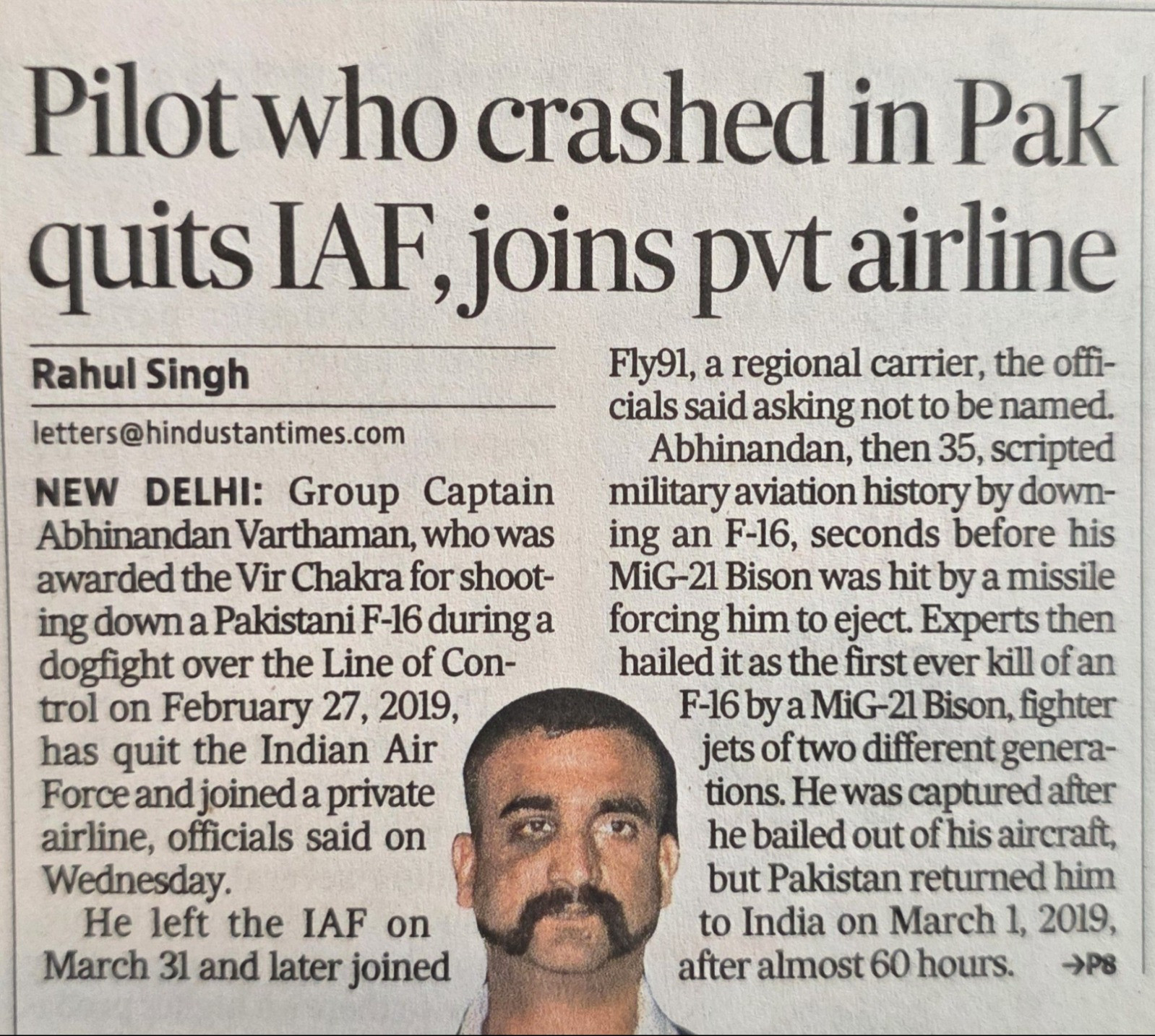
According to a report by Hindustan Times,

Former Group Captain Abhinandan Varthaman is now preparing for his second innings in the sky. After completing necessary training and regulatory approvals, Abhinandan will fly ATR aircraft for the private airline. Upon being contacted, FLY91 confirmed Varthaman's joining the airline but declined to provide further details regarding his training or future flight schedules.
When asked by the airline when the former fighter pilot would start commercial flights and on which routes he would operate in the future, it stated that Varthaman does not wish to share any additional information about his professional or personal travel at this time. This stance aligns with the simplicity and low-profile lifestyle he has maintained even after becoming one of the country's most talked-about military figures.
It is noteworthy that during the aerial confrontation in February 2019, Abhinandan shot down a Pakistani F-16 fighter jet. Subsequently, his MiG-21 Bison also came under attack from the enemy.
Due to the aircraft being damaged, he had to eject in the Pakistan-occupied area, where he was taken into custody by Pakistani security forces. He remained in captivity in Pakistan for three days.
Abhinandan is known as the only MiG-21 pilot in the world to have shot down an F-16 aircraft. For demonstrating "extraordinary fidelity to duty" during the aerial conflict, he was awarded India's third highest wartime bravery award, the 'Vir Chakra', in 2021.
The award citation praised his bravery during that dogfight, where he challenged enemy aircraft despite facing a numerically superior Pakistani Air Force. At that time, he was serving as a Wing Commander. Later, the Indian Air Force promoted him to Group Captain. However, seven years after that incident, Varthaman is once again preparing to return to the cockpit. But this time, he will be flying to transport passengers to their destinations, not on a combat mission.
This change in aircraft and mission is significant. The MiG-21 Bison was a supersonic fighter aircraft designed for combat. In contrast, the ATR is a turboprop passenger aircraft used primarily to connect cities on short regional routes. However, the fundamental requirements associated with flying aircraft will still be familiar to Abhinandan—discipline, precision, situational awareness, adherence to established procedures, and the ability to make critical decisions under pressure.
The operational protocols of civil aviation are entirely different from military flights. Fighter pilots are trained for combat, strategic decisions, and high-risk missions. In contrast, airline pilots operate within a highly structured framework, where safety procedures, coordination in the cockpit, communication, and continuity are given utmost importance. Therefore, Abhinandan will need to adapt his extensive military flight experience to the systems and procedures of civil aviation.
It is believed that FLY91 is part of this transition with his current training. He will take on regular airline pilot responsibilities only after completing his training.
This move is also significant for the Indian aviation industry in many ways. The pilot, who was recognized nationwide for flying fighter jets during one of the most tense aerial confrontations between India and Pakistan, is now preparing to fly ordinary Indian passengers on regional routes.
Varthaman's new employer, FLY91, is a regional airline aimed at strengthening air connectivity between India's tier-2 and tier-3 cities.
Founded by experienced professionals in the aviation industry and operated with the support of professional investors, this airline has centered its vision on making air travel more accessible even outside the country's major metropolitan areas. Due to the company's emphasis on regional connectivity, ATR aircraft are a significant part of its operations. These aircraft are considered suitable for establishing connections between short-distance flights and smaller towns.
Born on June 21, 1983, in Chennai, Varthaman was educated at Sainik School, Amaravatinagar, and later graduated from the National Defence Academy. He was commissioned into the Indian Air Force in June 2004 in the fighter branch. During his military career, he also flew Sukhoi-30 MKI before being deployed in the MiG-21 Bison Squadron. He served as a Flying Officer, Flight Lieutenant, Squadron Leader, and Wing Commander. He was promoted to Group Captain in December 2021. However, the aerial confrontation in February 2019 made him a household name in the country. His distinctive moustache, calm demeanor, and the circumstances of his return to India after being captured in Pakistan became emblematic of one of the most talked-about events in India-Pakistan relations.
Now, the next chapter of his flying career is set to begin in a completely different environment from the fighter squadron. The MiG-21 symbolized India's fighter aviation heritage and Varthaman's military pilot life. In contrast, the ATR represents the role of aviation that aims not to engage in war or intercept enemy aircraft, but to connect people and cities.
This pilot, who once flew in a controversial and tense sky, is now preparing to fly in entirely different circumstances. The date of Varthaman's first commercial flight and the routes he will operate in the future have not yet been made public at his request.
But one thing is clear—Abhinandan Varthaman, recognized for fighter jets, war training, and an extraordinary incident in India's military history, is ready to take to the skies once again. This time, the cabin of the aircraft will be filled with ordinary citizens, and the mission will not be war, but to connect people and cities.