
Why 5,506 villages in UP are now ghost towns

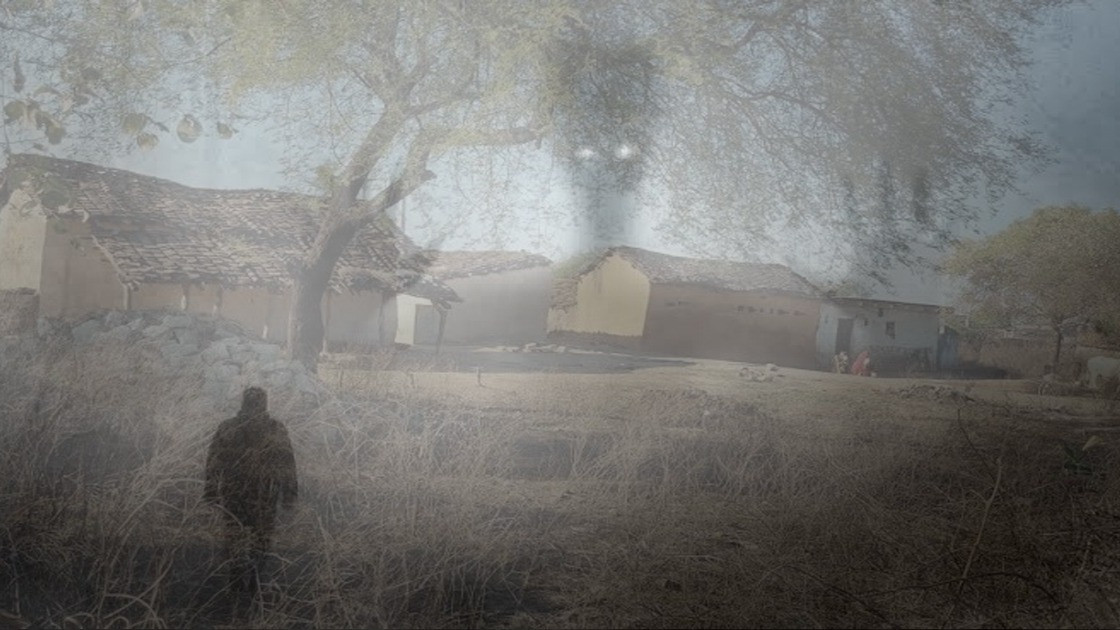
Around 28,000 villages across India are completely deserted.
The soul of our country once resided in its villages. However, these villages now seem to be inhabited by ghosts rather than people. Villages have become desolate. Across the nation, approximately 28,000 villages have been completely abandoned. This is not just our claim; government statistics testify that entire villages have been emptied. The National Institute of Urban Affairs has revealed this in its analysis of 6.41 lakh villages.
The study links the abandonment of villages to poor availability of roads, schools, banks, and other basic facilities, along with increasing migration from villages to cities. The situation is worst in Uttar Pradesh, where the highest number of 5,506 villages have been deserted. The people from these villages have now settled in cities.
According to The Telegraph, the study based on government data related to rural areas found that almost every state has such villages where no one resides anymore. In Kerala, the number is just 1, while Uttar Pradesh has the highest with 5,506 villages found empty. Nearly half of these deserted villages are at least 10 kilometers away from the nearest road, public transport facility, senior secondary school, bank, market, primary health center, and hospital. Researchers suggest that weak infrastructure might play a significant role in the declining population of villages.
Nawaz Sharif, a research fellow at the New Delhi-based National Institute of Urban Affairs who led the study, said,
“The geographical spread of these empty or 'ghost villages' is startling. Earlier assessments mostly assumed such villages were primarily in hilly states like Himachal Pradesh and Uttarakhand. But empty villages are also present in the two large states of UP and Bihar, far from these hilly areas.”
These findings are based on data from the central government's Mission Antyodaya, which assesses the status of infrastructure and essential services in villages across the country. No empty villages were recorded in Ladakh, Lakshadweep, Mizoram, the National Capital Territory of Delhi, and the Andaman and Nicobar Islands.
India remains a predominantly rural country. According to post-2011 census estimates, about two-thirds of the country's estimated 1.4 billion population still live in villages. Sharif stated,
“The geographical patterns we are observing indicate that poor access to infrastructure and essential services is contributing to the declining population of villages. When essential services are at least 10 kilometers away, life becomes very difficult.”
The analysis found large clusters of empty villages in various parts of the country. These include 5,506 in Uttar Pradesh, 3,431 in Bihar, 3,303 in Odisha, 2,413 in Maharashtra, 1,723 in Karnataka, and 1,703 in Assam. Other states also have smaller numbers of such villages. In states where the rate of migration out of villages is high, the presence of a large number of empty villages aligns with previously recorded broader trends of rural to urban migration, agricultural distress, and uneven development. However, the new study did not directly investigate these causes.
Sharif noted, “The reasons for the depopulation of villages may vary across different states and regions. We need more research to understand them.” However, some experts have warned that moving from villages to cities does not always improve people's lives.
Ghatak stated, “People often earn more in cities compared to villages. But higher income does not necessarily mean a better life, especially when migrants struggle for housing, education, and other basic amenities.”
According to Ghatak, the nationwide availability of the Public Distribution System (PDS) since COVID-19 might have also encouraged migration from villages. The PDS is a network of shops across the country that provides eligible families with grains and other essential food items at subsidized prices, and in some cases, for free.
This study by Sharif and researcher Diksha Chhetri from Cooch Behar Panchanan Barma University is an initial nationwide geospatial assessment of the country's villages. According to the study,
nearly half of the deserted villages are more than 10 kilometers away from the nearest primary health center or hospital. About 61 percent of empty villages are at least 5 kilometers away from the nearest primary school, while slightly more than half are over 10 kilometers away from the nearest bank.
The study also highlighted a severe lack of infrastructure and essential services in populated villages. In inhabited villages, about 42 percent are at least 10 kilometers away from the nearest hospital. 24 percent of villages are 10 kilometers or more from the nearest bank. Meanwhile, about 20 percent of villages are at least 10 kilometers away from the nearest senior secondary school and market.