
Who prompted the change in Form 6 for SIR?
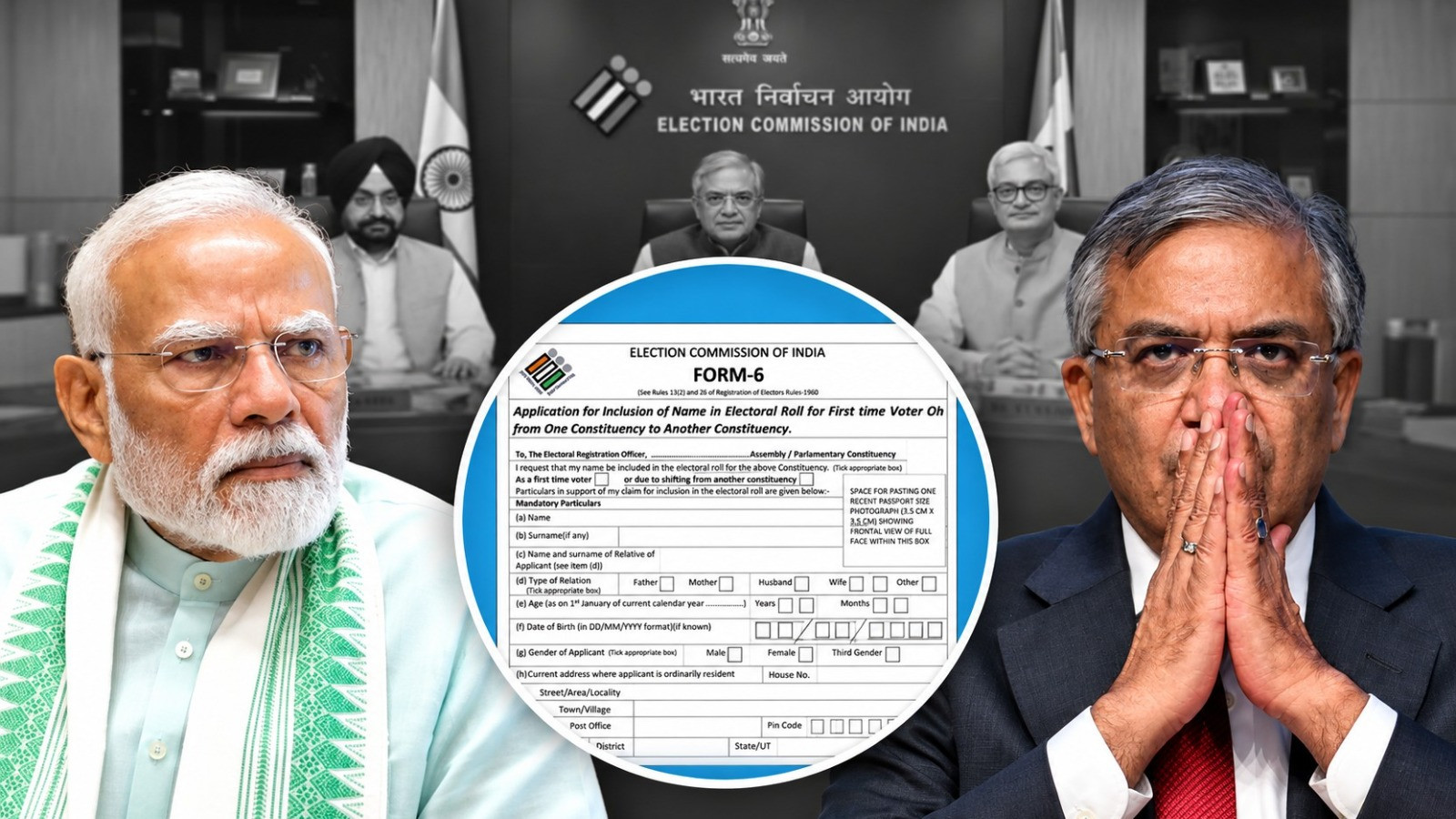
Depriving citizens of their voting rights is a grave offense in democracy.
In the Indian Express newspaper on September 23, an important point was made regarding the SIR of the Election Commission, suggesting that the Chief Election Commissioner and the Modi government are at fault.
The report stated that two election commissioners had warned that the changes made to Form – 6 were "illegal" and "unauthorized," and it was necessary to send this to the government. It should be removed immediately so that first-time voters are not harassed. It is surprising that this warning from the two election commissioners was ignored.
Due to this change, questions related to SIR were included in Form-6, which new voters have to fill out. There were three points:-
Whether their own name was in the voter list during the SIR conducted in the 2000s, or whether their parents' or grandparents' names were in it, or whether their name or those of their relatives were included. Answering these was not actually mandatory, but without answering these three questions, no voter could proceed with filling out Form-6.
Official records show that two out of three election commissioners, Sukhbir Singh Sandhu and Vivek Joshi, stated that amendments to the Registration of Electors Rules, 1960 could not include such conditions in Form-6 without amendments. Such rules are notified by the government only after consultation with the Election Commission.
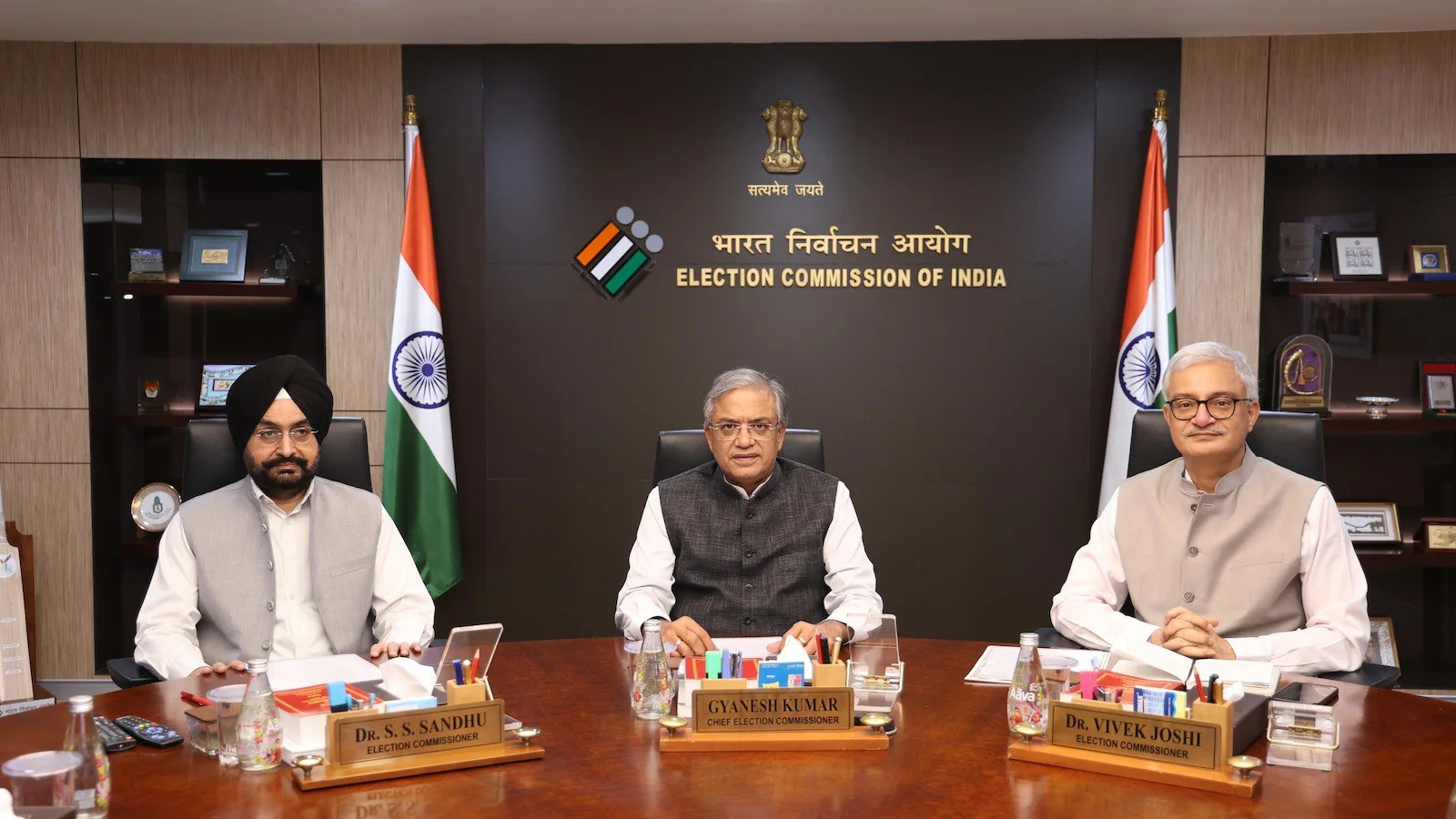
Responding to the proposal to change Form-6 under the SIR framework on May 16, 2026, Election Commissioner Vivek Joshi registered his objections. He also mentioned that under Section – 21(3) of the Representation of the People Act, SIR "is a one-time exercise and is an exception." This means that if you cannot answer these three questions, your name will not be included in the voter list.
Election Commissioner Sukhbir Singh Sandhu wrote that despite the clear intentions of the two election commissioners, changes were made to Form-6 that were unauthorized and illegal. In India's democracy, the right to vote belongs to the individual:-
A person qualifies to vote based on their age, citizenship, and residence, not based on whether their parents registered their name in the voter list during the last SIR.
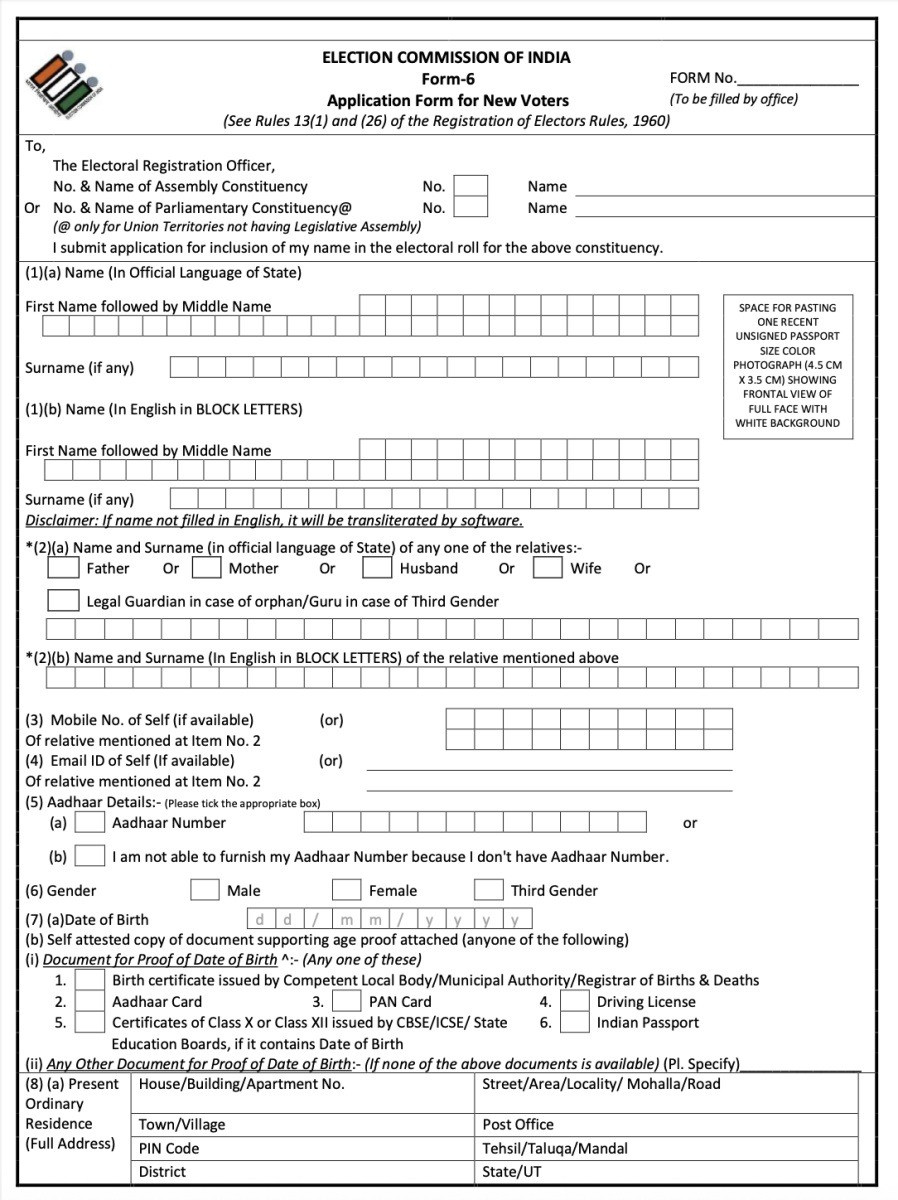
In fact, the new question on Form-6 is most significant for new voters whose parents or grandparents were not included in the voter list prepared after the last SIR. An 18-year-old from such a family could not truthfully choose either of the first two options, and the form did not clarify what would happen if they chose the third option.
Its significance is further heightened because there was already a clear path to change Form-6. In 2021, Parliament amended the Representation of the People Act, 1950 to allow the Election Commission to collect Aadhaar numbers from voters. That change in Form-6 was not made by the Commission itself. On June 17, 2022, the Law Ministry notified corresponding changes to the voter registration rules and also revised Form-6. Under this legal framework, the proposed changes to Form-6 were brought before the Commission this year.
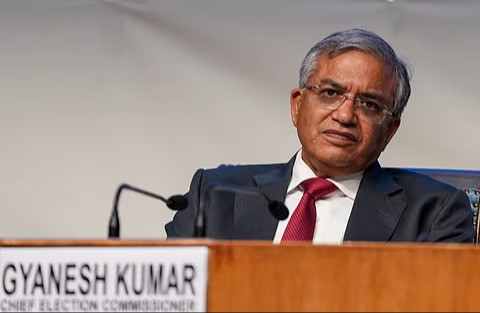
The question is, why were these three questions made mandatory? The intent was clearly to remove voters from the voter list. This is why 13 crore people have gone missing from the voter list in the country.
Now the Election Commission has stated that those whose names were removed from the voter list due to Form-6 will have BLO visit them again, and the entire process will be repeated. This means that the news published in the newspaper and the ensuing agitation led the Election Commission to reconsider its decision regarding Form-6. However, the question arises as to whose information led to all this and why it happened. The answer may lie with the Chief Election Commissioner, and for this, they are at fault. And who in the government provided this information? Taking away a citizen's right to vote is undoubtedly a grave crime in a democracy.
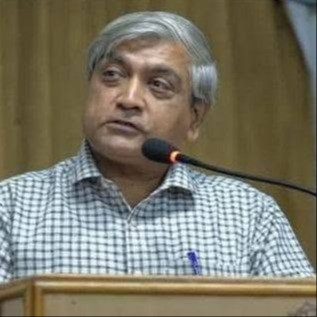
Pro. Hemantkumar Shah
प्रो शाह जाने-माने अर्थशास्त्री हैं और गुजरात में लंबे समय तक अध्यापन के बाद लेखन और सामाजिक कार्यों में सक्रिय हैं।