
Contempt petition filed as 45 metro stations remain shut

The petition names Union Home Secretary Govind Mohan and other officials as respondents.
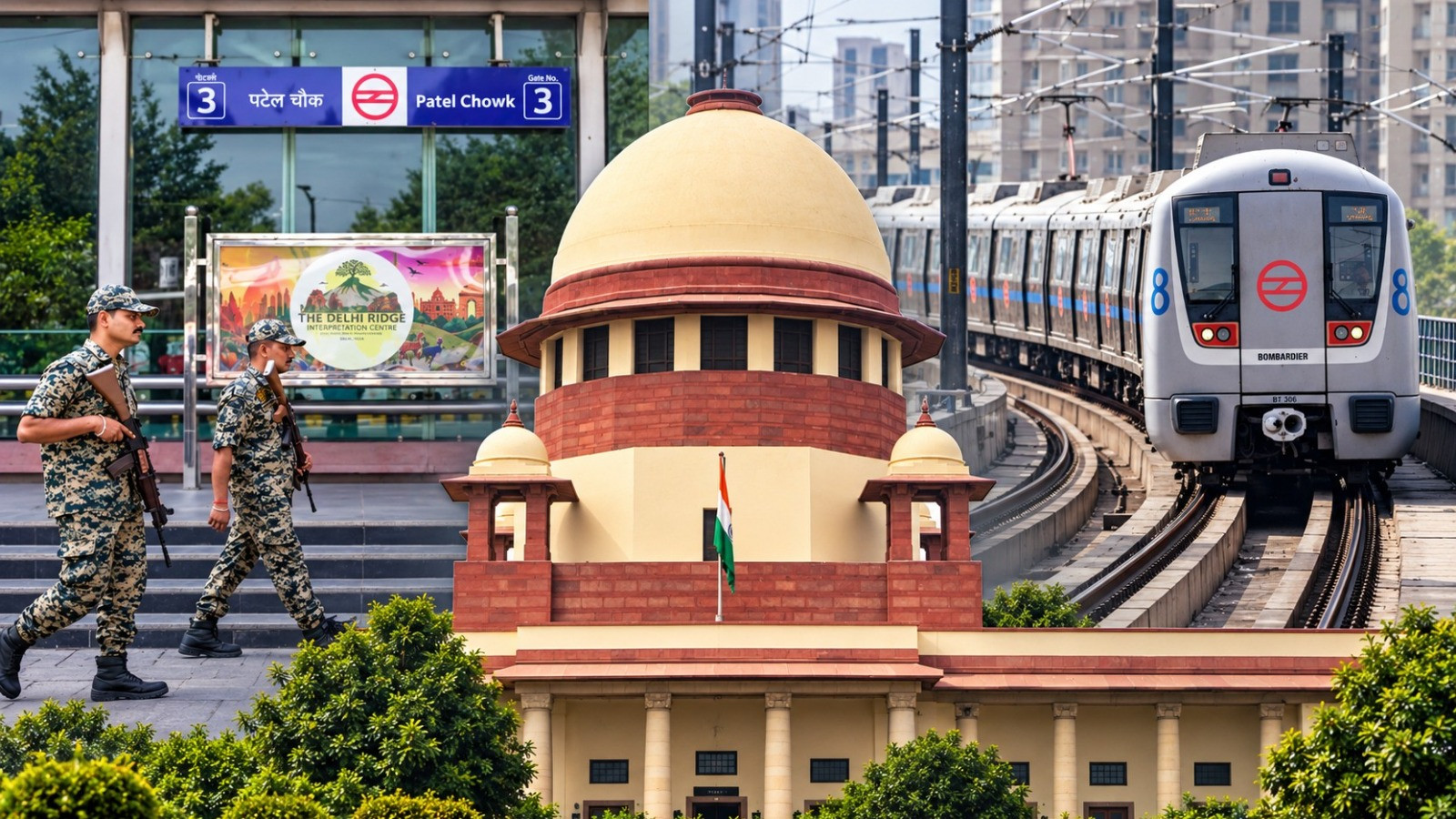
In light of the CJP protests, a contempt petition was filed in the Supreme Court on Saturday regarding restrictions on metro services and trains arriving in the capital. The petition alleges that officials did not comply with the court's directive, which prohibited a complete halt to public transport on October 10.
According to a report by Bar and Bench, the petition filed by Shailendra Mani Tripathi names Union Home Secretary Govind Mohan and other officials as respondents. The petitioner claims that despite the Supreme Court's order on October 9, metro stations in the national capital remained closed. The petition states that these restrictions affected normal public life and caused significant inconvenience to people.
This case is related to the protests by the Cockroach People’s Party, or CJP. The party had called for a protest in Delhi against Chief Election Commissioner Gyanesh Kumar. In this context, measures such as closing metro stations and canceling trains arriving in Delhi were taken citing security reasons.

The contempt petition mentions the Supreme Court's order of October 9. This order was issued during the hearing of a separate petition challenging the closure of 57 metro stations and the cancellation of trains arriving in Delhi due to the protests. The court had expressed concern over a complete halt to public transport. The case was heard on Friday by a bench comprising Chief Justice Surya Kant, Justice Joymalya Bagchi, and Justice V. Mohan.
The bench had directed the central government to ensure that there is no complete ban on metro services and trains arriving in Delhi on October 10. The court stated that everything cannot be completely shut down.
The bench also acknowledged the need to maintain law and order. The court stated that law enforcement agencies have the right to take steps to prevent uncontrolled movement, but such measures should not unnecessarily inconvenience ordinary citizens. It is also essential to consider people's everyday needs alongside security arrangements.
In its order, the court stated that the relevant notifications appear excessively broad, as they impose a complete ban on essential public transport. The bench clarified that there is a difference between completely prohibiting the movement of metro and other rail services and operating them in a controlled manner. CJI Surya Kant remarked that a hammer should not be used to kill a fly.
Following this stance from the court, the Solicitor General of India agreed to ask officials to reassess these restrictions. In this context of assurance, the bench clarified that there should be no complete ban on the movement of metro trains. However, depending on the circumstances, a prudent decision can be made to operate metro and other rail services in an appropriate and controlled manner.
The Supreme Court also stated that decisions regarding the operation of transport services should be widely publicized to avoid further inconvenience to the public. The court directed that traffic-related advisories be published in newspapers and online platforms to ensure smooth movement of vehicles and reduce public distress.
However, Delhi Metro reported that for security reasons, 45 stations will remain closed from 9 PM on Friday to 6 PM on Saturday. This situation has been raised in the new petition as an alleged violation of the court's directives. The petitioner claims that despite the order, the closure of stations continued to cause difficulties for those dependent on public transport.
Now, the contempt petition demands action against the concerned officials. The basis of the petition is the allegation that the Supreme Court's directives to keep public transport operational in a controlled manner during the protests were not followed. The court had emphasized the need for operating services according to circumstances and providing adequate information to the public rather than a complete halt.