
CJP leaders detained upon arrival in Delhi ahead of protest

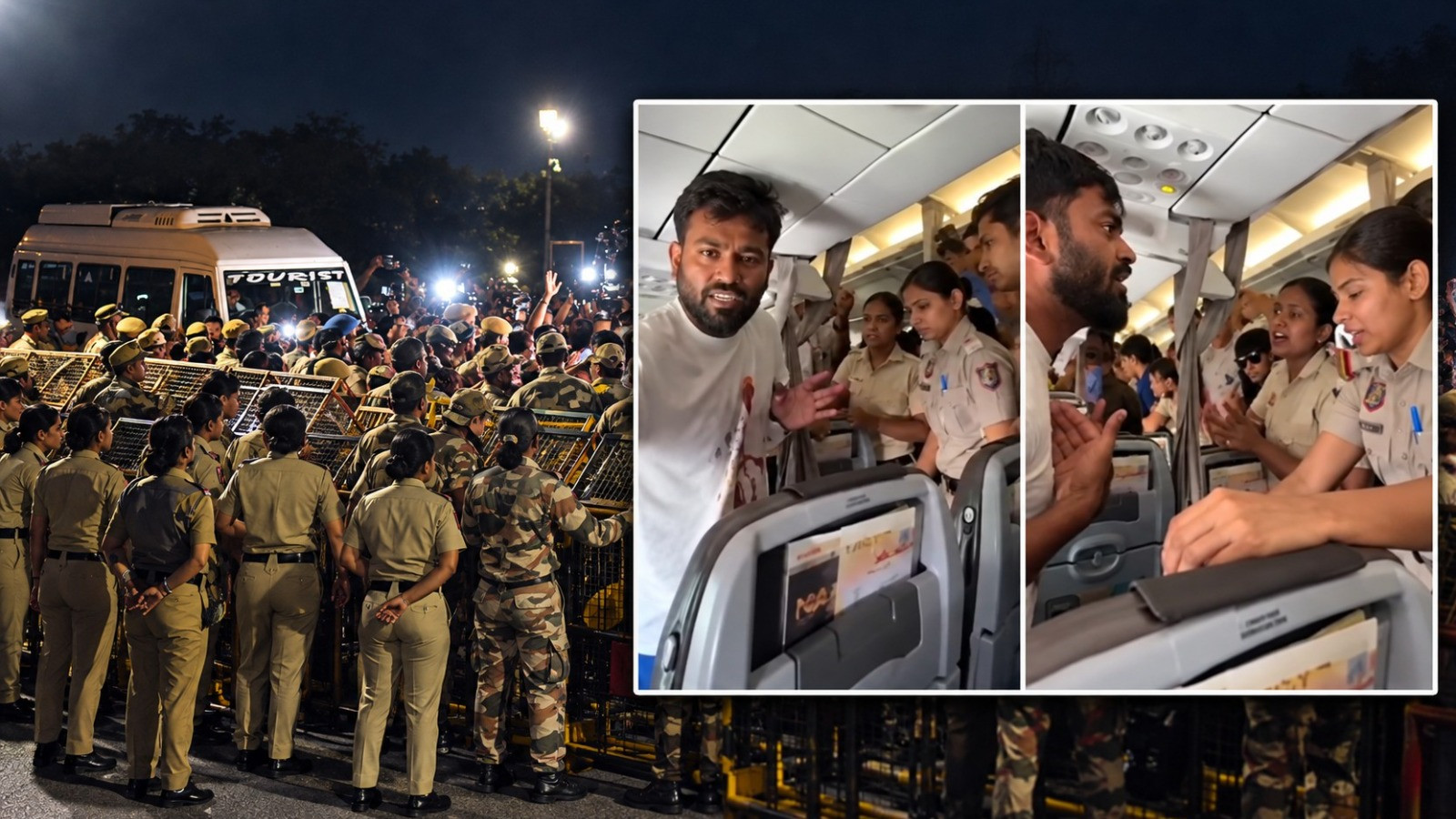
Delhi has been turned into a fortress ahead of the protest.
Leaders of the Cockroach People’s Party (CJP) Abhijit Deepke, Saurav Das, and Ashutosh Ranka were detained on Saturday after arriving in Delhi. The three had flown from Mumbai and were set to participate in the party's proposed protest at Jantar Mantar.
The party alleged in a statement that the leaders were detained as part of a pre-planned scheme to prevent them from reaching the protest site. CJP has demanded the immediate and unconditional release of the three leaders.

According to the party, the protest at Jantar Mantar was organized against Chief Election Commissioner Gyanesh Kumar. The issue of the protest was alleged manipulation during the Special Intensive Review (SIR) of voter lists and changes related to Form 6 used for voter registration.
Earlier on Saturday, YouTuber Dhruv Rathee and CJP's legal team head Ratna Singh were also detained by the police at their homes. This action took place at a time when security has been tightened in the national capital. Delhi Police are taking action to prevent protesters from reaching Jantar Mantar.
YouTuber Dhruv Rathee, who resides in Germany, was detained on Saturday morning at his residence in Central Vihar Society, Sector 56, Gurugram. According to the police, Rathee, who had recently returned to India, was asked by teams from Delhi and Gurugram police not to attend the CJP protest in the capital. After he rejected these requests, he was detained.
The CJP protest called at Jantar Mantar under the leadership of Abhijit Deepke did not receive permission. Protesters are demanding the resignation of Chief Election Commissioner Gyanesh Kumar over irregularities in the Special Intensive Review (SIR) of voter lists. In light of the protest, strict security arrangements have been made in Delhi. More than 40,000 personnel from Delhi Police and Central Armed Police Forces have been deployed. Barricades have been set up at various locations, and spike strips have been laid on the roads to stop vehicles.
A senior officer from Gurugram Police stated that,
A team from Delhi Police had arrived at Rathee's residence and requested him not to go to Delhi to participate in the protest. According to the officer, after receiving information from Delhi Police, teams from Gurugram Police also reached his home. They asked Rathee to comply with the law and help maintain peace.
Gurugram Police officials reported that police personnel have been stationed at Rathee's home, who will remain there until further notice.
CJP also confirmed Rathee's detention through a social media post. The organization targeted the government, alleging that it fears youth who ask questions and refuse to remain silent.
In another statement, CJP condemned Rathee's detention. The organization alleged that actions are being taken across the city to suppress the democratic voices rising against irregularities in the voter list. In a statement released on their WhatsApp channel, CJP demanded the immediate and unconditional release of hundreds of citizens and student activists detained along with Dhruv Rathee.
Recently, in a video shared on various social media platforms including X, Rathee had appealed to people to gather for the CJP protest at Jantar Mantar in Delhi on Saturday.
Before the protest called for the resignation of Chief Election Commissioner Gyanesh Kumar on Saturday, police had detained a large number of people in the capital. At least 1,000 people were detained overnight in precautionary measures ahead of this protest, which is a joint call by the Cockroach People’s Party (CJP) and the All India Students Association (AISA). According to police officials, this action was taken as a precaution. Additionally, security arrangements have been tightened in various areas of Delhi, borders, and routes leading to New Delhi.
A police source told The Indian Express that by 12:30 AM on Saturday, around 250 of those detained were from the South-East Delhi district, particularly from Shaheen Bagh and surrounding areas. Shaheen Bagh was a major center for protests against the Citizenship Amendment Act (CAA) in 2020. According to sources, a large number of people were also detained from this area before the protest.
Another officer from Delhi Police stated that over 100 people were also detained from Shahdara and East Delhi districts, both of which border Uttar Pradesh. Thus, police action has taken place in several parts of the capital. Figures related to South-East Delhi, Shahdara, and East Delhi have been provided by different police sources and officials. Reports indicate that at least 1,000 people were detained during the overnight actions in the capital.
Police officials say that these individuals were detained to prevent any potential disorder. According to officials, individuals were identified beforehand who had a history of gathering protesters and allegedly creating a ‘lawless’ situation. Based on this, they were taken into precautionary custody. This is the police's claim regarding individuals' past records and potential roles. Officials described this action as part of preparations to maintain law and order before the protest.
The detained individuals will be sent to 13 major detention centers that have been designated in various districts of Delhi before the protest. According to officials, these centers were identified in advance. Arrangements are now being made to transfer the detained individuals there. In light of the upcoming protest in the capital, police preparations include not only detaining individuals but also ensuring their transport to designated centers.
Meanwhile, Delhi Police have deployed a large number of security personnel across the city. CJP leaders are scheduled to arrive in the capital around 10:15 AM on Saturday. In anticipation of the protest, over 30,000 security personnel will be deployed on the ground. There will also be strict monitoring and security arrangements at all borders of Delhi. The deployment plan includes routes within the city as well as border areas to ensure a continuous presence of security forces at various locations day and night.
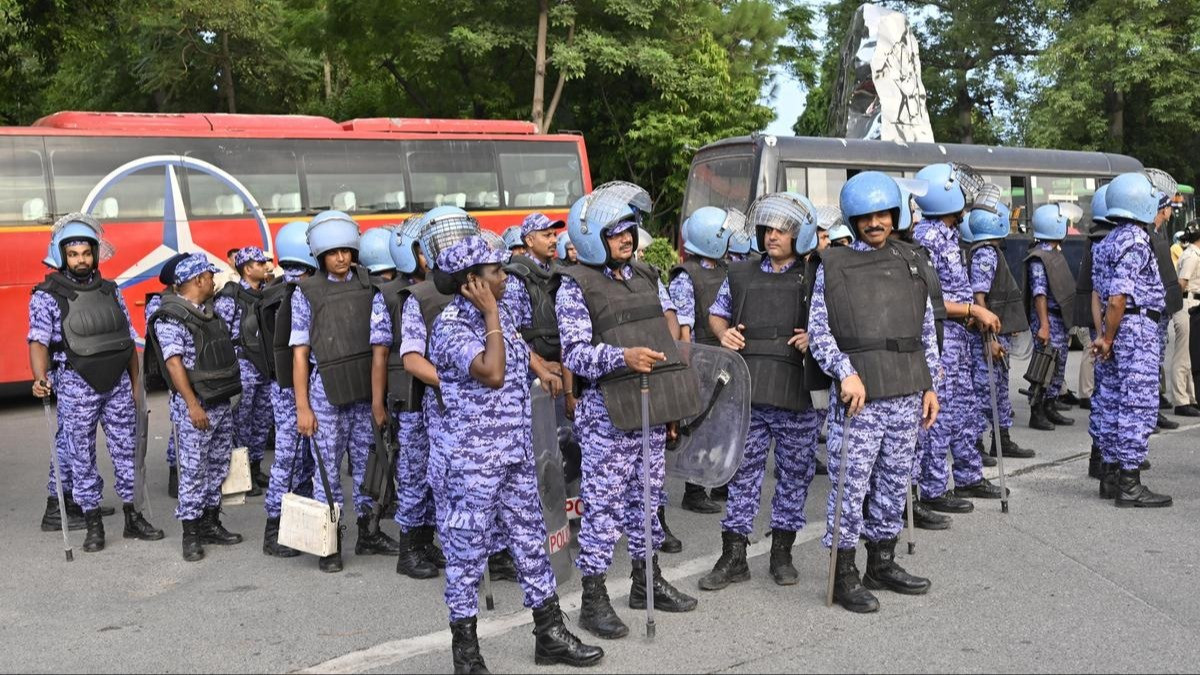
According to the deployment plan, police inspectors will be present at designated locations along with platoons of male and female security personnel in the first shift, as well as smaller units. If necessary, additional forces and reserve personnel can also be deployed. The entire arrangement has been prepared in different shifts. The aim is to ensure continuous deployment. This means that along with the security arrangements for one shift, preparations have also been made to send additional security personnel for subsequent shifts if needed.
Police have also established checkpoints on the routes between districts within the city. Such pickets have been set up between Central Delhi and New Delhi districts. Additionally, checkpoints have been created at locations connecting South Delhi, South-East Delhi, and South-West Delhi. These arrangements have been made on routes connecting districts within the capital. Police presence has been increased at the boundaries and access routes of different districts before the protest.
Access to routes near the New Delhi area will also not be easy. Areas like Ashoka Road and Tolstoy Road, which are within walking distance, will also pose challenges for entry. Ten barricades have been set up in this area, and more than 30 paramilitary personnel have been deployed. Extensive security arrangements have been made in the capital ahead of the protest called for the resignation of Gyanesh Kumar. Police describe this as a precautionary action, while preparations are underway to send the detained individuals to designated centers.