
UN report flags minority voter exclusion in India

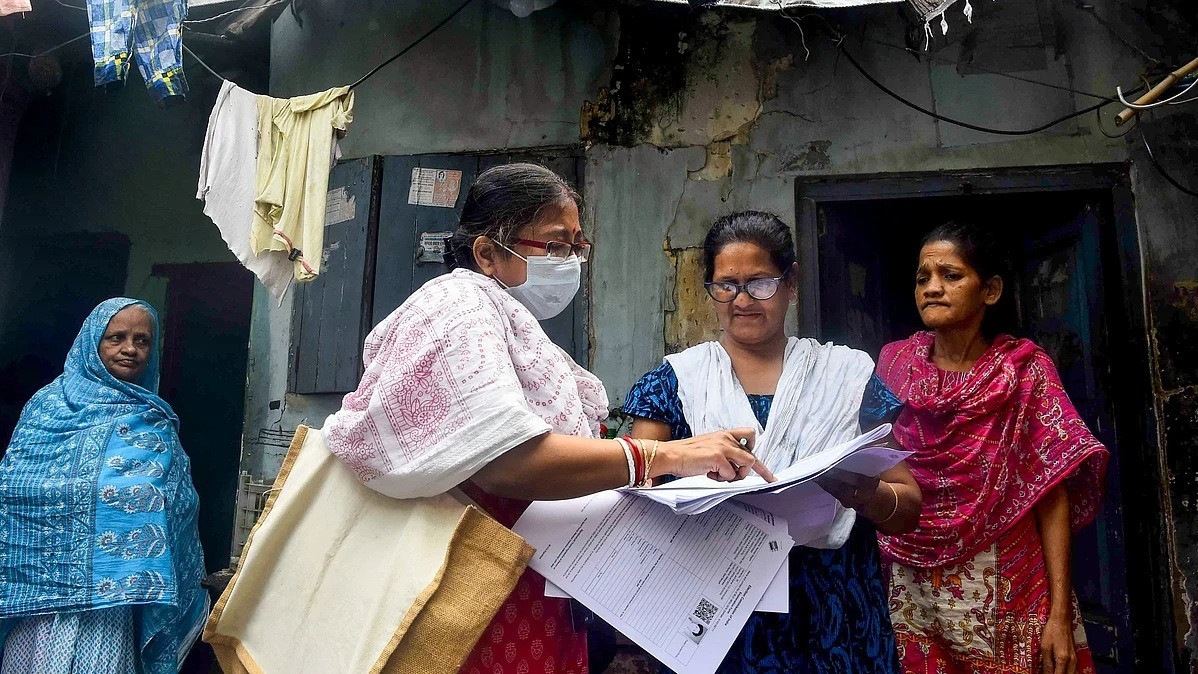
Three United Nations (UN) special rapporteurs have expressed concern over the Special Intensive Revision (SIR) campaign being conducted by the Election Commission in India. They claim that during this process, allegations have surfaced regarding the removal of a large number of Muslim and other minority community voters from the electoral rolls.
According to a special report by 'The Hindu', UN experts have stated that the SIR process could impact the voting rights of minority communities, raising questions about its fairness and transparency.
Who are the special rapporteurs involved?
The three UN special rapporteurs expressing concern are—
Nicolas Levrat – Special Rapporteur on Minority Issues
Irene Khan – Special Rapporteur on Freedom of Opinion and Expression
Nazila Ghanea – Special Rapporteur on Freedom of Religion or Belief
Allegations of removing lakhs of names
UN experts have stated that during the Election Commission's SIR process, lakhs of names were removed from the voter list. They allege that this has disproportionately affected Muslim and other minority communities.
Questions on transparency and use of AI
The report states that an allegedly AI-based and opaque system was used for checking and revising the voter list. Experts claim that there was no clear mechanism for filing complaints or correcting errors in this process. They also expressed concern that there might be a political motive behind excluding minorities. The Government of India was given 60 days to respond. This report was prepared on 1 May 2026, and the Government of India was asked to respond to these allegations and concerns within 60 days.
Mention of Nandigram in the report
The report cites the example of the Nandigram Assembly constituency in West Bengal. It states that about 95 percent of the removed voters were Muslims, while Muslims constitute about 25 percent of the total voter population in that area. According to the report, the affected individuals included men, women, and elderly people who possessed valid identification documents.
Stance of the Supreme Court and Election Commission
The report mentions that many people sought relief from the Election Commission and the Supreme Court, but on 6 April 2026, the Supreme Court refused to halt the SIR process. It also alleges that minor errors in names or spellings in government documents were used as a basis for removing names from the voter list.
Claim of 27 lakh names removed in West Bengal
According to the report, about 27 lakh names were removed from the voter list in West Bengal based on "Logical Discrepancies". The experts also mentioned a similar process previously conducted in Bihar, which had created fear among Muslims and other minorities regarding their voting rights and citizenship.
Mention of Supreme Court hearing
According to the report, on 16 April 2026, the Supreme Court provided relief under Article 142 of the Constitution to those voters in West Bengal whose names were removed from the voter list. The court stated that those whose appeals are approved before the Assembly elections will be allowed to vote. The Supreme Court directed the Election Commission to update a Supplementary Voter List for successful appellants. However, those whose appeals were not approved in time were not allowed to vote. The report states that over 34 lakh appeals were filed in this process, putting pressure on tribunals to resolve a large number of cases in a short time, leaving many eligible voters disenfranchised.
Concerns over political rhetoric
The report also expresses concern over public statements made by leaders during the SIR process. According to the letter, several government officials, including Union Home Minister Amit Shah, described the removal of names from the voter list as a campaign against "illegal Bangladeshi immigrants". UN experts say such statements pose a risk of associating Indian Muslim citizens with foreign nationals. The report also mentions the use of slogans like "Detect, Delete, Deport" in the context of the electoral process. UN experts stated that such rhetoric could promote hatred on religious or national grounds, which is prohibited under Article 20(2) of the International Covenant on Civil and Political Rights (ICCPR). They assert that if a religious community is targeted through the electoral process, it could become an issue related to India's international obligations under the International Convention on the Elimination of All Forms of Racial Discrimination (ICERD).
Questions posed to the Government of India
- UN experts have sought information from the Government of India on seven key points. This includes steps taken to align the SIR process with international human rights standards.
- They also asked whether separate data based on religion and caste is available for those removed or disqualified from the voter list. If such data is not available, the reason for its absence was also sought.
- Citing the ICCPR and the 1992 UN Declaration on the Rights of Minorities, the experts stated that every citizen has the right to vote and participate in public life without undue interference. It is also essential to protect the rights of religious, linguistic, and ethnic minorities.
- They stated that the voter registration process should be fair, transparent, and non-discriminatory. According to the experts, the procedural difficulties observed in the SIR process appear to disproportionately affect Muslim citizens.
- The report also states that short deadlines, alleged opacity of the AI system, and difficulties in the appeal process for economically and linguistically disadvantaged individuals could amount to an undue restriction on voting rights.
- UN experts have stated that this information and the response from the Government of India will be made public after 60 days. It may also be included in the regular reporting process of the United Nations Human Rights Council.
Meanwhile, the experts have urged the Government of India to immediately halt any potential human rights violations, prevent their recurrence, and ensure appropriate action against those responsible if the allegations are found to be true.