
Supreme Court affirms right to not sing 'Vande Mataram'
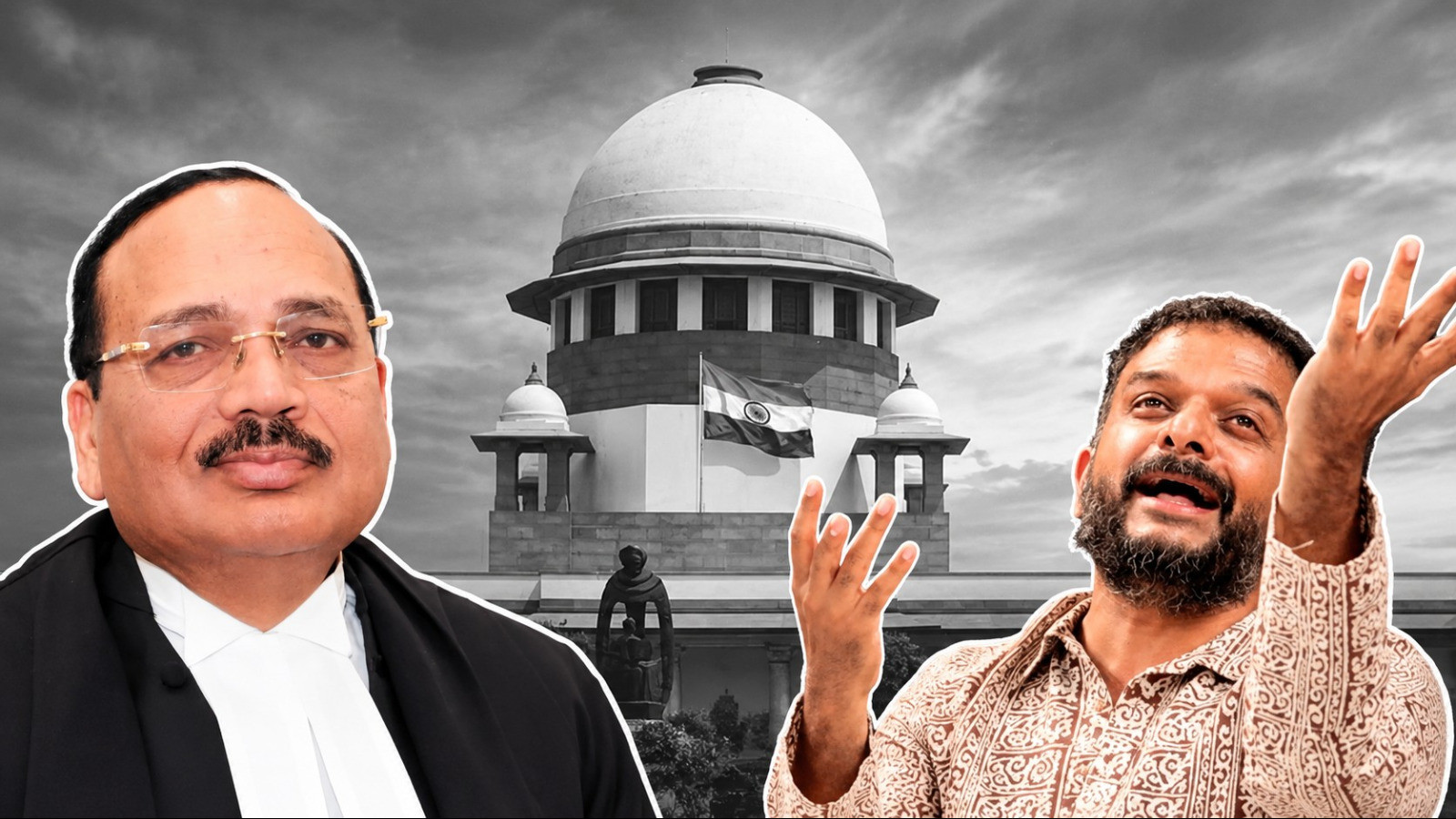
The Supreme Court has reminded the Centre that individuals cannot be punished for refusing to sing 'Vande Mataram'.
The Supreme Court's remarkable decision on Tuesday states that any citizen of the country has the right not to sing the Vande Mataram song. The court said that,
a citizen is free not to sing the Vande Mataram song due to their religion or the voice of their conscience.
This ruling, delivered by Chief Justice D.Y. Chandrachud and two other judges, Joymali Bagchi and V. Mohan, stated that,
according to the legal amendments made in 2026, no criminal action can be taken against a person who does not sing a line or the entire song of Vande Mataram. The similar decision made in 1986 in the Bijoe Emmanuel case has been reaffirmed once again.
The case is related to the petition filed by Karnataka musician T.M. Krishna. Krishna has challenged the law that mandates singing all six lines/verses of Vande Mataram. He argues that the last four verses raise questions about the secular character of the country.
The bench sought a response from the Centre on the petition but also stated that,
it is hoped that the legal principles established in the 1986 Bijoe Emmanuel vs. Kerala Government decision will also apply to the amended law.
The 1986 case involved a school student who stood during the singing of Vande Mataram but did not sing. The Supreme Court stated that the 1986 decision is the final law.
The court stated that any individual can object to the Vande Mataram song under the rights of freedom of religion or conscience as provided in Articles 25 and 26 of the Constitution and has the right not to sing it, and no criminal action can be taken against them.
This decision has come in the context of the petition filed by renowned Karnataka musician T.M. Krishna. His lawyer argued that the recent legal amendment does not provide any definition regarding the national song and could lead to misuse. The government has only issued a circular regarding the singing of the six lines of Vande Mataram and has not issued any notification, as stated by T.M. Krishna 's lawyer S. Murli Dhar.
The government's solicitor general Tushar Mehta said that a law cannot be made as one would say about Naxalites. Then Judge Bagchi remarked that even a person labeled as a Naxalite has constitutional rights.
Justice Bagchi told Solicitor General Tushar Mehta that,
the court is not in favor of issuing a notice in this matter, but hopes that the law declared by the Supreme Court in the Bijoe Emmanuel case will also govern the amended law.
The bench stated that,
there is no dispute over what the national song is. It is the right of a democratic government to decide whether there will be two verses or four in the national song. However, if a person feels that their rights under Articles 25 and 26 of the Constitution are being violated or if they refuse to do something on the basis of conscience, they should not be punished.
T.M. Krishna's petition challenges the amendments made in 2026 to Section 3 of the Prevention of Insults to National Honour Act, 1971 and the orders of the Home Ministry dated January 28 and July 9, 2026. Under the amended Section 3, there is a provision for imprisonment of up to three years, a fine, or both for deliberately preventing the singing of the national anthem or national song or for disrupting such a program.
The bench stated that the court is not in a position to decide what the national sentiments or aspirations associated with Vande Mataram should be. This decision is for the state to make. The court also clarified that,
it is not determining what the national song should be. It will only examine whether the rights of a 'Conscientious Objector', that is, a person refusing to sing Vande Mataram on the basis of conscience or religion, are protected under the law.
T.M. Krishna 's senior advocate S. Murli Dhar stated that the amended law does not provide a clear definition of 'national song'. This creates confusion and potential misuse of the law. He also mentioned that it is not clarified how many verses of Vande Mataram will be considered the official part of the national song. According to him, the previous understanding was limited to the first two verses of Vande Mataram.
Murli Dhar also stated that the amendment was made in haste and a process of broad national consensus was not adopted for it.
Wow, what a decision! Here’s what it means:
(1) A government lawyer calls a prominent musician a Naxalite, and that too in court. How shameless, incompetent, and lowly are the people in power that their top lawyer can label any citizen as a Naxalite!
(2) Article 25 of the Constitution grants citizens the right to conscience and the right to act according to what their conscience dictates. If my conscience tells me that I should not call the country named India my mother, then I have the right to say so.
(3) Ignoring the controversy over singing the six lines of Vande Mataram, this decision states that not only the six lines but the entire song can be not sung by any citizen.
(4) This means that not singing Vande Mataram cannot be said to be an insult to the country by any citizen.
(5) This means that those who wish to salute the country by considering it their mother may do so, while those who do not wish to consider it their mother may refrain from doing so. But this does not make that person a traitor. There is no reciprocal relationship between Vande Mataram and patriotism.
Salute to all the members of the Constituent Assembly that gave us a Constitution with the freedom of conscience, and special salute to Dr. B.R. Ambedkar.
Salute to the Constituent Assembly.
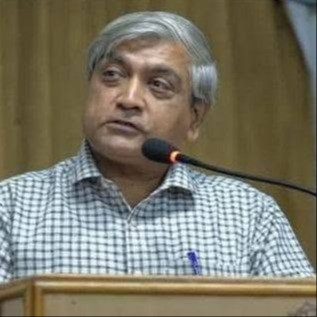
Pro. Hemantkumar Shah
प्रो शाह जाने-माने अर्थशास्त्री हैं और गुजरात में लंबे समय तक अध्यापन के बाद लेखन और सामाजिक कार्यों में सक्रिय हैं।