
What is UCC and why is it controversial?
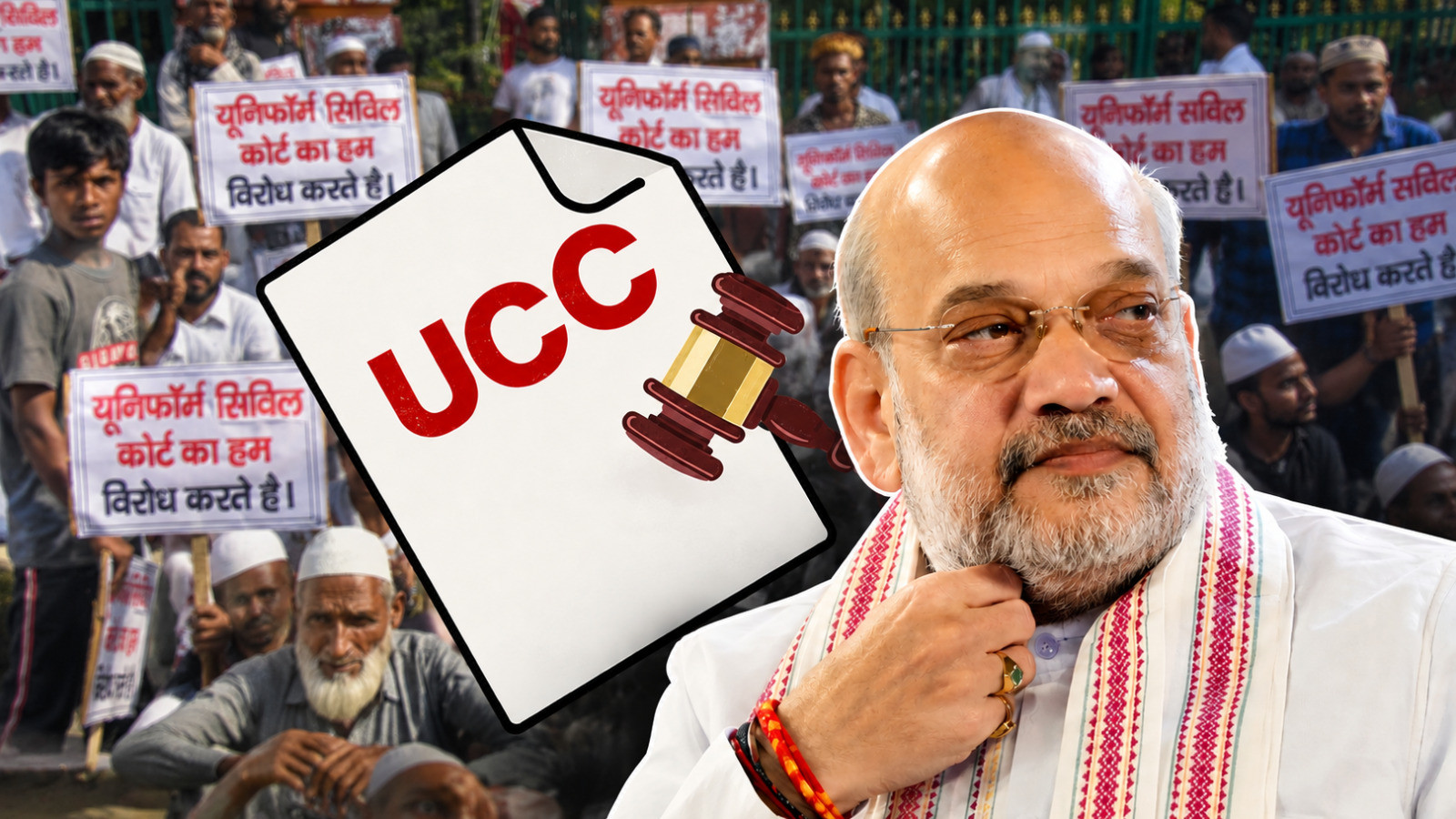
The debate on UCC revolves around balancing equality and religious freedom.
Union Home Minister Amit Shah stated on September 13 that the Uniform Civil Code (UCC) will be implemented in all 21 BJP-NDA ruled states before the 2029 Lok Sabha elections. Speaking at a press conference in Mumbai, he said,
“We have implemented the Uniform Civil Code in several states, and I am confident that we will implement the UCC in the 21 BJP-NDA ruled states before 2029.” Citing the abolition of triple talaq as an example, he said it was part of the government's effort to provide equal rights to Muslim women.
UCC is one of the key issues of the BJP's long-standing ideological agenda that has not yet been fully realized. According to a report by Indian Express, in 2023, when the Modi government first pushed the UCC as a major political issue,
a source linked to the RSS told the newspaper that there is a need for in-depth study and extensive discussion on this subject, as it will impact every section of society.
The priority of the Sangh was that first BJP-ruled states implement their respective UCC, and later the central government could potentially consider a comprehensive central law. In March 2024, RSS General Secretary Dattatreya Hosabale welcomed the Uttarakhand model and said it should be studied and implemented across the country.
However, after Amit Shah's statement, opposition was also seen within the NDA coalition-
JD(U) has consistently stated that it is not against the UCC, but wants it to be taken forward through consensus rather than imposition.
TDP has also emphasized the need for discussion and deliberation. In 2024, the party stated that it would ensure the protection of the interests of the Muslim community.
UCC What is it?
The Uniform Civil Code (UCC) refers to a system of civil laws where there are no separate rules for marriage, divorce, inheritance, adoption, and some other family matters based on an individual's religion. Currently, in India, personal laws of different religions and communities also apply along with general laws in these matters.
Hindu personal law has been codified largely through the 1955 Hindu Marriage Act and the 1956 Hindu Succession Act. Similarly, there are separate laws related to marriage and divorce for Christians and Parsis. Muslim personal law is still largely uncodified, although the pre-independence central legislature enacted laws such as the Muslim Personal Law (Shariat) Application Act of 1937 and the Dissolution of Muslim Marriages Act of 1939.
UCC has a constitutional basis in Article 44 of the Constitution. It states that,
“The state shall endeavor to secure for the citizens a uniform civil code throughout the territory of India.” However, Article 44 is part of the Directive Principles of State Policy (Directive Principles of State Policy) and therefore cannot be enforced by any court.
Article 37 of the Constitution clearly states that,
“The Directive Principles are not enforceable by the courts. However, it is also stated that these principles are fundamental for the governance of the country and it is the duty of the state to apply them while making laws. Therefore, Article 44 sets a constitutional goal, but does not provide a directly enforceable right on which a citizen can demand the implementation of the UCC from the court.”
Why doesn't the government implement it through legislation in Parliament?
But now the question is why the UCC is not being brought forward by the central government as a central law? In fact, there are both constitutional and political reasons behind this. In the Constitution, matters related to civil laws such as marriage, divorce, adoption, wills, and inheritance fall under Entry 5 of the Concurrent List. This means that the power to legislate on these matters lies with both Parliament and state legislatures.
However, the political reasons behind this are more significant. A national UCC would have to reconcile the vast diversity of personal laws and prevailing customs in India, especially among tribal communities and in northeastern states, which can be quite complex.
Since the practices of a tribal community in Uttarakhand or Himachal Pradesh can be quite different from those of a community in Chhattisgarh or elsewhere, a uniform law for both could create problems. Therefore, by legislating and implementing the law through states, the BJP can experiment with different models, consider issues related to local customs, and gain experience in implementation before tackling the full political and constitutional complexity of a nationwide law.
What did the Law Commission say in 2018?
The 21st Law Commission stated in its 2018 Consultation Paper on Family Law Reform that at that time UCC "is neither necessary nor beneficial." Instead, the Commission suggested improving the discriminatory provisions in Personal Laws while emphasizing the need to maintain India's diversity. The Commission focused on achieving "equality within communities" between men and women rather than establishing "equality between communities." It advocated for gradual and phased reforms instead of imposing complete uniformity.
The 22nd Law Commission revisited the issue of UCC in 2023. It sought fresh opinions from the general public and recognized religious organizations. The Commission noted that more than three years had passed since the 2018 consultation, during which several significant developments had occurred. Therefore, it is necessary to review the issue again.
Where has the UCC been passed?
Four BJP-ruled states—Uttarakhand, Gujarat, Assam, and Madhya Pradesh—have passed laws related to the UCC. Among these, Uttarakhand is the only state where this law is currently in effect. Uttarakhand implemented its UCC in January 2025. It established uniform rules related to marriage, divorce, inheritance, and succession. Polygamy has been prohibited, and marriage registration has been made mandatory. A distinctive feature of this law is the regulation of live-in relationships.
The Gujarat Assembly passed the UCC bill in March 2026. Its model is similar to that of Uttarakhand. It includes provisions related to marriage, divorce, inheritance, and live-in relationships, and prohibits polygamy.
Assam passed its UCC bill in May 2026- which also includes provisions related to marriage, divorce, inheritance, and live-in relationships. Polygamy is prohibited, and registration of live-in relationships has been made mandatory.
Madhya Pradesh passed its bill in July 2026- which also includes provisions related to adoption. Additionally, it contains provisions related to triple talaq and nikah halala. Here too, there is a provision for the registration of live-in relationships, and polygamy is prohibited. A significant similarity among all these laws is that Scheduled Tribes are excluded from their purview. In Uttarakhand, certain communities protected under special prevalent laws of the Constitution have also been exempted.
Why is there opposition and support?
Opposition parties have generally raised the question of whether the BJP's UCC is genuinely a reform for gender equality or an attempt to change the personal laws of minorities through a majoritarian framework.
The Congress opposed the Gujarat bill, calling it "anti-Muslim," while in Madhya Pradesh, it criticized the law as part of the RSS agenda. In Assam, opposition parties also demanded extensive discussions and expressed concerns regarding the exemptions granted to tribal communities and the regulation of live-in relationships.
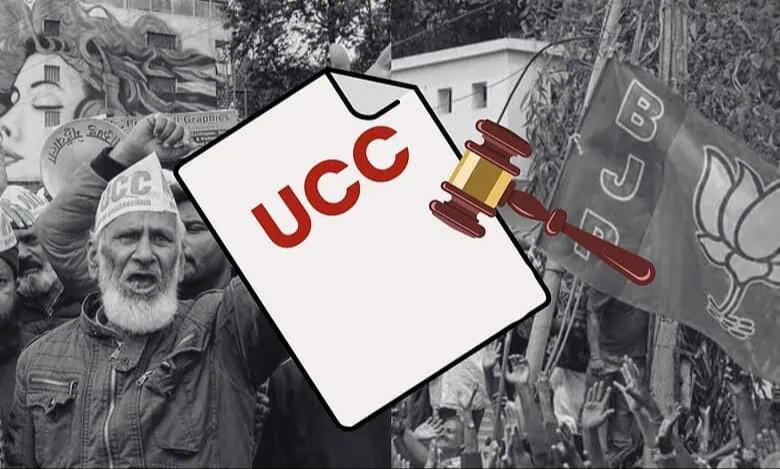
The most crucial aspect of the UCC debate is the balance between equality and religious freedom. Article 25 of the Constitution grants individuals the freedom to profess, practice, and propagate religion. Meanwhile, Article 29 provides rights related to the protection of cultural and linguistic identity.
The biggest argument from supporters is equality. They argue that a person's civil rights should not differ based solely on their religion. Especially in the case of women, uniform laws can provide equal legal protection in matters such as marriage, divorce, alimony, and property. Another argument from supporters is that different personal laws complicate the legal system. If there are uniform rules in civil matters, the system can be simplified.
Opponents of the law express concerns regarding religious freedom, cultural rights, and diversity. They argue that different communities in India have their own religious and social traditions. If a uniform law is enacted, some communities may feel that state intervention in their traditional systems is increasing.
This is where Articles 25 and 29 come into discussion. Opponents question how the protection of religious and cultural diversity will be ensured while formulating a uniform civil law.

Md. Tousif
मोहम्मद तौसिफ़ राष्ट्रीय और अंतर्राष्ट्रीय खबरों पर नजर रखते हैं और ‘द क्रेडिबल हिस्ट्री’ में रिसर्चर के रूप में कार्यरत हैं।