Scolding Meta won't fix Modi's image
Modi and his advisors fail to grasp that they've lost the perception battle this time.
In the Bankipur by-election, a statement by former Union Minister Ravi Shankar Prasad went viral, showing him saying that the BJP could win even a dog or a cat from there. The statement was incomplete, and a ten-second clip was cut and spread in the same way as several viral clips of Rahul Gandhi's statements, like 'gold from potatoes', were previously circulated.
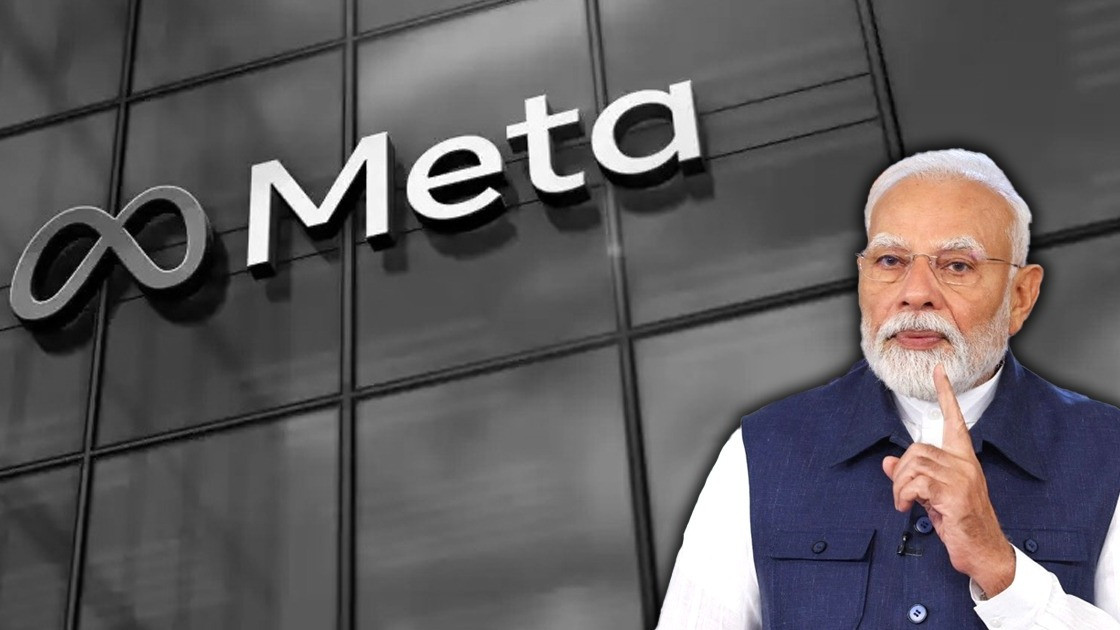
Social media was the biggest weapon of the Modi government and the right-wing ecosystem, but they did not consider that such weapons are double-edged and can backfire at any time. When the Government of India is calling Meta to apologize for the Prime Minister's video and complaining about the increasing algorithm of anti-government content, the fear of this virtual sword's other edge is clearly visible.
In the past twelve-thirteen years, social media and the so-called national media owned by friendly capitalists have become the most effective tools for perception building in favor of Modi and his government. Memes, edited videos, and ten-second clips that went viral on social media in moments and reached millions of mobiles via WhatsApp continuously strengthened Rahul Gandhi's 'Pappu' image on one hand and Narendra Modi's image as a world leader on the other. This benefited not only in elections but also helped the government dilute the opposition's questions on serious issues.
In fact, new technology has often been used by powers in this way, and while in power, they feel they can do so indefinitely. During Hitler's time, radio and cinema were new; during Idi Amin's time, TV; and during Obama's time, social media. Hitler used the radio to spread his message to every corner of Germany. Goebbels' job was to control radio and cinema so that nothing but praise for Hitler was broadcast. The effect was that support for Hitler among the German public continued to grow, and every opponent of Hitler was seen as a traitor.
Idi Amin used TV to spread his cruelty to every home and instill fear in people. Obama may seem like the odd man out in this list, but he was the first example of such tremendous use of social media in his election campaign. During this time, John McCain's wife said in an interview that they feared being lynched every day. Despite sufficient war-mongering, social media also played a significant role in building Obama's liberal human image. In the last elections, Elon Musk's purchase of Twitter and its complete dedication to Trump was another example of the power of social media.
The policy directors of the Bharatiya Janata Party learned a lot from these examples and became the first major party in India to use social media extensively. However, this use of social media was also done vigorously during the Aam Aadmi Party and earlier during the Anna movement, and at that time, the Congress in power avoided acknowledging its importance.
A part of this entire game was to turn a large portion of their grassroots workers into social media trolls and prepare thousands of bots that could continuously insult opponents, abuse them, and boost IT cell posts. As a result, on one hand, people were scared of these countless and uncontrolled abuses, and on the other hand, government-supporting posts continued to dominate social media algorithms.
Abusing and mocking the opposition, especially the Congress, became trending, and derogatory comments about Muslims also continued to trend. All this was favorable for the government, and at that time, there was no problem with Meta or any other platform for the government, although even in such an environment, there was no reduction in incidents of getting anti-government posts removed and closing opposing Twitter handles.
The NEET-leak protest has turned this entire game around. Although even earlier, at least on Twitter, the narrative was slipping out of the government's hands, in this movement, the generation that has been playing with mobile since birth came to the streets, is several steps ahead of their previous generations in terms of technology, and whose neighborhood always resides on social media.
After the TikTok ban, their hub became Instagram, and reels became the biggest weapon. So when brutal attempts were made to suppress the movement, they used their weapon creatively and skillfully to such an extent that seventy-plus Narendra Modi was forced to make reels, and Mohan Bhagwat had to plan a dialogue with Gen Z.
This has now become a major concern for the Modi government. The Congress's social media view is consistently ahead of the BJP, and the CJPI is reaching more than the combined views of both. If we add anti-government reels to this, there is no comparison. Earlier, abusing Rahul was trending, but now criticizing the Modi government is trending, and videos are being made and going viral. Meta or any company will not be able to stop this even if they want to.
In reality, Modi and his advisors are unable to understand that this time they have lost the battle of perception. The seventy-four-year-old Prime Minister is expected to show responsibility, not reels of their kind, by the youth. Reels and the ridiculous editing videos of the IT cell are making them more pitiable.
This cannot be changed by intimidating Meta, and to change it, they will have to reverse all their policies so far.