
Why is RSS not registered in India despite 80% global affiliates?

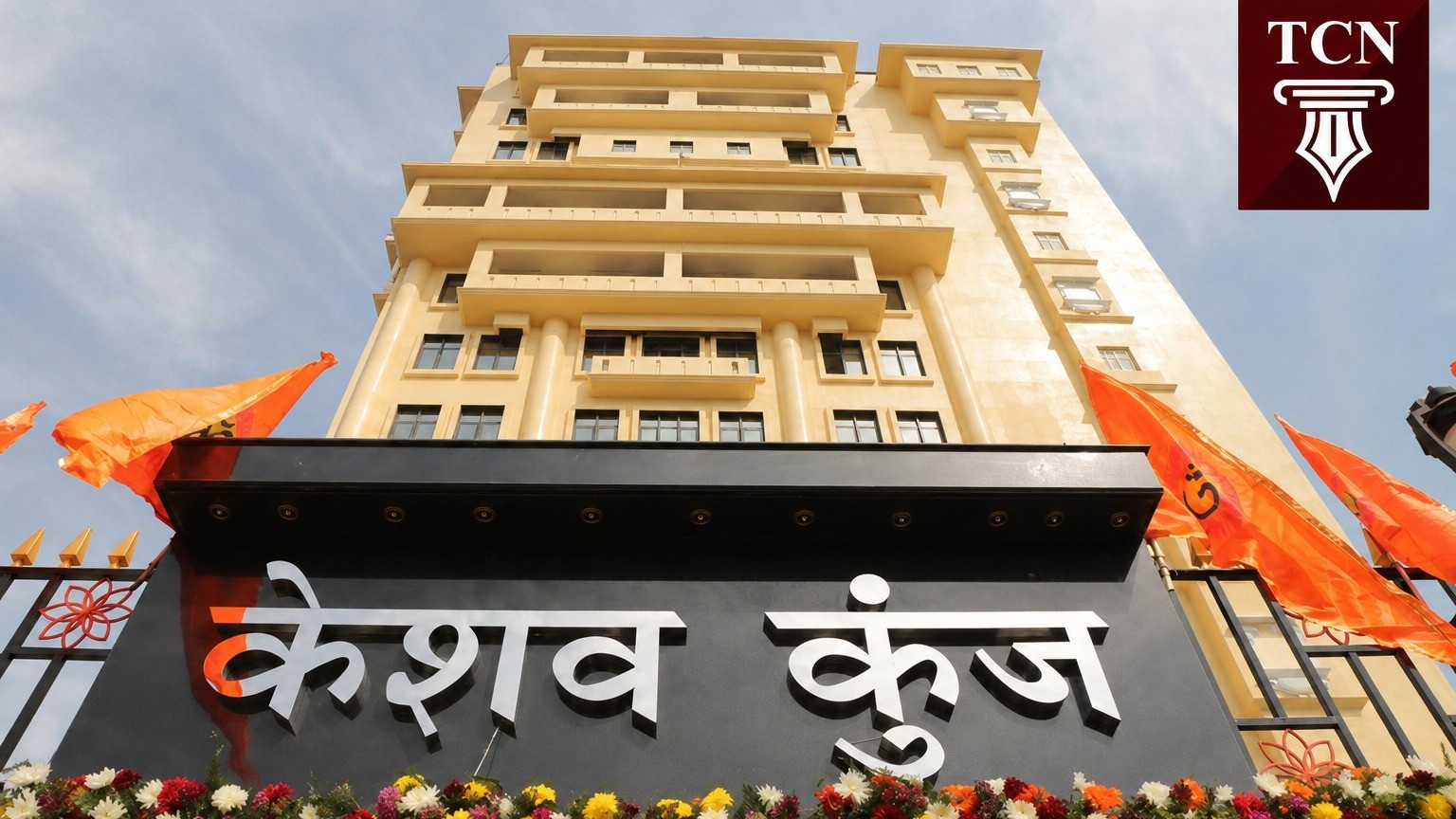
RSS complies with all regulations in the US, yet remains unregistered in India.
80% of the Rashtriya Swayamsevak Sangh (RSS) network's organisations outside India are registered. In the USA, the RSS complies with all regulations, whereas in India, the RSS is not registered. Experts suggest that the RSS deliberately avoids registration in India to minimise accountability, thereby evading audits, donor details, FCRA rules, etc. The work is managed through affiliate organisations.
Last month, Karnataka's Home Minister Priyank Kharge wrote a letter to RSS chief Mohan Bhagwat, stating that the RSS should register itself. The very next day, Mohan Bhagwat clarified the matter. During a programme in Kerala, he said, "Many things in the world operate without registration. Hinduism is not registered, and many other things are not registered." However, available data suggests that Bhagwat's statement does not present the complete picture.
Analysis of the dataset 'Seeing The Sangh' by 'The Wire' found that although the RSS is not registered in India, most of its affiliated organisations abroad are duly registered. This means that RSS's affiliate organisations comply with the laws of various countries, while the main organisation in India avoids registration. It is also unclear why the RSS's approach varies in different countries.
'Seeing The Sangh' is the first major dataset collecting data on the RSS and its affiliated organisations worldwide. It is housed at CERI-Sciences Po in Paris and has been published and hosted by 'The Caravan'. According to this dataset, the RSS network extends to 38 countries outside India. It includes 2,502 organisations considered part of the RSS's large global network.
The Wire's analysis revealed that more than two-thirds of the RSS's affiliate organisations outside India are registered and operate according to local laws. Out of the total 2,502 organisations associated with the RSS in the dataset, only 747 are unregistered. This means that over 70% of the organisations have registered themselves under local laws. If the RSS's affiliate organisations in India are excluded, this figure rises to over 79% abroad. Thus, almost 8 out of every 10 affiliate organisations of the RSS abroad are registered and comply with local regulations, while the RSS itself does not do so in India.
These organisations affiliated with the RSS are registered under different legal frameworks. Some are private companies, some are lobbying or advocacy organisations, while many are registered as non-governmental (NGO) and non-profit organisations. 'The Wire' sent two emails to Sunil Ambedkar, the RSS's All India Publicity Head, for a response on this issue, but no reply was received. In 2025, during his Independence Day speech from the Red Fort, Prime Minister Narendra Modi described the RSS as "the world's largest NGO, with a century-old history of dedication."
In 2010, the RSS had around 40,000 branches across the country. By April 2014, this number had increased to 44,000, operating in over 29,000 locations. In March this year, the RSS claimed that it now runs over 88,000 branches in more than 55,000 locations. Despite being such a large organisation, the RSS does not face the same scrutiny and accountability as other NGOs. Other organisations are required to audit their accounts, maintain donor records, and comply with several rules related to fund usage. Many experts who have been observing the RSS for a long time believe that the organisation's avoidance of registration might be a strategy to stay away from accountability.
Journalist and author Nilanjan Mukhopadhyay, who has been studying the politics of Hindu right-wing since the 1980s, says that
the RSS has always operated through its affiliate organisations but avoids coming forward directly. According to him, the ban imposed on the RSS after Mahatma Gandhi's assassination strengthened the belief that the organisation should not be formally registered. The RSS might have thought that if the organisation is not formally documented, it would be difficult to hold it directly accountable in case of any future action."
Many people associated with the RSS also believe that the organisation and its affiliate institutions work as a strong network. RSS thinker and author Ratan Sharda wrote in the organisation's mouthpiece 'Organiser' in 2025 that maintaining better coordination between the RSS and its affiliate organisations is extremely important and keeps the entire "Hindu family" united. However, the RSS's refusal to register in India does not align with the behaviour of its affiliate organisations abroad.
According to the dataset, the largest presence of the RSS outside India is in the USA, where 107 organisations associated with it were found. Some of these organisations are directly linked to the RSS, such as the Vishwa Hindu Parishad-America (VHP of America), which operates as the American branch of India's VHP and is a registered entity there. Meanwhile, some organisations have conducted programmes with or received financial support from RSS-affiliated organisations. Out of these 107 organisations, only 10 are unregistered, while the remaining 97 are duly registered under various legal provisions in the USA.