
Punjab's stubble burning and Delhi's pollution: What does this annual spectacle mean?

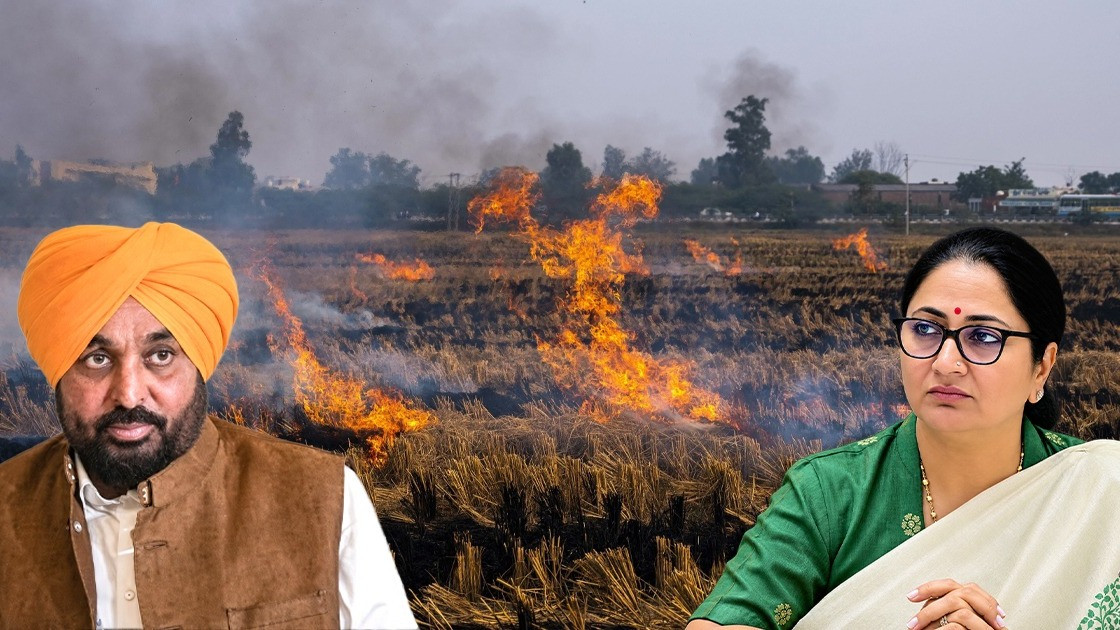
People are struggling to breathe, while politics unfolds over who did what.
North India, especially Punjab and Haryana, has made stubble burning a major political issue between the Bharatiya Janata Party (BJP) and the Aam Aadmi Party (AAP) concerning seasonal air pollution in Delhi.
After the air quality index (AQI) in Delhi reached the 'severe' category from 'very poor' post-Diwali in November 2026, sharp exchanges began between the two parties regarding the root causes of pollution and data transparency.
BJP's Stance
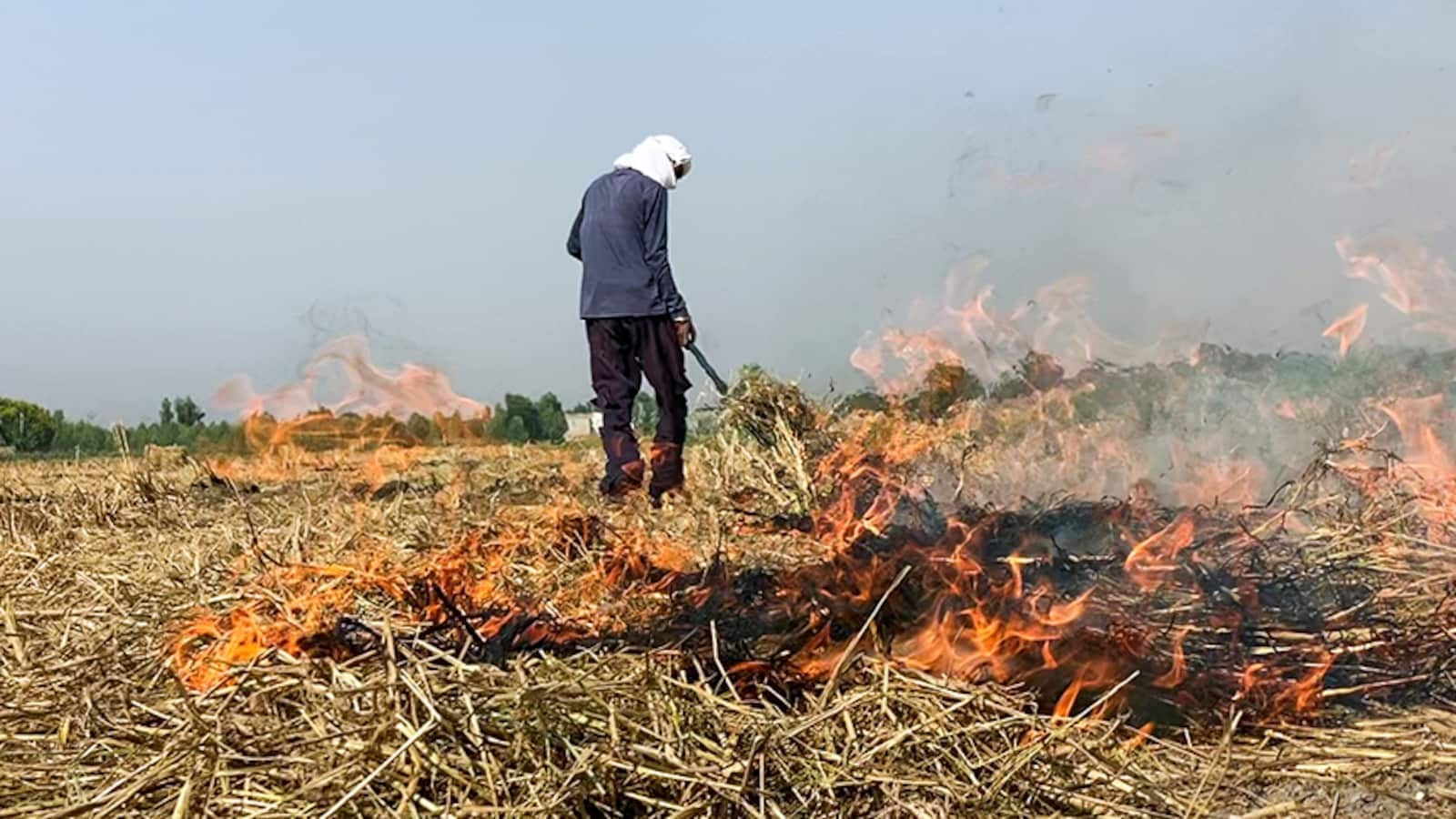
Allegations of a sudden increase in stubble burning incidents. The Economic Times reported that Delhi's Cabinet Minister Kapil Mishra accused the AAP-led Punjab government of allowing a "suspicious" tenfold increase in incidents of burning fields on Diwali night. According to official satellite data cited in media reports, over 1,152 to 1,200 stubble burning incidents were recorded in Punjab on Diwali, reflecting a 607% increase between November 7 and 8, 2026.
Mishra claimed that his office received calls from farmers in Punjab who alleged that their fields were deliberately set on fire while they were celebrating the festival with their families. He demanded an investigation by Punjab Chief Minister Bhagwant Mann and the filing of a First Information Report (FIR) against the culprits.
The BJP also directly blamed the incidents of stubble burning in Punjab for the increase in pollution in Delhi on its official Twitter handle.
BJP spokespersons and supporters argue that the BJP government in Haryana has actively reduced stubble burning incidents by working with farmers and tightening monitoring, which is in stark contrast to the alleged inaction of the Punjab government.
Aam Aadmi Party (AAP) Stance
NDTV reported that Punjab's Finance Minister Harpal Singh Cheema and senior AAP leader Baltej Singh Pannu termed the BJP as "anti-Punjab and anti-farmer." They claimed that the BJP deliberately targets farmers in Punjab every harvest season while ignoring stubble burning incidents in BJP-ruled Haryana.
Cheema stated that the Bhagwant Mann government has distributed a large number of crop residue management machines over the past five years, resulting in a significant overall decrease in stubble burning incidents. AAP leaders dismissed the connection between stubble burning on Diwali night and the immediate increase in smog in Delhi, arguing that Punjab's smoke "cannot reach Delhi in 10 minutes."
Allegations of Data Manipulation
According to a report, AAP leaders accused the Delhi BJP government of "fraud" in monitoring air quality. They alleged that officials placed AQI stations near green areas to artificially show lower pollution figures and sprayed water near monitors, while failing to enforce a ban on firecrackers in the capital.
This controversy has gained further political significance ahead of the Punjab Assembly elections, as both parties are using the pollution crisis to shape their image among voters in Delhi and Punjab.
Various Sources of Pollution: What Does the Data Say?
Environmental experts and broadcast reports believe that while stubble burning contributes to the increase in pollution at the end of October and in November, the role of local factors is much larger in overall pollution. According to data provided in media coverage, local emissions—especially from vehicles—account for about 20–21% of Delhi's pollution, while the share of stubble burning at the beginning of November 2026 ranged between 8% and 16%.
Under the Air (Prevention and Control of Pollution) Act, 1981, and Supreme Court rulings, burning of crop residues is legally prohibited as it violates citizens' right to a pollution-free environment, although its strict enforcement remains politically sensitive due to farmers' economic compulsions.
A reality in the game of accusations and politics is that pollution has now become a persistent problem, and no government appears serious about addressing it. If anyone is a victim of this politics of shifting blame, it is the common man, who is now forced to buy air purifiers after water purifiers to maintain the illusion of clean air.