
Over 100 student protesters injured in police crackdown

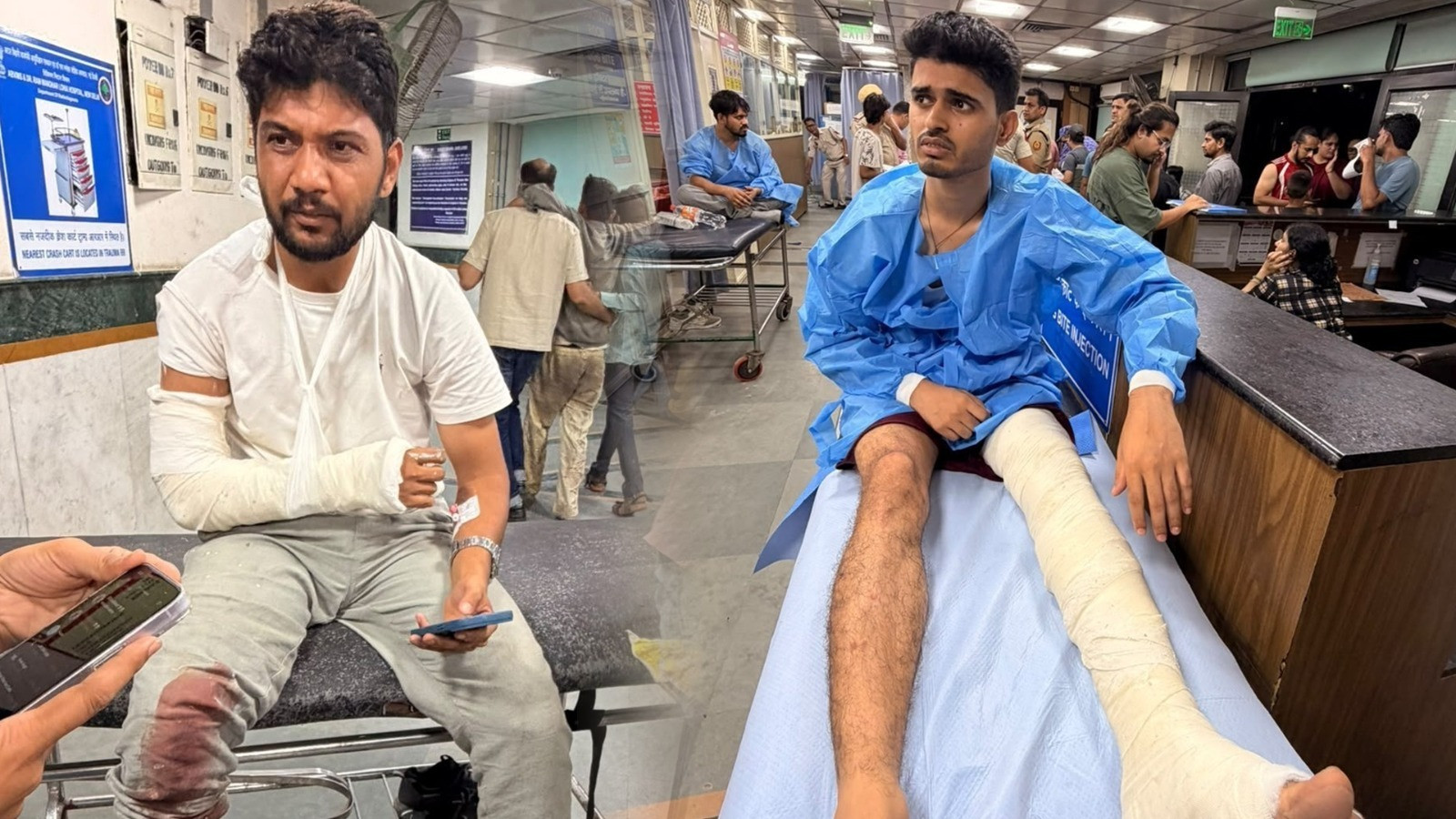
More than 100 injured student protesters are admitted to the emergency ward of RML Hospital.
During the "Parliament Chalo" march on Delhi's Sansad Marg on Monday, a large number of protesting students were injured following a lathi charge and the use of tear gas. Over 100 injured students and protesters have been admitted to the emergency ward of Delhi's Ram Manohar Lohia Hospital (RML). Among them, the condition of one student is reported to be critical.
According to a report by The Indian Express, doctors treating the injured students and protesters say that most of the injuries are severe head injuries. Many patients require stitches on their heads, tetanus injections, and wound dressing.
The most critically injured is 24-year-old Ravi from Uttam Nagar, who hails from Muzaffarnagar, Uttar Pradesh. He has been admitted to the ICU with a severe head injury. According to doctors, there is bleeding in his brain, and his condition remains critical.
Ravi's brother Shyam stated,
“The police first fired tear gas shells, causing the protesters to retreat. Despite this, the police began a lathi charge. He alleges that a policeman struck Ravi on the head multiple times with a baton, causing him to collapse on the spot. Shyam said Ravi decided to join the movement just a week ago, believing it was important to support students against the ongoing issues in the education system.”
According to the Nursing Head Superintendent at RML Hospital, Ravi sustained multiple severe head injuries, leading to intracranial bleeding. Upon arrival at the hospital, he was unresponsive, and his vital parameters were continuously dropping. By around 5:30 PM on Monday, nearly 100 injured from the protest had been treated, including about 90 protesters and 10 policemen. Four protesters had to be admitted to the ICU. The number of injured protesters was so high that RML Hospital eventually stopped admitting new patients, and many injured were sent to Lady Hardinge Hospital.
Hospital officials stated that most of the injured had injuries to their heads and limbs. Many required stitches on their heads, tetanus injections, and wound dressing. Those in serious condition were sent for CT scans, X-rays, and other tests. Some patients were shifted to the ICU, while others required immediate orthopedic surgery. Doctors say most of the injured are young people.
Rishi Raj Singh, a 21-year-old from Rajasthan with stitches on his head, said,
“When you fight against power, you have to be prepared for such situations.”
Vishal, a 22-year-old from Haryana, was groaning in pain on a stretcher in the hospital's emergency ward, waiting for an X-ray. He had a severe leg injury. He said he was near the stage at Jantar Mantar when the police began a lathi charge without any warning.
A resident of Shadipur in Delhi reported that his friend Akhlaq was also seriously injured and admitted to the ICU. He stated that the police suddenly started a lathi charge near Ashoka Road. In the chaos, Akhlaq fell on the road and was trampled by the crowd. He was found unconscious about half an hour later and taken to RML Hospital in an auto-rickshaw.
Chanchal Bora, a 35-year-old from Uttarakhand, came to Delhi to participate in the protest for the future of his two-and-a-half-year-old daughter. He sustained a severe back injury. He said he was protesting for reforms in the education system and in support of the resignation of Union Education Minister Dharmendra Pradhan, but instead, he faced a lathi charge. Chanchal mentioned that despite being injured himself, he helped another injured protester who was bleeding profusely from the head.
Some policemen were also injured during the protest. A policeman admitted to the hospital, speaking on condition of anonymity, said he was hit on the head by a stone while on duty near Sansad Marg.
Volunteers played a crucial role in transporting the injured to the hospital. Anshul, a 22-year-old, said he and his colleagues helped transport over 30 injured protesters from the road to the hospital using ambulances and private vehicles. He described the experience of seeing people writhing in pain on the road as extremely horrifying.