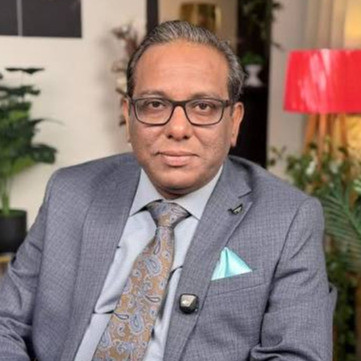
Open letter from Aligarh Muslim University academic community to Professor Faizan Mustafa
An open letter addressing ideological opportunism, public intellectualism, and decades-long institutional deputation.
To,
Professor Faizan Mustafa
Vice-Chancellor, Chanakya National Law University, Patna
(Former Vice-Chancellor - NALSAR and NLUO; Former Registrar - Aligarh Muslim University, 2004-07)
Date: September 2, 2026
Subject: An open letter on ideological opportunism, public intellectualism, and the long-standing misuse of institutional deputation
Dear Professor Faizan Mustafa,
In recent years, your identity as a legal commentator has significantly increased through your articles (columns) in the country's leading newspapers.
Ravish Kumar has played a major role in enhancing this identity. He provided you a platform on NDTV Prime Time. He never placed you in a panel discussion (debate), but always gave you a solo show where no uncomfortable, sharp, or probing questions were asked. Similarly, the promotion of 'Gamed Media' through the NDTV Prime Time show that he initiated with you, today Ravish Kumar does not expose you by criticizing your pro-Sangh articles published in 'Indian Express' and elsewhere on his YouTube channel. Clearly, when it comes to exposing and criticizing Muslim conservatism and communalism, no liberal or leftist remains liberal.
However, a review of your published articles and your institutional presence reveals a disturbing pattern of political alignment, academic negligence, and the long-term misuse of university deputation rules. In short, this is the most despicable form of opportunism that you have been consistently demonstrating for the past nine years.
This open letter draws attention to three distinct areas where your public record stands in stark contrast to the expectations of a senior constitutional law professor.
Initial writings and conservative stance on affirmative action (reservation)
Your ideological inconsistency is not a new phenomenon. Long ago, in 1992, in your article titled "Reservation-Politics or Social Upliftment" published in the MMU-Arts Faculty Magazine (1992-93, pages 128-131), you adopted a highly conservative and critical stance against social justice initiatives. Writing as a lecturer in the law department of AMU, you argued that affirmative action (reservation) has failed, has been monopolized by the upper classes, and was entirely driven by electoral vote-bank politics (like implementing the Mandal Commission in 1990).

You took a strong stance against reservation in science and technology, limiting its benefits to only one phase of a career or one generation, and ultimately advocated for "step-by-step abolition of the reservation policy." Your early record highlights a long-standing ideological framework that prioritized anti-reservation rhetoric long before your later political alignment with right-wing majoritarianism.
Timeline of ideological shifts and selective silence
Over the past decade, your comments reflect your eagerness to align with Hindu majoritarian power structures, while conversely, there is no criticism of the conservative elements present within your own institutional and religious foundation.
January 18, 2018 (The Tribune): On the eve of Israeli Prime Minister Benjamin Netanyahu's visit to India, your article Learn from Israel’s legal pluralism praised Israel's legal framework and described it as an ideal model of secular democracy. Written while serving as a visiting professor at Tel Aviv University, this article presented Israel's religious legal autonomy as a model for India, while ignoring the ongoing reality of the displacement of Palestinians.
May 28, 2019 (The Indian Express): After the 2019 general elections, your article Note to the minority: Welcome PM Modi’s resolve to win over their trust argued that the Muslim community should expect better treatment from the RSS. This marked the beginning of a public stance of reconciliation with Hindutva leadership. Clearly, this was less due to your belief in the principle of "Truth and Reconciliation" and more aimed at appeasing the RSS-BJP for personal gain.
March 21, 2020 (The Indian Express): In "Why Hindu Rashtra Should Not Terrify Muslims ", you provided a convenient interpretation of majoritarian nationalism. This article was later widely promoted by right-wing media outlets like Swaraj (April 22, 2020) as support from a prominent Muslim academic.
July 6, 2021 (The Indian Express): In Are Mohan Bhagwat’s recent remarks a sign of moderation in Hindutva?, you credited RSS chief Mohan Bhagwat with future hopes for Hindu-Muslim unity. This marked the beginning of a series of articles with the group—subsequently, your then-assistant (now BJP National Vice President and MLC, UP) Tariq Mansoor wrote articles in The Hindu (July 13, 2021) and his son, Assistant Professor (Law) Mohammad Nasir wrote in Hindustan Times (July 15, 2021).
Presenting yourself as a proponent of social justice and upliftment of the marginalized, you tweeted at the end of 2021 paying respectful tribute to the statue of Manu in the Rajasthan High Court (Jaipur Bench). You completely ignored the fact that the name Manu is merely a title and regarded a misogynistic and casteist figure as the greatest lawmaker! It is no surprise then that you immediately support triple talaq (IDT) and extend your cooperation to Muslim extremists.
Your extraordinary talent for reading thousands of pages of judgments and writing your responses in moments for publication in the next morning's English daily/portal has almost made you 'divine.' Salman Khurshid's book ‘Sunrise Over Ayodhya’ exposes this with subtle irony; an excerpt of which was also published in The Print on October 28, 2021.
Your excessive admiration for RSS's Shri Ram Madhav on your YouTube channel has already become a major joke.
June 10, 2024 (The Indian Express): In your article “Unity with Diversity”, published after the 2024 general election results, you claimed: “This writer still believes that declaring Hinduism as India's primary spiritual heritage could be a good thing for our secularism.”
Commentators have pointed out how objectionable this observation is for a constitutional scholar. Arguments made under the guise of protecting dialogue and constitutionalism pave the way for supporting an 'ethnocracy.' When applying the political geography and hierarchy framework, supporting a single dominant religious/spiritual heritage legitimizes majoritarianism. It undermines the security provided against a unified regional populace and majoritarian tyranny.
August 31 / September 1, 2026 (The Indian Express): Your article “Mohan Bhagwat’s Hindutva is Not Narrow: Are His Words in New York Heard in India?” once again praised the RSS chief's speech given in New York, stating that Bhagwat's stance rejects the argument of "foreign origin" against Muslims.
This article, written while serving as the head of a university, questions several contemporary complexities of intellectual engagement. Subsequently, Professor Tariq Hamid (a former student of the Department of Law) published his article praising Manusmriti in the same Indian Express. Was this merely a coincidence? Or is it something more towards creating a specific narrative?
Ideological Contradiction
While you continuously try to portray the majoritarian leadership as liberal (which is indeed your pretense and deception), you have systematically avoided any public criticism of Muslim right-wing extremism, the politics of reactionary student organizations, or conservative religious organizations (such as the Saudi-funded apparatus linked to the ‘Institute of Objective Studies’).
This calculated dual policy allows you to maintain a relationship as a “practical bridge-builder” with the ruling party while also keeping a relationship as a “practical bridge-builder” with the conservative Muslim leadership, who view your maneuvers as strategic defenses rather than theoretical scholarship.
Intellectual Work vs Administrative Dominance
A review of your academic career reveals that for over two decades, administrative appointments have replaced classroom teaching and peer-reviewed legal research.
Lack of Quality Research
Since the publication of your book Strict Liability of Criminal Law by Deep & Deep Publications in 1991, you have practically not written any international-level research papers or articles in high-impact journals. Serious legal research has been replaced by media op-eds.

This 1991 title is “plagiarized” from Richard A. Wasserstrom’s 1960 essay in the Stanford Law Review. His essay Strict Liability in the Criminal Law (Stanford Law Review, Vol. 12, No. 4 (Jul., 1960), pp. 731-745 (15 pages), is still available online, https://doi.org/10.2307/1226524.

According to a news report in ‘The Hindu’ (August 20, 2014), you were awarded a Transnational British Fellowship to further this subject. Did you do anything during that time after your PhD?
This was the truth of the Fulbright Fellowship. You received the ‘Fulbright Visiting Scholar Program’ in October 2018 while serving as VC of NULS AI Hyderabad. You received the ‘Best SAARC Teacher Award’ in 2014, while you have not been teaching since 2004. You have only been managing the administration of various universities.
Administrative Tenure
AMU Registrar (2004-2007): From your tenure as AMU was pushed into a judicial crisis over minority status (the issue is still pending and unresolved) to your continuous tenure as Vice-Chancellor at NLUO (Odisha), NALSAR (Hyderabad), and CNLU (Patna), you have primarily operated as an administrative officer rather than an active teacher or researcher. Serving only in executive positions raises serious questions about the criteria for academic evaluation regarding receiving educational awards or academic fellowships.
AMU Deputation Rules and Systemic Loopholes
Your continuous absence from your original academic position at Aligarh Muslim University (AMU) highlights a significant administrative irregularity concerning University Grants Commission (UGC) and AMU service rules.
Legal Limits of Deputation
Under standard UGC guidelines, central university ordinances, and Government of India service rules, there is a limit to deputation. The limit for deputation or extraordinary leave (EOL) for serving external organizations or state universities is strictly defined—generally not exceeding 5 consecutive years, and in exceptional circumstances, a maximum of 7 years (or less) for the entire service period.
This allows you to retain your original position (Lien) at your original post. Maintaining a position on deputation for nearly two decades is a gross violation of the fundamental intent of AMU's recruitment ethics and rules. It freezes departmental vacancies and halts the recruitment and progression of new/junior faculty. However, no one asks the AMU Vice-Chancellors and its Executive Council (EC) why they continue to extend your deputation indefinitely? Would they grant such concessions to anyone else besides you?
Administrative Failure within AMU Executive Council (EC)
The repeated extensions of continuous deputation granted by the AMU Executive Council (EC) over two decades demonstrate how institutional administration is manipulated to benefit specific networks. By ensuring the protection of your seniority and original position while maintaining Vice-Chancellors in other places, you have utilized the university as a ‘safety net’ while depriving it of your teaching presence.
Moreover, the collective support you received from the AMU Court and EC during the Vice-Chancellor selection processes (October 2023) underscores how internal political networks prioritize opportunism and administrative dominance over academic output and institutional integrity.
Conclusion
A professor of constitutional law has a clear duty towards institutional ethics and systemic accountability. When comments regularly align with the politics of the ruling power, when administrative tenures exceed legal limits, and when community criticism is selectively applied, the credibility of a public intellectual is entirely undermined.
The above statement says a lot about you and the reluctance of the Muslim elite as well as liberal-leftists to expose you: indeed, they have known you better. Even opposition leader Rahul Gandhi proposed your name to appoint Prime Minister Modi as India’s Chief Information Commissioner (‘The Hindu’, April 24, 2026). This simply means that the liberal-leftists and the Muslim elite have kept Rahul Gandhi unaware of your Sangh-supporting credentials expressed in major English dailies in New Delhi.
The academic community deserves clear answers: On what legal basis has AMU extended your deputation for two decades, and why has your constitutional review remained silent on Muslim reactionary politics while continuously justifying the ruling power?
Sincerely,
Members of the University and Academic Community
(Note: This open letter was sent to us by a professor from AMU via WhatsApp. The Credible News is publishing it under its journalistic/social responsibility. We have provided necessary hyperlinks to support the facts mentioned, but we do not necessarily agree with the views expressed.)