
Nine glacial lakes in Himachal rapidly expanding: IIT study

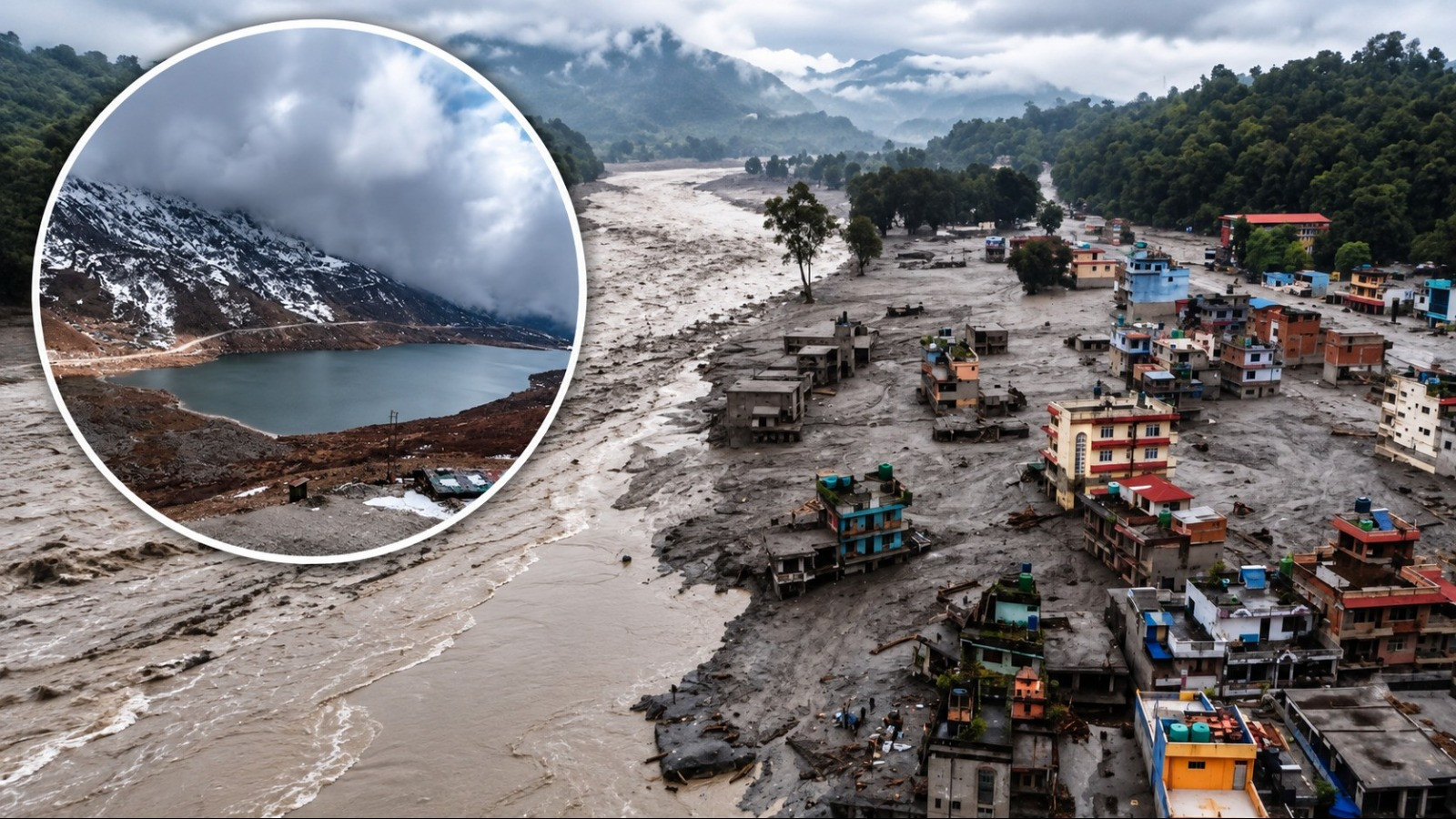
Concerns over Himalayan glacial lakes have intensified following the devastating floods in Nepal.
Concerns have increased regarding the glacial lakes in the Himalayan region following the devastating floods in Nepal. Researchers from IIT Mandi have identified nine rapidly expanding glacial lakes in Himachal Pradesh, which they have termed ‘Water Bombs.’

It is believed that the floods in Nepal occurred when a massive portion of a glacier broke off and fell into a lake. This caused the lake's water to overflow, resulting in unprecedented devastation in the lower areas and a significant loss of life.
According to a report by the Telegraph,
IIT Mandi researchers state that rising temperatures in the Himalayas are causing glaciers to melt rapidly. This poses a serious threat to communities living in the lower areas from these lakes. Analysis of satellite images and other data has revealed that the number of glacial lakes in the Himalayan region has increased by about 30 percent over the past decade. Additionally, the size of these lakes has also expanded significantly.
Professor Dericks P. Shukla, the founding chair of the School of Civil and Environmental Engineering at IIT Mandi, who led the six-member research team, stated that,
this has increased the risk of glacial lake outburst floods (GLOF) occurring suddenly. In such a scenario, large volumes of water and debris could flow towards the lower valleys.
In the study,
nine lakes—Kalikhund, Chandratal, Vasuki, Surai, Kya Tso, Yoche, Samudra Tapu, Kasang, and Gepang Gath—were found to be particularly sensitive. Located in the high-altitude areas of Chamba and Lahaul-Spiti, these lakes could prove to be ‘water bombs’ if their natural barriers break.
If the water from these lakes suddenly escapes due to landslides, earthquakes, or other geological disturbances, it could cause widespread devastation in the lower valleys. The study warned that more than 15 bridges, along with several populated areas, educational institutions, and health centers, are located in the potential danger zones of these lakes.
Researchers mapped 2,076 glacial lakes located at an altitude of over 3,500 meters in Himachal Pradesh in 2025. This number is approximately 710 more than in 2015. Over the past decade, there has been a 28.45 percent increase in the total area of these lakes. These figures highlight the growing threat of floods resulting from glacial lake outbursts in the state. Among the most significant changes is the area of the Gepang Gath lake in the Lahaul-Spiti district, which has increased by about 2,44,000 square meters due to glacier melting. The Kasang lake in Kinnaur has grown by approximately 1,50,000 square meters, and the Kalikhund lake, spread across Kangra and Chamba districts, has increased by around 1,20,000 square meters.
Researchers have identified the Kalikhund lake as particularly sensitive. The steep slopes surrounding the lake could increase the risk of sudden breakage or water escaping from the lake.
The study also considered human activities as a potential cause behind the rapid melting of glaciers. Researchers warned that increasing tourism activities in sensitive Himalayan areas could lead to dust accumulation on glaciers. This dust absorbs more sunlight compared to clean snow, accelerating the melting process.
Natural disasters such as earthquakes and landslides can also destabilize glacial lakes and cause sudden floods. Government agencies, including the Central Water Commission (CWC) and the National Disaster Management Authority (NDMA), have currently classified four glacial lakes in Himachal Pradesh as sensitive. Three of these lakes are also included in the IIT Mandi study. Monitoring these rapidly changing lakes has now become easier through satellite technology. However, researchers emphasized the urgent need for regular ground-level monitoring, timely warning systems, and strong government intervention.
According to officials,
the Himachal Pradesh government has requested ₹105 crore from the central government for installing early warning systems on four major glacial lakes and for other measures to mitigate risks. Additionally, the Central Water Commission will study the potential water flow routes of 681 glacial lakes in the Himalayan region and the threats posed to lower areas. Meanwhile, the National Disaster Management Authority will develop a comprehensive framework for risk classification.
Expressing concern over the worsening environmental crisis in Himachal Pradesh, a bench of Supreme Court Justices J.B. Pardiwala and R. Mahadevan stated last year, “The day is not far when the entire Himachal Pradesh could disappear.” The court specifically highlighted the deteriorating ecological balance of the state due to natural disasters occurring during the monsoon.