
Mehbooba Mufti accuses administration of negligence over Kashmir saffron fields

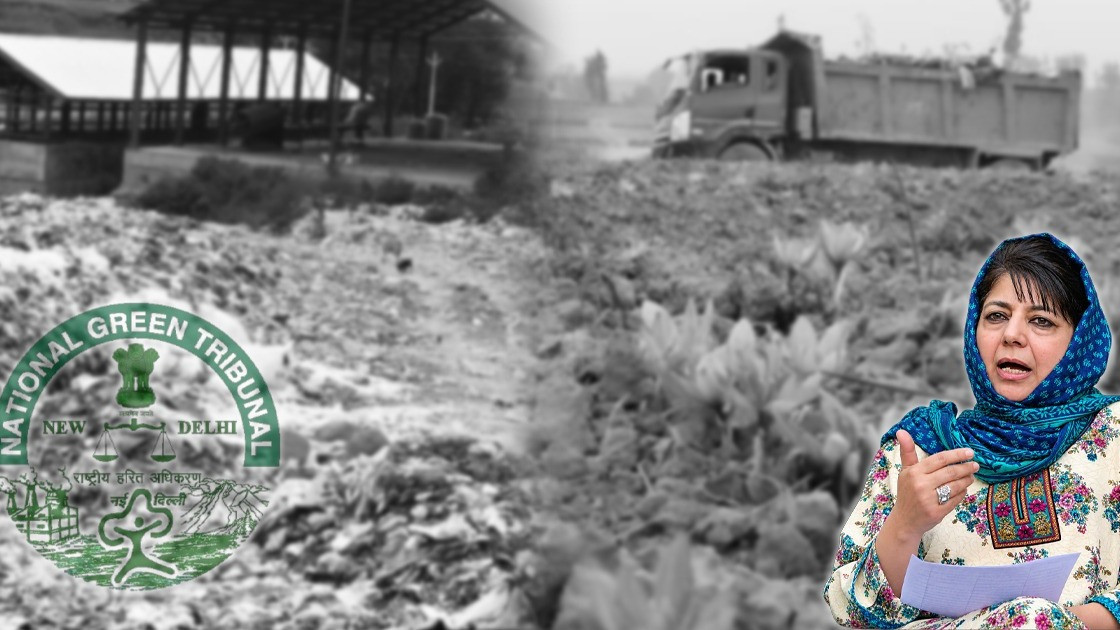
Mehbooba Mufti claims that saffron-growing land has been used as a municipal dumping ground for the past three years.
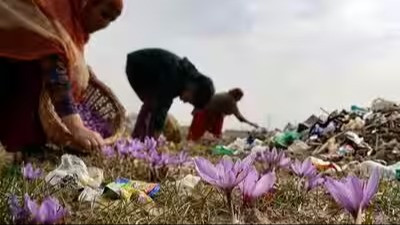
Pampore in Kashmir is known for its saffron fields, but complaints about municipal waste being dumped around these fields have raised serious questions regarding the livelihood of farmers and environmental protection. Mehbooba Mufti, president of the People's Democratic Party and former Chief Minister, has alleged that for the past three years, saffron-growing land has been used as a municipal dumping ground. On the other hand, the National Green Tribunal (NGT) has directed the formation of a joint committee to investigate the matter.

On November 21, Mehbooba Mufti claimed in a message on X that approximately 2,000 kanals of land have been affected and around 150 farming families are at risk of losing their livelihoods. She also mentioned damage to crops from rats and other animals. According to her, this is administrative negligence towards Kashmir's saffron heritage. She demanded the protection of the fields and a ban on dumping waste there.
The judicial aspect of the case had already emerged before Mehbooba Mufti's statement. Environmental activist Dr. Raja Muzaffar Bhat had approached the NGT against the alleged unscientific dumping of waste by the municipal body in the Patalbagh area of Pampore. According to a report by local news agency KNS on November 17, the case was heard under original application number 602/2026.
The petition alleges that solid waste management debris is being dumped around the Patalbagh-Galander area by the municipality and plastic waste is also being disposed of. According to The Times of India, the applicant stated that the leachate, a toxic liquid released from untreated waste, is seeping into groundwater and reaching the Jhelum River through nearby drains. The distance of the river from the relevant site is reported to be less than one kilometer.
The applicant also claims that the waste has attracted rodents and porcupines, which damage the underground corms of saffron. They cited a report from a local official of the pollution control committee, which mentioned the accumulation of unsegregated and untreated old waste in the area. This included single-use plastics and packaging materials along with domestic organic waste.
The NGT's joint committee will include representatives from Sher-e-Kashmir University of Agricultural Sciences and Technology, Kashmir, the Ministry of Environment, Forest and Climate Change, and the Jammu and Kashmir Pollution Control Committee. The Deputy Commissioner of Pulwama has been tasked with this work. The committee will inspect the site, assess the situation of accumulated municipal and plastic waste, and check whether the necessary permits for the relevant facility have been obtained.

The committee is also required to assess the potential impact on surrounding crops. The tribunal has directed that this process be completed within eight weeks and a report submitted. According to KNS, the next hearing is scheduled for February 3, 2027. For now, this directive should not be considered a final order to close the dumping site or compensate farmers. The tribunal has initiated the process of gathering facts and clarifying the extent of damage.
Farmers hope for relief from this intervention. According to local reports, award-winning saffron producer Irshad Ahmed from Patalbagh said that after failing to find solutions through other means, the NGT has become a beacon of hope for them. Affected farmers are demanding the closure of the dumping site and compensation for the alleged damage. Farmers from Pampore, Patalbagh, Sambura, and surrounding areas have welcomed the investigation.
The immediate challenge for the administration is to provide a clear and documented response to the complaints. Available reports do not show a detailed direct response from the municipal committee. It would be useful to consider farmers' statements, the condition of the fields, the source of the waste, and the examination of soil and water during the inspection. If pollution is confirmed, a time-bound plan for cleanup, land rehabilitation, and preventing further waste from reaching the site should be developed.
The need for urban waste disposal is real, but solutions cannot be sought at the expense of agriculture and rural livelihoods. The success of this investigation for Pampore will extend beyond the preparation of the report. It is essential that the conclusions are made public, accountability is established, and affected farmers receive relief commensurate with verified losses. Protecting the saffron heritage means safeguarding the land, labor, and future of the families that have built this identity.