
JMI suspends four students for protest over admission scam

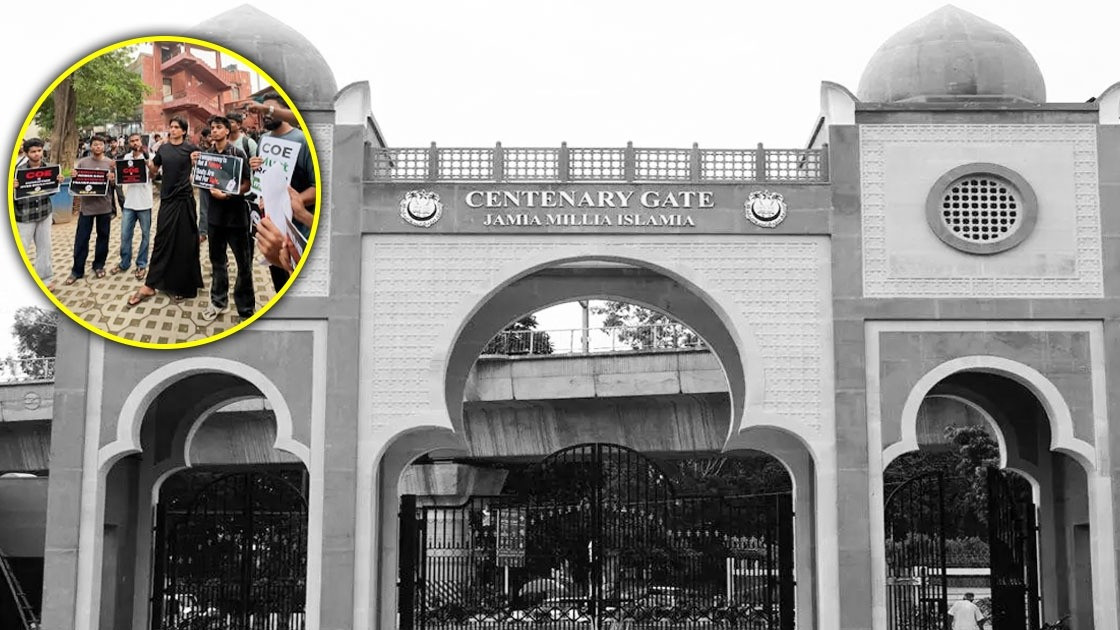
Students protested against irregularities in the 2026-27 spot admission process at the university.
Jamia Millia Islamia University has suspended four students protesting against irregularities in the university's spot admission process for 2026-27. Their entry into the campus has also been banned.
Indian Express reports that the university suspended the students for protesting. The students claim there were irregularities in the spot admission process at Jamia Millia Islamia University for 2026-2027.

According to information, the suspended students are Dhruv Chauhan, Tabrez Afsar, Abin Basil, and Mohammad Jasim. All four students are associated with the NSUI student organization. NSUI (National Students Union of India) is the student wing of the Congress party. NSUI has demanded the withdrawal of disciplinary action and urged the administration to engage in dialogue with the protesters.
The students allege they were forcibly removed from the protest site. In response, the administration stated that security personnel only asked the students to vacate the area as they were protesting outside the designated protest zone.
The protest was regarding the spot admission process. The spot round admission process is conducted every year in July-August to fill the remaining vacant seats after the regular cutoff list ends. The protest began with allegations that candidates lower on the waiting list were given admission instead of higher-ranked students on the exam list.
The Hindu reports that the university previously conducted online registration but switched to offline registration this academic year. Students allege a lack of transparency in this change. They also claim that this process allowed officials to arbitrarily allocate seats, leaving eligible candidates deprived. The campus dispute escalated when candidates lower on the waiting list were admitted, while higher-ranked students were not. Students have also questioned the decision to conduct this year's spot admission offline, which was the basis for seat allocation and the release of merit and waiting lists.
However, the university has dismissed these allegations as baseless, stating that the admission process is entirely transparent. According to Jamia's admission portal, notices related to offline spot registration for the 2026-27 session were issued in July and August.
NSUI has opposed the action taken against the four students. In a statement released on Thursday, the organization demanded the immediate withdrawal of the students' suspension and campus ban. NSUI stated that any disciplinary action affecting students' academic and campus rights should follow due process, allowing students to present their case. The organization also urged the university to address students' admission-related concerns through "open and transparent dialogue."
The admission-related dispute centers on complaints submitted by students to the Controller of Examinations. These include questions about the basis of spot admissions, the publication of merit and waiting lists, and the criteria used to fill vacant seats. Students have also expressed concerns about reserved seats for residents of Jammu and Kashmir, Kashmiri migrants, and persons with disabilities.
The university's action followed the removal of protesters from the central canteen by security personnel on Wednesday. NSUI alleged that students were forcibly removed, while Jamia administration stated that the action was taken because the protest was being held at a location other than the designated site.
The administration cited the conduct of the protesters and their communication with JMI officials as reasons for the action. The university's chief proctor alleged that Tabrez Afsar and Abin Basil helped organize a protest in the central canteen on August 24, despite the university's notification designating Gate No. 18 for student gatherings and protests.
In reference to the suspended students of Jamia Millia Islamia, the university stated that the protesters obstructed access to the billing counter and the girls' common room, and continued the protest despite instructions from the proctorial department. Additionally, the university mentioned that outsiders and former students participated in the protest, and political slogans were raised by the students.
Regarding the protest on August 24, the university alleged that efforts were made to contact the students and facilitate dialogue, including a meeting with the proctorial department. Following a request for dialogue, the proctor visited the northern campus at night and met with students in the central canteen.
The administrative action against the students included complaints from various university departments, such as Psychology, Chemistry, Mathematics, Physics, Economics, and the University Polytechnic Department. The university stated that the protests disrupted the regular functioning of departments, libraries, laboratories, and other facilities, causing operational hindrances.