
IIT Delhi director warns protesting students of expulsion

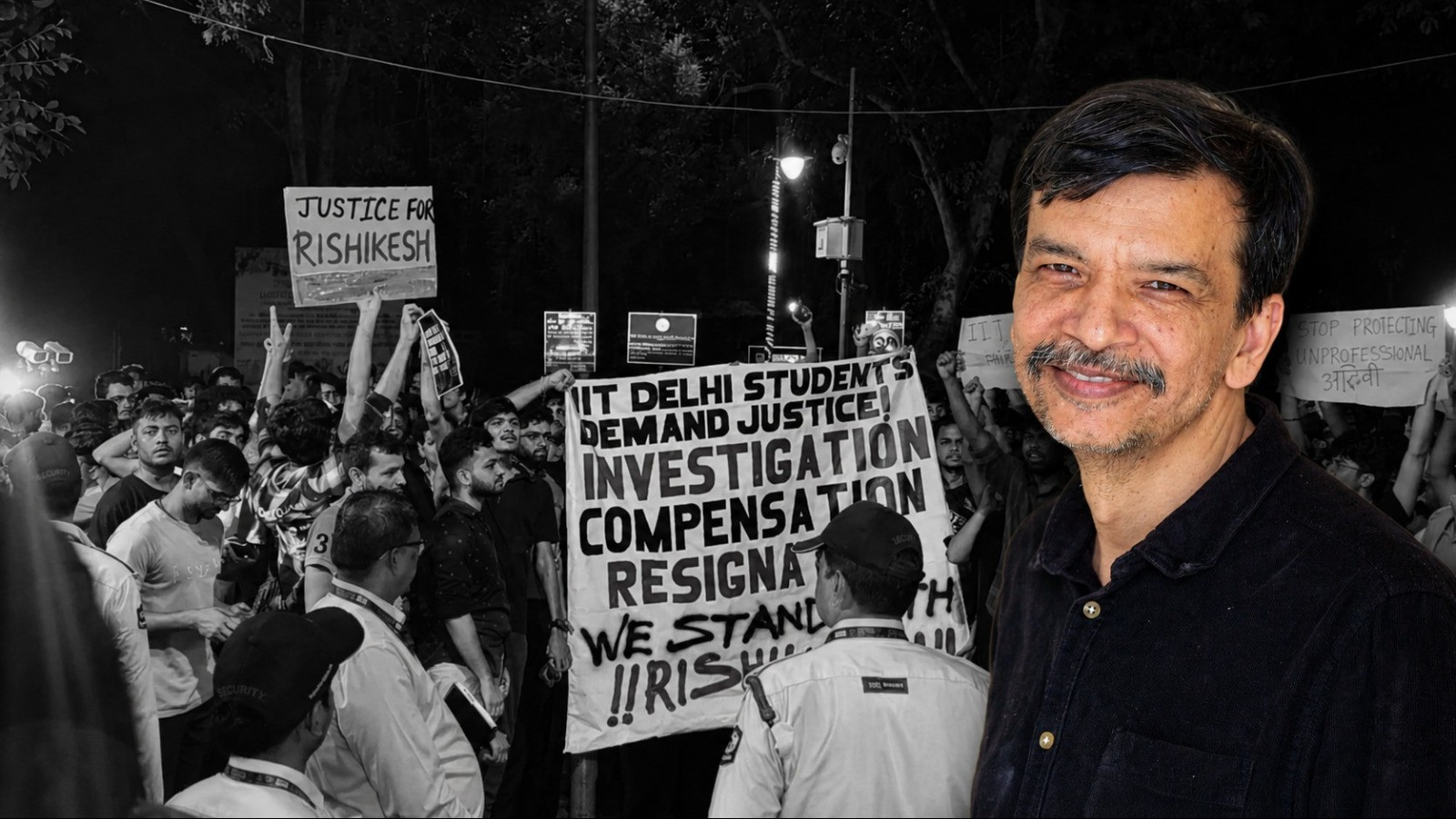
IIT Delhi director Rangan Banerjee has warned protesting students of disciplinary action.
IIT Delhi Director Rangan Banerjee has warned protesting students of disciplinary action. He stated,
The situation "deteriorated seriously" during the protest, and "obscene, abusive, and threatening language" was used in the slogans. If students do not stop protesting, they will be expelled from the campus.

According to a report by Indian Express, this warning came after a midnight protest by students against the suicide of 31-year-old MSc student Rishikesh Kumar. Students were protesting for the fifth consecutive day. The protesters were marching with banners that read,
IIT Delhi students demand justice! Investigation, compensation, and resignation. We stand with Rishikesh.
During this time, security personnel had barricaded the main gate of the institute.
In an official message sent to students on Friday, Banerjee stated that several concrete steps have been taken based on discussions with student representatives. Despite this, "unfortunately, the situation deteriorated seriously on the night of Thursday, 27 August 2026."
He said,
"Between 10:30 PM and 12:30 AM that night, a group of protesters extended their agitation to the residential areas of the campus. They protested right in front of faculty residences and used obscene, abusive, and threatening language in the slogans."
Banerjee further stated, "Such behavior affects the safety, privacy, and peace of faculty members and their families, including small children and elderly dependents. The institute will take disciplinary action against those disrupting residential areas, classrooms, academic activities, and the peaceful functioning of the campus."
Referring to the steps taken, Banerjee wrote, "The external inquiry committee has started its work. Approval has been granted to provide assistance to the family from the Benevolent Fund. A separate fund has also been created from voluntary contributions by faculty, students, and staff. An external ombudsman will be appointed next week. We are continuously engaging in goodwill discussions with student representatives and other students."
31-year-old Rishikesh Kumar died on Saturday after jumping from the sixth floor of a building on campus. Delhi Police have registered a case of abetment to suicide against unknown persons. Students have demanded an independent investigation into Kumar's death, the resignation of the Dean, Associate Dean (Student Welfare), Associate Dean (Hostel Management), and the Head of the Physics Department. They have also demanded compensation of at least ₹1 crore for Kumar's family.
Students claim that this is the eighth suicide on campus since 2023. However, the IIT Delhi administration has not accepted the demands for resignations or a specific compensation amount.
According to a report by The Wire, meanwhile, this technology institute, which imparts knowledge of science, has closed its doors to the media. Media personnel gathered at the main entrance of IIT Delhi from around 4 to 6 PM. They wanted to cover the protest ongoing on campus since Sunday. But they were not allowed inside. Security was tightened at the main entrance, and everyone entering was being checked. Security personnel were given strict instructions not to allow any media personnel inside the institute without prior permission.
Following the suicide of MSc Physics second-year student Rishikesh Kumar at the Lecture Hall Complex of IIT Delhi, the ongoing protest on campus is no longer just a demonstration of mourning for a student's death. Now, other students of the institute are questioning the system within which they study, live, and expect help during mental distress.
This protest within IIT Delhi is significant because such demonstrations are not usually seen in this premier institute of the country.
Students say that viewing Rishikesh's death solely as his personal or mental health issue would overlook the circumstances he was continuously struggling with after his return, such as not getting a hostel, not getting an academic project, the complex process of withdrawing from the semester, and insensitive behavior from the administration.
A student pursuing a PhD in Philosophy at IIT Delhi, involved in these protests, shared on the condition of anonymity,
"This is not the first case of suicide at IIT. Looking at past such incidents, a pattern emerges. Generally, those, especially students from marginalized communities, who cannot find a place for themselves on campus, reach this situation."
According to the report, eight students have committed suicide at IIT Delhi in the last 30 months. The protesting students consider this an 'institutional failure' and describe the institute as insensitive towards mental health.
Rishikesh was admitted to IIT Delhi in July 2025. He was from Patna district in Bihar. After losing his father in 2025, Rishikesh began facing severe mental health issues. According to a note released by the students, his health deteriorated after Holi this year, and he was treated at the IIT Delhi hospital for about a week. After this, he was admitted to VIMHANS hospital in Delhi for about a month. After treatment, Rishikesh's condition improved, and he returned to IIT after receiving medical fitness clearance.
According to the note released by the students, his troubles did not end even after his return. His studies were affected due to prolonged treatment, and he fell behind in exam preparation. He requested to withdraw from the semester (second semester) and decided to go home. But upon returning to campus in July, he found out that his name had been removed from the hostel. To complete the process of withdrawing from the semester, he was asked for medical clearance from the IIT Delhi hospital. Students say this was a demand they were not informed about in advance.
Students say,
"Not getting a project, getting low marks, these cannot be seen only as personal failures. When a student is already struggling with grief and poor mental health, the question of institutional support becomes equally important."